Showing posts sorted by date for query Ambient. Sort by relevance Show all posts

Sunday, November 23, 2025

Robert Fripp, Brian Eno - 2014 "Live in Paris 28.05.1975"


These days nobody bats an eyelid if somebody taps at a laptop or twiddles an oscillator or two for the duration of a gig.

In 1975 it was just too much for the punters who’d packed into the Paris Olympia to see Fripp & Eno. Having escaped the restrictions of their parent acts, Robert Fripp and Brian Eno were keen to present the results of a collaboration that first began in 1972 to a live audience. It didn’t really work – the second night in Paris saw the duo booed off the stage. Thankfully, the first evening was bootlegged and it’s this gig that occupies two discs of this historic three-CD set.

Handsomely packaged, painstaking audio restorations have removed layers of sonic dirt, ensuring the music really shines through. In a way, it’s a kind of audio documentary – we hear the gentle undulations of Eno’s pre-gig VCS3 percolating through the Gauloise smoke drifting up from a bemused and restless crowd.

When the players come on stage, the sound world they create is about as far removed from the dramatic extremes of King Crimson or Roxy Music’s showmanship as it’s possible to imagine. With the players partially obscured by a movie loop of a horse endlessly trotting around a yard, the event was more akin to an art installation than the traditional gig most punters were expecting.

What we hear are raw renditions of material that comprised the darker angularities of _(No Pussyfooting) _and the slightly sweeter tones of Evening Star. The music manages to be both beautiful and, at times, incredibly brutal, veering from contemplative proto-ambient meanderings to blistering the paintwork within a 300-yard radius of the stage and blowing the bloody doors off the place.

Complementing the actual concert, the third disc consists of the reels of guitar loops across which Fripp soloed. The pristine sound quality makes these worthy of release in their own right. Added to them comes Later On, the B-side of Eno’s The Seven Deadly Finns single featuring the pair. Long out of print, its appearance on CD for the first time makes the completists among us shiver with delight.

While owing much to Terry Riley’s pioneering work, Fripp & Eno’s albums had a much wider impact on the mainstream rock audience over the longer term. With King Crimson now back in action, would it be too much to hope that in a more accepting climate, Fripp & Eno might take to the stage once more? In the meantime, this essential package is a must-have addition to your collection.


Track listing:

1-1 Water On Water 10:46

1-2 A Radical Representative Of Pinsnip 9:39

1-3 Swastika Girls 7:44

1-4 Wind On Wind 2:00

1-5 Announcement 1:13

2-1 Wind On Water 9:44

2-2 A Near Find In Rip Pop 7:21

2-3 A Fearful Proper Din 4:12

2-4 A Darn Psi Inferno 4:59

2-5 Evening Star 5:59

2-6 An Iron Frappe 10:33

2-7 Softy Gun Poison 12:31

2-8 An Index Of Metals 7:20

3-1 Test Loop I 4:07

3-2 Test Loop II 0:47

3-3 Loop Only: A Radical Representative Of Pinsnip 10:39

3-4 Loop Only: Wind On Water 9:53

3-5 Loop Only: A Darn Psi Inferno 5:40

3-6 Loop Only: Softy Gun Poison 14:45

Bonus Tracks

3-7 Loop Only: Wind On Water Reversed 9:50

3-8 Later On (Single B Side) 4:56


Personnel:

Guitar – Robert Fripp

Loops, Electronics [Devices] – Brian Eno

Thursday, January 12, 2023

Jeff Beck - 1999 "Who Else!"


Who Else! is the seventh studio album by guitarist Jeff Beck, released on 16 March 1999 through Epic Records. The album reached No. 99 on the U.S. Billboard 200 and marks the end of a decade-long absence of original material from Beck since the release of Jeff Beck's Guitar Shop in 1989. Stylistically it showcases the first addition of electronic and techno music into his repertoire, along with the blues-based instrumental rock and jazz fusion of previous albums.

Fellow guitarist Jennifer Batten, having often cited Beck's influence on her playing, is featured as a collaborator and subsequently joined him on tour for three years. The album features the collaborative songwriting of Tony Hymas. "Brush with the Blues" became a signature tune and concert staple, and along with "Angel (Footsteps)" made it onto his 2008 concert album Live at Ronnie Scott's. "What Mama Said" samples Dick Shawn's dialogue from the 1963 film It's a Mad, Mad, Mad, Mad World.

Jeff Beck has never shied away from following trends, at least as far as the musical styles he uses to back up his signature guitar sound. Back in 1969, in a sleeve note on Beck-Ola, he noted that he hadn't come up with "anything totally original," and instead made an album "with the accent on heavy music" at a time when the "heavy music" of the Jimi Hendrix Experience and Led Zeppelin was all the rage. In 1975, at the height of the jazz fusion movement, he made a jazz fusion album, and a good one, too. In both cases, however, the fashionable genres only provided a contemporary-sounding context in which his playing could flourish. If anyone has ever needed to be inspired to work, it's this recluse. So on his first regular studio album of new material in ten years, Who Else!, Beck, on at least a few tracks, solos over heavily percussive techno tracks reminiscent of Prodigy. But whether he's piercing such a rhythmic wall, rearranging the blues on the live "Blast From the East," or floating over an ambient soundscape on "Angel (Footsteps)," it's the same old Beck, with his stinging and sustained single-note melodies, his harmonics, his contrasting tones, his drive. And the man who played "Greensleeves" straight on Truth in 1968 is the same one who is faithful to the Irish air "Declan" here. Older fans who haven't been spending time at raves in recent years may want to program their CDs to avoid the electronica, but they should at least give those tunes a listen -- are they any heavier than the "heavy music" of 1969?

Track listing:

01.    "What Mama Said"    Jennifer Batten, Jeff Beck, Tony Hymas    3:22
02.    "Psycho Sam"    Hymas    4:55
03.    "Brush with the Blues" (live)    Hymas, Beck    6:24
04.    "Blast from the East"    Hymas    4:46
05.    "Space for the Papa"    Hymas    7:41
06.    "Angel (Footsteps)"    Hymas    6:30
07.    "THX138"    Hymas    6:15
08.    "Hip-Notica"    Hymas, Beck    4:40
09.    "Even Odds"    Jan Hammer    3:29
10.    "Declan"    Dónal Lunny    4:02
11.    "Another Place"    Hymas    1:48
Total length:    53:52

Personnel:

    Jeff Beck – guitar, arrangement, producer
    Jennifer Batten – guitar, guitar synthesizer
    Mark John – guitar (track 10)
    Tony Hymas – keyboard (except track 9), sound effects, arrangement, production
    Jan Hammer – keyboard (track 9), drums (track 9)
    Simon Wallace – synthesizer (track 10)
    Steve Alexander – drums (except tracks 2, 9, 10)
    Manu Katché – drums (track 2), percussion (track 2)
    Randy Hope-Taylor – bass (except track 2)
    Pino Palladino – bass (track 2)
    Bob Loveday – violin (track 10)
    Clive Bell – flute (track 10)

Saturday, January 23, 2021

Jack DeJohnette - 1978 [2000] "New Directions"


New Directions is an album by Jack DeJohnette released on the German ECM label. It was recorded June 1978 at Talent Studio in Oslo and released in 1978.

New Directions found drummer/pianist Jack DeJohnette reflecting on the multiple routes his musical life had taken and summarizing them in a single band. “My idea was to put together a cast of unlikely characters”. He’d worked with Eddie Gomez in the Bill Evans Trio, played extensively with John Abercrombie in the Gateway trio and a new alliance with Art Ensemble trumpeter Lester Bowie reconnected Jack to the experimental spirit of the early AACM. “With Lester added we had four strong and very different characters, could cover a lot of musical areas, and the chemistry was fantastic.” New Directions, recorded in 1978, won France’s Prix du Jazz Contemporain de L’Academie Charles Cros.

Jack DeJohnette's New Directions was a jazz supergroup (circa 1978) made up of Lester Bowie (of the Art Ensemble of Chicago), Eddie Gomez (known for his work with Chick Corea), John Abercrombie (an ECM guitarist whose previous work had been in the John McLaughlin vein) and, of course, DeJohnette himself on Drums. I would call this music ambient jazz, with an eery, yet beautiful, dreamlike quality.
The playing (of DeJohnette, Abercrombie, and particularly Lester Bowie) on this album is revelatory.
DeJohnette's cymbal and snare work, recorded here in ECM's pristine clarity, seems to flow directly out of the collective unconcious. He plays endless variations on rhythms, never ceasing to groove, oh so subtly. If you broke his beats down measure by measure, any given measure would be enough for another drummer to fill an entire song.
John Abercrombie lays back and plays atmospherics throughout most of the album. He displays very little of the Mahavishnu-esque pyrotechnics he was wont to spew previous to this album. The atmosphere's he creates remind me of Brian Eno's ambient music at times. Maybe he had been listening to Robert Fripp. I don't know. But his playing is beautiful and unique throughout most of the album. In fact, while I doubt many 1980's pop/rock guitarists ever listened to this album, Abercrombie's playing here is an ambient jazz precursor to the playing of people like the Edge (on Unforgettable Fire), or Johnny Marr, or the guitar work on Joy Divisions Closer album.
But it is the trumpet of Lester Bowie for which this album most deserves to be remembered. While Lester did much great work in his life, he would often interrupt his best work to express the clown spirit which was so much a part of his nature. Here, though, Lester seems on a mission to express the entirety of his spirit. There's clowning to be sure, but it's framed in the larger picture of "Great Black Music, Ancient to the Future" which the Art Ensemble set out to express.
This album contains two tracks which should go down in the history of jazz as classics.
Bayou Fever is an extended, almost formless, field-holler with a a humid and surreal atmosphere. On this track Bowie plays the Blues as if he were it's culmination. It's not a blues, but Bowie's feel embodies the blues while, at the same time, being something else entirely.
Jack DeJohnette's piano ballad Silver Hollow is exquisite; touching and sentimental, without being sappy. Once again, Lester Bowie steals the show. Who would have guessed he could play this tenderly? His work on this track rivals Miles Davis' playing on tracks such as Blue in Green, Round Midnight, or Someday My Prince Will Come.

Jack's playing is perpetually crisp and inventive. He really has no clichés in his playing, yet his touch and feel are unmistakable. The real gem on this set has no drums at all, but Jack plays the piano. Silver Hollow is one of my favorite DeJohnette compositions, and its treatment here in the hands of Jack, John Abercrombie, Eddie Gomez and MVP Lester Bowie goes above and beyond. Buy it for that track, the rest is merely outstanding.

This is a great record -- nearly an all-time jazz classic. From the very first chords of "Bayou Fever," you're in a dreamscape created by four brilliant musicians at the very peak of their abilities, and enmeshed in a telepathic quartet setting that brought out the best in them. Abercrombie never sounded better -- he's at his most subtle and oracular here; Lester Bowie sounds like he's infected with some kind of voodoo that Miles himself never came down with; DeJohnette sounds like three guys, but never too busy, always selflessly stoking the groove; and Gomez is perfect here, adding lead notes that haunt the melodies like a voice you can't get out of your head. This is the stuff. The acoustic "Silver Hollow" at the end, after all that swirling blackness, is so beautiful it's almost too much!  

Track listing:

All compositions by Jack DeJohnette except as indicated.

    "Bayou Fever" – 8:40
    "Where or Wayne" – 12:25
    "Dream Stalker" (Abercrombie, Bowie, DeJohnette, Gomez) – 5:55
    "One Handed Woman" (Abercrombie, Bowie, DeJohnette, Gomez) – 10:49
    "Silver Hollow" – 8:24

Personnel:

Jack DeJohnette – drums, piano
John Abercrombie – guitar, electric mandolin
Lester Bowie – trumpet
Eddie Gómez – double bass

Sunday, February 2, 2020

Trilok Gurtu - 1993 "Crazy Saints"

Percussionist Trilok Gurtu comes from a long line of respected Indian classical musicians, but he's best known for his genre-blending fusions of world music and jazz. Crazy Saints is one of his most complex and challenging releases to date, enlisting the aid of jazz legends like guitarist Pat Metheny and Joe Zawinul to create a thoroughly modern sound that moves from razor sharp ensemble work to dizzying solos. The most effective songs are those that mine Gurtu's myriad world music influences, including "Manini" and "Blessing in Disguise," both of which are blessed with the haunting vocal ululations of Indian music legend Shobha Gurtu, the drummer's mother. The genteel balladry of "Ballad for 2 Musicians" and the excessive ambient noodling of "The Other Tune" may tax the patience of those with a lower tolerance for modern jazz wankery. But ultimately songs like the title track, which marries blistering beats in quirky time signatures with heavenly vocals and dazzling instrumental interplay, make the album a fine foray into jazz/world fusion.

Rhythm Maestro Trilok Gurtu,Brings us another fine release from his CMP dates.Bringing in Jazz Guitarist Pat Metheny who makes the hair in your neck bop the blues,French Clarinet Cultivater Louis Sclavis,whose distinctive approach towards the clarinet can be clearly heard on "Thillana"(Highly Recommended Track) with another Frenchman Daniel Gayone,giving funkified jazz riffs that dwells on indian raaga on Thillana As well as on other tracks,There are 2 songs here which are higlights from a Famous Jazz Festival where Joe Zawinul brings in his vision to trilok gurtu's every so wonderfull dancing drums!. Truely a fine release,and one of trilok's best releases so far! ,but this cd could be,what the peers describes as "Slow Poison",meaning it takes sometime for you to get the hang of it,once you do..you'll never let it go!

Track listing:

1     Manini     7:06
2     Tillana     4:12
3     Ballad For 2 Musicians     6:08
4     The Other Tune     7:39
5     Blessing In Disguise     9:26
6     Crazy Saints     8:19
7     No Discrimination     3:38

Personnel:

    Drums, Tabla, Voice, Dhol [Dol], Kanjira, Percussion – Trilok Gurtu
    Bass – Marc Bertaux (tracks: 1, 6)
    Bass Clarinet – Louis Sclavis (tracks: 2, 5)
    Cello – Ernst Reijseger (tracks: 2, 5)
    Clarinet – Louis Sclavis (tracks: 2)
    Guitar – Pat Metheny (tracks: 1)
    Guitar Synthesizer – Pat Metheny (tracks: 6)
    Keyboards – Daniel Goyone (tracks: 1, 6)
    Keyboards, Pedalboard [Keyboard Bass] – Joe Zawinul (tracks: 3, 4)
    Piano – Daniel Goyone (tracks: 1, 2, 5, 6, 7), Joe Zawinul (tracks: 3)
    Saxophone – Louis Sclavis (tracks: 7)
    Vocoder – Joe Zawinul (tracks: 4)
    Voice – Shobha Gurtu (tracks: 1, 5, 6)

Sunday, July 14, 2019

Steps Ahead - 1984 "Modern Times"

Steps Ahead is a jazz fusion group formed by vibraphonist Mike Mainieri in the 1970s. The lineup consisted of Mainieri, Michael Brecker, Don Grolnick, Eddie Gómez, and Steve Gadd and would change often over the years. Steps Ahead fused elements of rock, funk, jazz, and rhythm and blues.

By 1984, Steps Ahead's personnel had stabilized with original keyboardist Warren Bernhardt rejoining the group and teaming up with tenor saxophonist Michael Brecker, bassist Eddie Gomez, drummer Peter Erskine, and vibraphonist Mike Mainieri; guitarist Chuck Loeb guests on one selection, as does Tony Levin, who is heard on the Chapman stick. This outing is very electronic and does not quite reach the heights of Steps Ahead's earlier Elektra album, but it certainly has plenty of spirit and power.

Michael Brecker formed Steps Ahead (originally Steps) with fellow New York masters vibraphonist Mike Mainieri and bassist Eddie Gomez, put together initially for the Japanese market. Steve Gadd was their original drummer, replaced in the early ’80s by Weather Report man Peter Erskine.

Steps Ahead’s self-titled debut album showcased a mostly-acoustic fusion sound, but the follow-up Modern Times embraced all sorts of ’80s technology to intriguing effect. Of course such tinkering opens it up to sounding somewhat dated these days, but at least the album has ambition, quality compositions and the kind of attention to detail that makes it an interesting companion piece to key mid-’80s works like The Flat Earth, Hounds Of Love, Boys And Girls and So.

Opener ‘Safari’ kicks off with a vaguely Caribbean/reggae groove featuring a multitude of synths and sequencers and a tribal, almost Zawinulesque melody. With repeated listens there are many pleasures to be found; Brecker’s typically incisive tenor solo, Erskine’s subtly-building groove work, the slinky bass line which rumbles on throughout.

Equally arresting is pianist Warren Bernhardt’s title track, a modal piece built over another serpentine, sequenced line, developing into a series of lovely vignettes featuring Brecker’s solos and some very Steely Dan-ish chord progressions. Mainieri’s composition ‘Old Town’ features King Crimson/Peter Gabriel sideman Tony Levin playing some menacing Stick over the sort of exotic, ambient groove Bryan Ferry would utilise on Boys And Girls a year later. And ‘Radio-Active’ taps into some of the World vibes Peter Gabriel investigated throughout the ’80s.

Unfortunately a few tunes let the side down, drifting uncomfortably into smooth jazz territory. Mainieri’s composition ‘Self Portrait’ is almost saved by a lyrical Brecker solo but far too saccharine for my tastes, while Erskine’s ‘Now You Know’ features a melody line (Brecker on soprano) which, though memorable, veers scarily towards Kenny G.

And it has to be said that Eddie Gomez’s role in the band was diminishing very fast, so anonymous is his contribution. He would be gone by the next album Magnetic, replaced by ex-Weather Report man Victor Bailey.

In Modern Times‘ liner notes, Peter Erskine thanks someone for their help with click tracks, and that concept in itself would probably turn off a big section of the ‘jazz’ audience. But some arresting compositions, tribal grooves and typically tasty Brecker solos ensure that one’s attention never strays for long. Modern Times is a key jazz album of the ’80s, albeit one that would probably have given most of the Young Lions nightmares…

Released in 1984, Modern Times, the group's second album as Steps Ahead, was a radical departure from their self-titled debut. Unlike the first album's mostly acoustic textures, Modern Times is a high-tech, futuristic, jazz-of-tomorrow fusion masterpiece. While many have used sequencers, throbbing synth-bass, and programmed percussion in a jazz context, to this day no one has done it better than this group on this album. Strong compositions, impassioned performances, and early DDD production are married to otherworldly yet urban atmospheres to create one of the best albums any of these distinguished players has ever appeared on.

Steps Ahead were always Mike Mainieri's group, and he is the only player to appear on every album. "Oops" and "Self Portrait" are classic Mainieri compositions: long-lined unforgettable melodies, loud/soft contrasts, quirky bridges, outstanding solos over synth splashes, and sudden endings. His two other songs on this album are a bit more eclectic. "Radio Active" is mostly programmed (special guest: Craig Peyton) and showcases Michael Brecker's multi-tracked licks and best soloing on the album. "Old Town" includes drumbox, gurgling synth loops, Tony Levin on the Chapman Stick, and Mainieri's marimba solo. Ubiquitous drummer Peter Erskine contributes the smooth "Now You Know" with guest (and future band member) Chuck Loeb on guitar, an exquisite Warren Bernhardt piano solo, and Brecker making a rare appearance on soprano sax. Brecker's only composition, "Safari", also features his soprano work before moving to the tenor and a brilliant Mainieri vibraphone solo. Bernhardt's "Modern Times" opens with intricate synth patterns and includes an Eddie Gomez bass solo that's almost drowned in the mix. In the interest of full disclosure, it should be mentioned here that while credited as a full band member, Gomez can only be heard on "Oops", "Modern Times", and "Now You Know". Not surprisingly, he has not appeared on another Steps Ahead album since.

While the shock of high-technology no doubt alienated some listeners, the gamble has paid off in that this album still sounds very, well, MODERN and contemporary over 30 years after its original release. Future Steps Ahead albums would never recapture the innovative, imaginative quality of Modern Times, and would add vocals and a revolving-door line-up that could never hold a candle to this original jazz "supergroup". If you're at all familiar with the players, Modern Times will provide a lifetime's worth of listening pleasure.

https://jazz-rock-fusion-guitar.blogspot.com/search?q=steps+ahead

Track listing:

1     Safari     6:58
2     Oops     6:20
3     Self Portrait     6:02
4     Modern Times     6:17
5     Radio-Active     8:49
6     Now You Know     6:25
7     Old Town     6:19

Personnel:

    Bass – Eddie Gomez
    Chapman Stick – Tony Levin (tracks: 7)
    Drums, Percussion, Electronic Drums [DMX] – Peter Erskine
    Guitar – Chuck Loeb (tracks: 6)
    Keyboards – Warren Bernhardt
    Synthesizer [Additional] – Michael Brecker (tracks: 1), Michael Mainieri* (tracks: 2, 3, 7)
    Synthesizer, Electronic Drums [DMX], Bass [Pro 1] – Craig Peyton (tracks: 5)
    Tenor Saxophone, Soprano Saxophone – Michael Brecker
    Vibraphone [Vibes], Marimba, Synthesizer [Synthi-vibe] – Mike Mainieri

Sunday, February 10, 2019

Robert Fripp - 1995 "A Blessing of Tears" - Soundscapes Vol. 2 - Live

When Robert Fripp's mother passed away in 1993, he chose the new age sounds of his soundscape series to serve as a tribute to her. The liner notes in the CD booklet contain a beautifully written eulogy (by Fripp himself) about the interesting life of his mother Edie. Fripp does an excellent job of conveying his grief in the eight selections that comprise A Blessing of Tears, while his sorrow is evident in some of the tracks' titles ("The Cathedral of Tears," "A Blessing of Tears," etc.). All of the tracks were recorded live during a week-long U.S. West Coast tour, and it differs from the preceding Soundscapes release, Radiophonics, because its sole purpose is obviously not to test his audience's "listening capabilities." Fripp has once again successfully put his most personal and heartfelt feelings into his music, the proof being heard throughout the beautiful A Blessing of Tears: 1995 Soundscapes, Vol. 2.

Robert Fripp's "A Blessing of Tears" consists of improvised live performances from Fripp's solo soundscapes tour in the beginning of 1995. Soundscapes is a form of digital guitar looping based on Frippertronics-- tape-based guitar looping that Brian Eno concocted. Fripp performs this in many contexts, in the case of this album, as a solo performer. The music on this album is entirely improvised, with only Fripp's guitar and processing in place. The result does not sound like a solo guitar record, but closer to electronic orchestral ambient music. It is fragile and often of stunning beauty, in particular on this album-- "A Blessing of Tears" is a reflection on the death of Fripp's mother, whose eulogy (by the guitarist) is included in the liner notes.

From the opening track ("The Cathedral of Tears"), the mood is set. The piece is achingly beautiful, suggestive of loss, prodding but in a gentle way, and overall mournful. This theme and feel is developed over the next two pieces ("First Light", whose loops hint at Fripp's solo line in 2003's "The Power To Believe II" and the album's standout track, "Midnight Blue", a piece of such a delicate nature it demands its listener to stop and listen) before sort of resetting on "Reflection I", whose gentle themes provide an openness not found on the previous tracks. Again,there seems to be a trilogy of pieces on this one, as "Second Light" and "A Blessing of Tears" build on this mood and establishment. The couplet at the end of the album, "Returning I" and "Returning II", is actually the same track, only the tape is played in reverse on one of them. It is interesting to contrast the two, as they are evocative in different manners.

This is certainly the best of the 1995 soundscapes series and likely the best of Fripp's ambient catalog. If you are a fan of ambient music, or of Robert Fripp, this is essential, if you are curious, this is where to start. Highly recommended.

The "Soundscapes" are more technologically sophisticated frippertronics and while the concept itself is not original, the effectiveness of tools is nonexistent without a good ear for sound. With _A Blessing of Tears_, Fripp has crafted an album of such beauty that you will wonder how it can even be real! All the pieces are taken from improvised, live solo performances. It is hard to describe what it sounds like, it is sort of like a rapturous form of guitar soloing... Fripp pensively constructs various levels of looped guitar synths through digital electronics (as opposed to the old frippertronics use of analog tapes), bearing no resemblance to usual guitar music, just a constantly shifting, alien voices that make your billions of individual cells quiver with ineffable emotions.

It is not like ambient new-age music for SISSIES that goes over you like moving water -- this gives most benefit to the active listener, rather than some passive-aggressive dingus trying to chill out. The way Fripp makes the different voices sort of "speak" to each other is very beautiful, and more engaging, like the solos from Crimson's "Walking on Air" but more complex. There is an emphasis on lots of minor and augmented harmonies, or harmony is strangely suspended altogether.

It is not like an ambient, textural wall of sound, it is about dialogue between different voices, a ravishing polyphony in the language of angels. There is no real structure so one is just lucky that this music was recorded and one can listen. That is part of why this music is a peaceful, mystical experience. _A Blessing of Tears_ is a meditation on sadness, dedicated as it is to the memory of Fripp's mother, but I find this album does not make me feel sad. As with the world, we see suffering and evil and we are distressed by how the world is apparently such a malevolent place. But past this veil of sadness, is a sense of reconciliation and recognition that all the instruments in the symphony of the Absolute meld into a perfectly coherent, beautiful whole. We think of pain and death, but we must also think of beauty, friendship, peace and love.

This is an excellent album!

https://jazz-rock-fusion-guitar.blogspot.com/search?q=Robert+Fripp

Track listing:

1 The Cathedral Of Tears 6:30
2 First Light 7:59
3 Midnight Blue 6:06
4 Reflection I 6:06
5 Second Light 7:25
6 A Blessing Of Tears 8:37
7 Returning I 4:00
8 Returning II 5:12

Personnel:

Guitar, Producer – Robert Fripp

Robert Fripp, Jeffrey Fayman - 2000 "Temple In The Clouds"

From 2000: A stunning album of looped Frippertronics and electronics, in the vein of the classic Fripp & Eno No Pussyfooting collaboration.

Recorded live from a past life. Awash in the hypnotic looping structures of Robert Fripp’s guitar soundscapes, Jeffrey Fayman adds an opulent cinematic brilliance to the proceedings, creating an intense and dramatic vision of a future rich in the heritage of Fripp’s past.

A Temple In The Clouds is a unique collaboration between one of rock’s most important and influential guitarists and a contemporary cinematic composer. Fripp’s contribution of two hours worth of treated guitar work (his trademark “Frippertronics”) formed the basis for Fayman’s layering of interwoven electronic soundscapes. Focusing on the subtleties and slight shifts in overtones and harmonics, Fayman & Fripp have created a dynamic musical kaleidoscope, ever changing and intrinsically radiant in each sonic fractal.

AmbientVisions: "A Temple in the Clouds is a spiritual and euphoric soundscape by Jeffrey Fayman and Robert Fripp(!). A glorious album of Frippertronics and contemplative sound sculptures. The sheer spirituality of their experiences shines in this ethereal ambience and insightful minimalism. The joy and beauty of the soul is touched. Piercing rays of bright and unfettered emotion overshadow the dark undertones. This disc is a spiritual journey."

Robert Fripp is like a box of chocolates. One minute he's the evil scientist pumping out some of the most intense and disturbing metal ever recorded with the boys in King Crimson, and the next minute he's a new age disciple using his guitar to create incredibly soothing and "healing" textures. A Temple in the Clouds - a collaboration with keyboardist Jeffrey Fayman - would fall in the latter camp as it is a collection of Fripp's patented "Soundscapes" mixed in with Fayman's keyboards stylings and some ambient outdoor sounds. If the goal of the music (actually, calling it music is a stretch - "ambient backgrounds" would be more appropriate) is to put the listener in almost a meditative trance-like state, A Temple in the Clouds succeeds on every level. After listening to this CD multiple times, I literally felt as if every muscle in my body had called out sick and gone to Tahiti.

According to the liner notes, in 1992 Fripp and Fayman took a pilgrimage to the Greek temple of Anapraxis (along with three tons of recording equipment) with the idea of hopefully capturing some of the mystique of ancient Greece on tape. The sounds captured there - along with some samples from Fripp's Let the Power Fall, - comprise the four tracks on A Temple in the Clouds. Musically speaking, the tracks are mostly exercises in patience and subtlety - the slow chord changes take you from Point A to Point B without really allowing you to remember how you got there. Fripp's guitar acts as the foundation for the CD, while Fayman colors in the spaces with sweeping synthesizers that lend an almost ominous tone to the tracks. The prime example of this eeriness is the 30-minute title track - by the time I was 10 minutes into the track I was definitely completely relaxed, but there was also a residual feeling of something not quite being right.

So if your interest lies in Fripp's guitar chops and "traditional" song structure, you won't be happy here. But, if you're looking for ambient sounds that patch directly into the very essence of what you are, then look no further than A Temple in the Clouds. I guarantee that no matter how stressed and anxious you may feel from the mundane day-to-day existence on planet Earth, spending an hour Fripp and Fayman will put your mind and body at ease - and in these hectic and fast-paced times an experience like A Temple in the Clouds is priceless.

https://jazz-rock-fusion-guitar.blogspot.com/search?q=Robert+Fripp

Tracks Listing:

1. The Pillars Of Hercules (15:23)
2. The Sky Below (4:32)
3. A Temple In The Clouds (30:59)
4. The Stars Below (3:30)

Total Time 50:28

Personnel:

- Robert Fripp / soundscapes
AND
- Jeffrey Fayman / tranceportation


Note: The actual instrumentation could not be fully confirmed at this moment

Sunday, September 23, 2018

Miles Davis - 1971 [2003] "The Complete Jack Johnson Sessions" [5 CD Box]

The Complete Jack Johnson Sessions were recorded in April 1970 by Miles Davis, and released in September 2003. These sessions formed the basis for the 1971 album Jack Johnson, as well as some of the studio portions of Live-Evil.

Jack Johnson, also known as A Tribute to Jack Johnson, is a soundtrack recorded by American jazz musician Miles Davis. The album was the second film score Davis had composed, after Ascenseur pour l'échafaud in 1957. In 1970, Davis was asked by Bill Cayton to record music for his documentary of the same name on the life of boxer Jack Johnson. Johnson's saga resonated personally with Davis, who wrote in the album's liner notes of Johnson's mastery as a boxer, his affinity for fast cars, jazz, clothes, and beautiful women, his unreconstructed blackness, and his threatening image to white men.
Jack Johnson was a turning point in Davis' career and has since been viewed as one of his greatest works. Davis, who wanted to put together what he called "the greatest rock and roll band you have ever heard," recorded with a line-up featuring guitarists John McLaughlin and Sonny Sharrock, keyboardists Herbie Hancock and Chick Corea, clarinetist Bennie Maupin, and drummers Jack DeJohnette and Billy Cobham. The album's two tracks were drawn from one recording session on April 7 and edited together with recordings from February 1970 by producer Teo Macero. The music reflected Davis' interest in the eclectic jazz fusion of the time, but also foreshadowed the hard-edged funk that would fascinate him in the next few years.

The first major recording session for the album, which took place on April 7, 1970, was almost accidental: John McLaughlin, awaiting Miles's arrival, began improvising riffs on his guitar, and was shortly joined by Michael Henderson and Billy Cobham. Meanwhile, the producers brought in Herbie Hancock, who had been passing through the building on unrelated business, to play the Farfisa organ. Miles arrived at last and began his solo at about 2:19 on the first track.
The album's two long tracks were assembled in the editing room by producer Teo Macero. "Right Off" is constructed from several takes and a solo by Davis recorded in November 1969. It contains a riff based on Sly and the Family Stone's "Sing a Simple Song". Much of the track "Yesternow" is built around a slightly modified version of the bassline from the James Brown song "Say It Loud – I'm Black and I'm Proud".This may be a deliberate allusion to the song's Black Power theme as it relates to the film's subject. "Yesternow" also incorporates a brief excerpt of "Shhh/Peaceful" from Davis's 1969 album In a Silent Way and a 10-minute section comprising several takes of the tune "Willie Nelson" from a session on 18 February 1970.

"Right Off" comprises a series of improvisations based on a B flat chord, but changing after approximately 20 minutes to an E chord. "Yesternow" has a similar B flat ostinato and shifts to C minor. It concludes with a voiceover by actor Brock Peters: "I'm Jack Johnson, heavy-weight champion of the world. I'm black. They never let me forget it. I'm black all right. I'll never let them forget it." The album's liner notes provide a description of the music.
Michael Henderson launches into an enormous boogie groove with Billy Cobham and John McLaughlin. Miles immediately leaves the control room to join in with them. He achieved exactly what he wanted for the soundtrack by creating the effect of a train going at full speed (which he compared to the force of a boxer). By chance, Herbie Hancock had arrived unexpectedly and started playing on a cheap keyboard that a sound engineer quickly connected.

None of Miles Davis' recordings has been more shrouded in mystery than Jack Johnson, yet none has better fulfilled Miles Davis' promise that he could form the "greatest rock band you ever heard." Containing only two tracks, the album was assembled out of no less than four recording sessions between February 18, 1970, and June 4, 1970, and was patched together by producer Teo Macero. Most of the outtake material ended up on Directions, Big Fun, and elsewhere. The first misconception is the lineup: the credits on the recording are incomplete. For the opener, "Right Off," the band is Miles, John McLaughlin, Billy Cobham, Herbie Hancock, Michael Henderson, and Steve Grossman (no piano player!), which reflects the liner notes. This was from the musicians' point of view, in a single take, recorded as McLaughlin began riffing in the studio while waiting for Miles; it was picked up on by Henderson and Cobham, Hancock was ushered in to jump on a Hammond organ (he was passing through the building), and Miles rushed in at 2:19 and proceeded to play one of the longest, funkiest, knottiest, and most complex solos of his career. Seldom has he cut loose like that and played in the high register with such a full sound.

 In the meantime, the interplay between Cobham, McLaughlin, and Henderson is out of the box, McLaughlin playing long, angular chords centering around E. This was funky, dirty rock & roll jazz. There is this groove that gets nastier and nastier as the track carries on, and never quits, though there are insertions by Macero of two Miles takes on Sly Stone tunes and an ambient textured section before the band comes back with the groove, fires it up again, and carries it out. On "Yesternow," the case is far more complex. There are two lineups, the one mentioned above, and one that begins at about 12:55. The second lineup was Miles, McLaughlin, Jack DeJohnette, Chick Corea, Bennie Maupin, Dave Holland, and Sonny Sharrock. The first 12 minutes of the tune revolve around a single bass riff lifted from James Brown's "Say It Loud, I'm Black and I'm Proud." The material that eases the first half of the tune into the second is taken from "Shhh/Peaceful," from In a Silent Way, overdubbed with the same trumpet solo that is in the ambient section of "Right Off." It gets more complex as the original lineup is dubbed back in with a section from Miles' tune "Willie Nelson," another part of the ambient section of "Right Off," and an orchestral bit of "The Man Nobody Saw" at 23:52, before the voice of Jack Johnson (by actor Brock Peters) takes the piece out.

 The highly textured, nearly pastoral ambience at the end of the album is a fitting coda to the chilling, overall high-energy rockist stance of the album. Jack Johnson is the purest electric jazz record ever made because of the feeling of spontaneity and freedom it evokes in the listener, for the stellar and inspiring solos by McLaughlin and Davis that blur all edges between the two musics, and for the tireless perfection of the studio assemblage by Miles and producer Macero.

The role of guitarist Sonny Sharrock is finally defined here. It has previously been discounted and provided endless grist for the Davis rumor mill how he was mixed out of the session. Yes, he was, but so was almost everyone but McLaughlin and Miles at one point or another. Check out Sharrock's killer slide playing that appears on the second inset of "Willie Nelson." For those who worship at the McLaughlin altar, there are the extra minutes of screaming, fuzz-drenched wailing on "Right Off" that were left on the floor by Macero.

https://jazz-rock-fusion-guitar.blogspot.com/search?q=Miles+Davis

Track listing:
All compositions by Miles Davis except where noted.

Disc 1
1. "Willie Nelson (Take 2)**" February 18, 1970 at Columbia 30th Street Studio B 6:41
2. "Willie Nelson (Take 3)*" February 18, 1970 at CBS 30th Street Studio 10:21
3. "Willie Nelson (Insert 1)**" February 18, 1970 at CBS 30th Street Studio 6:33
4. "Willie Nelson (Insert 2)**" February 18, 1970 at CBS 30th Street Studio 5:22
5. "Willie Nelson (Remake Take 1)*" February 27, 1970 at Columbia Studio B 10:45
6. "Willie Nelson (Remake Take 2)" February 27, 1970 at Columbia Studio B 10:17
7. "Johnny Bratton (Take 4)*" February 27, 1970 at Columbia Studio B 8:18
8. "Johnny Bratton (Insert 1)*" February 27, 1970 at Columbia Studio B 6:39
9. "Johnny Bratton (Insert 2)*" February 27, 1970 at Columbia Studio B 5:20
10. "Archie Moore*" March 3, 1970 at Columbia Studio B 4:45

Disc 2
1. "Go Ahead John (Part One)**" March 3, 1970 at Columbia Studio B 13:07
2. "Go Ahead John (Part Two A)**" March 3, 1970 at Columbia Studio B 7:00
3. "Go Ahead John (Part Two B)**" March 3, 1970 at Columbia Studio B 10:06
4. "Go Ahead John (Part Two C)**" March 3, 1970 at Columbia Studio B 3:38
5. "Go Ahead John (Part One Remake)**" March 3, 1970 at Columbia Studio B 11:04
6. "Duran (Take 4)*" March 17, 1970 at Columbia Studio C 5:37
7. "Duran (Take 6)" March 17, 1970 at Columbia Studio C 11:20
8. "Sugar Ray*" March 20, 1970 at Columbia Studio B 6:16

Disc 3
1. "Right Off (Take 10)" April 7, 1970 at Columbia Studio B 11:09
2. "Right Off (Take 10A)**" April 7, 1970 at Columbia Studio B 4:33
3. "Right Off (Take 11)**" April 7, 1970 at Columbia Studio B 5:58
4. "Right Off (Take 12)**" April 7, 1970 at Columbia Studio B 8:49
5. "Yesternow (Take 16)*" April 7, 1970 at Columbia Studio B 9:49
6. "Yesternow (New Take 4)**" April 7, 1970 at Columbia Studio B 16:02
7. "Honky Tonk (Take 2)**" May 19, 1970 at Columbia Studio C 10:04
8. "Honky Tonk (Take 5)*" May 19, 1970 at Columbia Studio C 11:29

Disc 4
1. "Ali (Take 3)*" May 19, 1970 at Columbia Studio C 6:50
2. "Ali (Take 4)*" May 19, 1970 at Columbia Studio C 10:16
3. "Konda**" May 21, 1970 at Columbia Studio C 16:29
4. "Nem Um Talvez (Take 17)*" (Hermeto Pascoal) May 27, 1970 at Columbia Studio C 2:50
5. "Nem Um Talvez (Take 19)*" (Hermeto Pascoal) May 27, 1970 at Columbia Studio C 2:54
6. "Little High People (Take 7)*" (Hermeto Pascoal) June 3, 1970 at Columbia Studio C 6:52
7. "Little High People (Take 8)*" (Hermeto Pascoal) June 3, 1970 at Columbia Studio C 9:28
8. "Nem Um Talvez (Take 3)*" (Hermeto Pascoal) June 3, 1970 at Columbia Studio C 4:36
9. "Nem Um Talvez (Take 4A)" (Hermeto Pascoal) June 3, 1970 at Columbia Studio C 2:04
10. "Selim (Take 4B)" (Hermeto Pascoal) June 3, 1970 at Columbia Studio C 2:15
11. "Little Church (Take 7)*" (Hermeto Pascoal) June 4, 1970 at Columbia Studio C 3:18
12. "Little Church (Take 10)" (Hermeto Pascoal) June 4, 1970 at Columbia Studio C 3:15

Disc 5
1. "The Mask (Part One)*" June 4, 1970 at Columbia Studio C 7:47
2. "The Mask (Part Two)*" June 4, 1970 at Columbia Studio C 15:45
3. "Right Off" April 7, 1970 at Columbia Studio B 26:54
4. "Yesternow" April 7, 1970 at Columbia Studio B ("Yesternow") + February 18, 1970 at Columbia Studio B ("Willie Nelson", uncredited) 25:36

"Right Off" includes an excerpt from an unaccompanied trumpet solo from November 19 or 18, 1969
"Yesternow" includes excerpts from the unaccompanied November 1969 trumpet solo with arco bass overdubbed, "Shhh/Peaceful" from In a Silent Way and the unaccompanied November 1969 trumpet solo with the following overdubs: orchestra arranged by Teo Macero and narration by Brock Peters
"Willie Nelson (Remake Take 2)" and "Duran (Take 6)" were originally released on Directions.
All takes of "Go Ahead John" were released as one assembled track on Big Fun.
"Honky Tonk (Take 2)" was partially released Get Up With It and Live-Evil.
"Konda" was partially released on Directions.
"Nem Um Talvez (Take 4A)", "Selim (Take 4B)" and "Little Church (Take 10)" were released on Live-Evil.
(*) Previously Unissued
(**) Previously Unissued in Full

Personnel:

Miles Davis - Trumpet
Bennie Maupin - Bass Clarinet
Steve Grossman - Soprano Saxophone
Wayne Shorter - Soprano Saxophone
Chick Corea - Electric Piano, Organ, Electric Piano with Ring Modulator
Herbie Hancock - Organ, Electric Piano
Keith Jarrett - Electric Piano, Electric Piano with Wah Wah
Sonny Sharrock - Electric Guitar, Echoplex
John McLaughlin - Electric Guitar
Dave Holland - Electric Bass, Double Bass
Michael Henderson - Electric Bass
Gene Perla - Electric Bass
Ron Carter - Double Bass
Jack DeJohnette - Drums
Billy Cobham - Drums
Lenny White - Drums
Don Alias - percussion
Airto Moreira - Percussion, Berimbau, Cuica
Hermeto Pascoal - Voice, Drums

Thursday, September 20, 2018

Various Artists - 1993 A Brief History of Ambient Vol. 1 - "152 Minutes 33 Seconds"

Ambient 1: A Brief History of Ambient is a 1993 compilation album released on the Virgin Records label, as part of their Ambient series. The album was issued as a double CD, and was compiled by Simon Hopkins.

A great sampling of ambient music, both chronologically and technologically diverse. Includes excerpts from the classic Eno-4 and some of the others like John Hassell from his old EG Records label. Tangerine Dream appears as well as some great Indian Trance. Hawkwind and Killing Joke (!) are on here for Christ's sake. Quite an impressively diverse selection of great quality, especially for the price. Never boring on either disc, and makes for great background or headphone listening.
A real surprise!

Although it seemed to arrive out of nowhere in the early '90s, ambient music actually has a long and varied history, leading back to Brian Eno and Kraftwerk's electronic experiments in the 1970s, right up to Aphex Twin's textural techno soundscapes. As an introduction and history lesson, the two-disc A Brief History of Ambient Music can't be beat; it shows that the ambient-techno trend has roots that most fans wouldn't even realize existed.

https://jazz-rock-fusion-guitar.blogspot.com/search?q=Ambient

Personnel / Track Listing:

CD 1:
01 Harold Budd Flowered Knife Shadows 7:05
02 Tangerine Dream Thru Metamorphic Rock (Edit) 9:46
03 Robert Fripp / Brian Eno Evening Star 7:30
04 Amorphous Androgynous Mountain Goat 4:28
05 Nusrat Fateh Ali Khan Sea Of Vapours 3:49
06 Hawkwind The Forge Of Vulcan 3:01
07 Killing Joke Requiem (A Floating Leaf Always Reaches The Sea Dub Mix) 10:35
08 Brian Eno An Ending (Ascent) 4:11
09 Richard Horowitz Marnia's Tent 2:58
10 Irmin Schmidt / Bruno Spoerri Rapido De Noir 6:32
11 Ashra Kazoo 5:36
12 Harold Budd / Brian Eno Their Memories 2:38
13 The Grid Leave Your Body 4:46
14 Christopher Franke Electric Becomes Eclectic 3:39

CD 2:
01 Tangerine Dream Phaedra (Edit) 10:25
02 Brian Eno / Jon Hassell Delta Rain Dream 3:20
03 William Orbit The Monkey King 4:49
04 Gong Castle In The Clouds 1:02
05 Hawkwind Life Form 1:40
06 Laraaji The Dance #2 9:04
07 Sheila Chandra Sacred Stones 5:26
08 Michael Brook Earth Floor 4:44
09 Faust Läuft...Heisst Das Es Läuft Oder Es Kommt Bald...Läuft 3:19
10 Jon Hassell Gift Of Fire 4:41
11 Material The End Of Words 3:46
12 Edgar Froese Panorphelia 9:35
13 Roger Eno Voices 2:15
14 Holger Czukay Träum Mal Wieder 7:21
15 David Sylvian Home 4:14

Saturday, August 25, 2018

Adrian Belew - 2005 "Side One"

Side One is the thirteenth solo album by Adrian Belew, originally released in 2005. The album features Les Claypool (from Primus), and Danny Carey (from Tool) on its first three tracks. The track "Beat Box Guitar" was nominated for a Grammy under the "Best Rock Instrumental Performance" in 2005.

By 2005, it had been nearly eight years since Adrian Belew had unleashed an all-new solo studio effort. That's not to say he wasn't busy, though, as he toured/recorded with both King Crimson and the Bears during this time. And in the process, he became quite friendly with two of rock's top players -- Primus' Les Claypool and Tool's Danny Carey -- who happened to be major Belew fans. As a result, Belew invited the duo to play on several tracks on Side One. But be forewarned: they do not appear on the entire album, which is a shame, because the two best tracks -- "Ampersand" and "Writing on the Wall" (the latter of which is a fierce funk-rocker, quite reminiscent of early-'80s-era King Crimson) -- are the ones that contain this stellar lineup. But that's not to say the other tracks aren't worthwhile; other standouts include the noisy, repetitive epic "Madness" (which could have fit snugly on Crimson's 2003 effort, The Power to Believe) and a tribute to pachyderms everywhere, the appropriately titled "Elephants." At barely over 30 minutes in length, some fans who have patiently waited this long for a new Belew release may be disappointed initially, before finding out the good news -- the guitarist will be releasing two additional solo releases in 2005 (Side Two and Side Three).

Adrian has been around. Most well known as the vocalist and a guitarist for prog-rock's longest lasting band, King Crimson, since its 1980s incarnation, he's also worked with David Bowie, Frank Zappa, Peter Frampton, The Talking Heads, Nine Inch Nails, Porcupine Tree, and Tori Amos, among others. This is his 10th solo album.

This album is only 33 minutes long, which perfect, in my opinion, but it still costs the same as an LP. It's the first in a trilogy of albums to be released this year. The production is bright and open, verging on thin, but gives the instrumental seperation necessary for this type of record. Les Claypool of Primus and Danny Carey of Tool appear on the first three songs.

For guitarists and especially progressive rock fans, Adrian Belew needs little introduction. Having worked with the likes of Frank Zappa, David Bowie, The Talking Heads, Nine Inch Nails as well as being a member of the new "renaissance" version of King Crimson that re-emerged in the 80's, he's a wildly prolific musician who has also released many solo albums. Much of his time has been taken up by both King Crimson and his other project entitled The Bears with his solo material having to be recorded during the brief breaks between his other band commitments. His latest solo album, Side One, is the first of a three part project with parts two and three being aptly named Side Two and Side Three. Both of those albums will emerge later this year or early next year. Largely recorded and performed entirely by himself except for a couple of tracks, this album contains all the avante garde weirdness and quirky guitar playing that he's so noted for. Wanting to record for the first time as a classic power trio format, Adrian enlisted the services of Primus bassist Les Claypool and Tool drummer Danny Carey for a few tracks on this album.
The first three tracks (Ampersand, Writing On The Wall and Matchless Men) all feature Les Claypool and Danny Carey with Ampersand featuring Adrian's trebly guitar style over an abstract 60's psychedelic feel. Writing On The Wall is more of the classic King Crimson sound with the ultra fuzzy guitar tone and Adrian uses a "distant" vocal style to chant the only lyrics to the song "I see the writing on the wall". Both Ampersand and Writing On The Wall benefit from the pounding bass of Les Claypool and Danny Carey's intricate drumming style. The experimentation with the "power trio" format is a huge success with both of these tracks. Matchless Men again uses a 60's psychedelic vibe but with more of an eerie tone accentuated by Danny Carey's bongo stylings. The rest of the tracks feature all instrumentation by Adrian himself except for a couple of guest appearances and range from chaotic King Crimson styles with Madness to a Police influenced Walk Around The World. Adrian explores more ambient tones with the tracks Beat Box Guitar and Under The Radar and he even revisits the elephants (in reference to Elephant Talk) with a track simply entitled Elephants. It's a weird sort of track with spoken word vocals. The album ends with the track Pause which is essentially a minute and a half of sound effects.

Track listing:

1. Ampersand (4:23)
2. Writing On The Wall (3:53)
3. Matchless Man (2:32)
4. Madness (6:54)
5. Walk Around The World (4:58)
6. Beat Box Guitar (5:08)
7. Under The Radar (1:39)
8. Elephants (2:15)
9. Pause (1:20)

Total Time 33:03

Personnel:

- Adrian Belew / vocals and instruments, producer
- Les Claypool / bass guitar (1-3)
- Danny Carey / drums (1,2), tabla (3)
- Peter Hyrka / violin (4,9)
- Gary Tussing / cello (4)
- Ian Wallace / voice of BBC

Friday, July 20, 2018

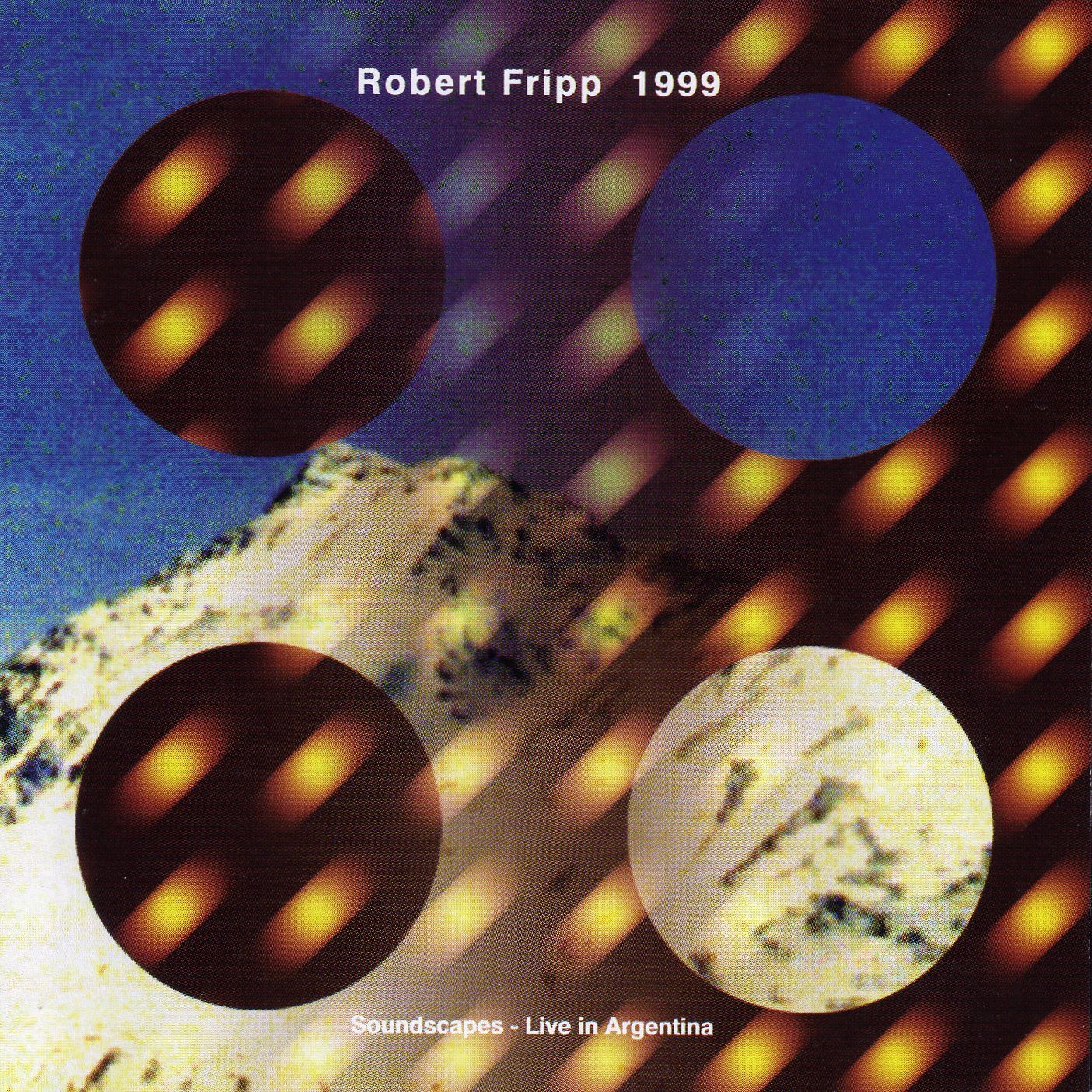
Robert Fripp - 1994 "1999" Soundscapes-Live In Argentina

The five selections that make up Robert Fripp's 1999 album were selected from 12 different live, improvised performances recorded in Buenos Aires, Argentina in 1994. And although some King Crimson fans will be confused by Fripp's musical departure, he's said that his soundscape material is his most immediate and personal work, since the improvised performances can change from night to night, depending on the circumstances. Also, it is pretty fascinating just how many different tones, colors, and textures Fripp creates with just a guitar, guitar synthesizer, and effects pedals (it sounds almost like a full electronic orchestra at times). Fripp also chose not to edit or cut any of the songs on 1999 (except for one), so the songs sound exactly the way they did when Fripp first improvised them in front of an Argentinean audience back in '94. If you want to check out Fripp's Frippertronics technique, which he talks about often in interviews (Fripp describes the technique as being based on "delay, repetition, and hazard"), 1999 is an adequate introduction.

"1999" is, if I'm not mistaken, the first album by Robert Fripp featuring solely his soundscapes performances (differentiated from Frippertronics as being a wholly digital experience whereas Frippertronics relied on tape loops). Essentially, it is Fripp, his guitar, a series of effects and looping equipment. It is not music that is for everyone-- for those familiar with Fripp's guitar work with King Crimson, this is not the sort of jaw dropping stuff he played with that band, instead it is similar to his work with Brian Eno-- in fact ambient music. In addition, it is wholly improvised, so all structure, implied or not, is spontanteous. And without such things as concrete melody, this music can often be extremely difficult to deal with.

Having stated that, "1999"-- five unedited live recordings from 1994 is a decent example of the form (though not the best-- I've reserve that for "A Blessing of Tears"). The music moves between dark and haunting ("1999"), horrific ("2000"), achingly beautiful ("2001"), meandering (the appropriately titled and fortunately only edited track on the record, "Interlude"), and gentle ("2002"). Remarkably, the only track I really dislike is the "Interlude", which comes closest to sounding like a guitar, the rest has an orchestral feel to it, the pure amount of noise generated at a minimum is pretty impressive.

If you're new to soundscapes, start with the easier to find "A Blessing of Tears", but if you're familiar with this work, track this one down, it is an interesting and rewarding release.

Robert Fripp's "1999" CD from 1994 was released during a time when the legendary guitarist was making a major comeback. King Crimson had returned after a decade-long absence and Fripp re-emerged with his first solo performances in almost as long. 1994 also marked the birth of Fripp's 'soundscaping' technique which was and still is an extension of his 'Frippertronic' experiments of the 1970's and '80's.

Instead of using two tape machines as had been the norm with 'Frippertronics', Soundscapes utilized digital technology and guitar-synthesizers to create and loop the endless mass of sound created by Fripp from his guitar. The idea was not a new one but the sound definitely was.

Unlike the later Soundscape albums which consist mostly of layered calm atmospheric sounds, "1999" mostly consists of giant crescendo-like pieces that begin from pure silence and slowly develop into harsh and sometimes abrasive frightening walls of sound. The opening two pieces (1999 and 2000) follow this manner and are quite unsettling and chilling. "2001" is a more calmer piece but still has the same principle as the first two tracks. "Interlude" is an edited piece from a longer performance and is quite experimental with its sounds which ping-pong between the speakers. Finally, to close the album, "2002" points the direction in which Fripp would eventually take his Soundscapes as it consists of beautiful ambient layered sounds.

"1999" has become somewhat difficult to find in recent years but if your a fan of King Crimson, Robert Fripp and Soundscapes, this CD is definitely a must. This was the beginning of a new Fripp trademark which continues to this day and displays him at his most experimental and most unpredictable. Recommended!!!

Track Listing:

1. 1999 Pt. 1 (16:08)
2. 2000 (16:02)
3. 2001 (12:52)
4. Interlude (3:59)
5. 2002 (8:29)

Total Time: 57:30

Personnel:

- Robert Fripp / guitar

Saturday, December 9, 2017

Trey Gunn - 2001 "Live Encounter"

Trey Gunn played in enough rock bands in his formative '80s years to learn how to become a star in popular music -- and then did a 180 into the jazz/fusion thicket. Gunn graduated from keyboards to guitar, then bass to Chapman stick before discovering the customized Warr guitar (which he calls a "touch guitar" because of its tapping response). With progressive rock juggernaut King Crimson since 1994, Gunn's Live Encounter CD goes even further outside of standard rock than Crimson's excursions -- blending Eastern and other world music styles with jazz/fusion rhythms and an against-the-grain attitude. With Gunn playing the ten-string and Joe Mendelson the eight-string Warr guitar, plus Tony Geballe adding electric guitar unorthodoxy on the opening "Dziban," it's deliciously difficult to discern who's playing what over drummer Bob Muller's 7/4-timed groove. Most of the early material is from Gunn's outstanding 1996 studio CD, The Third Star, with a couple exceptions. "The Glove," from 2000's even-better The Joy of Molybdenum, literally showcases Muller's leftism -- the drummer plays mounted tabla drums to the side of his drum kit in the intro before providing a bottom-heavy beat for solos by Geballe and Gunn. Warr guitars are capable of everything from bass-like bottom and distorted power chords to the clean, Crimson-like intertwining lines on "Sirrah." Another piece from The Third Star, "Arrakis," features psychedelia by Geballe and Mendelson over Gunn's monolithian lower-register notes and Muller's clever, percussive arsenal. The tribal, snake-charming closer, "Rune Song: The Origin of Water," beats the odds for any genre by featuring no solos over eight minutes. Clearly, these are virtuoso players who could play traditional jazz but choose to play more outside and emphasize the whole over the singular parts. High artistic marks and Gunn's side job with Crimson allow the Trey Gunn band enough currency -- against all popular music odds -- for the occasional studio recording session and these live encounters.

King Crimson 'Warr Touch' guitarist Trey Gunn's live show is the ultimate balance of power & symmetry - he gracefully intersperses rock, funk, ambient & world beat elements with the precision of a Swiss watchmaker. Joined by multi-percussionist Bob Muller, guitarist Tony Geballe & second 'Warr Touch' guitarist Joe Mendelson, Gunn has finally captured the band in its true essence, raw & bursting with energy. This is an enhanced CD that includes live Quicktime footage, assembled & mixed during Gunn's early 2000's tour with King Crimson on a double-bill with Tool.

Trey Gunn is still best known as a member of the most recent incarnation of King Crimson, playing his Warr Touch guitar, a variation on the Chapman Stick. Gunn's work with Crimson carries over into his own ensemble, except instead of holding down the bass player's role, he stretches out into some scintillating lead work that owes a debt to his mentor, Robert Fripp, especially the long, undulating sustained melodies. Teaming up with another Warr guitarist, Joe Mendelson, guitarist Tony Geballe, and drummer Bob Muller, Gunn shows that 2000's The Joy of Molybdenum was no studio fluke, as he brings the same hell-bent fury and sky-scraping architecture to the live performances captured here. Jettisoning the vocals that often make King Crimson sound like two different bands--one a quirky pop group with Adrian Belew singing, another storming the gates of instrumental heaven--Gunn's band sets their sites on the instrumental heaven, with roles shifting in the band as guitars become percussion instruments and drums become melodic. But topping it all are elaborate guitar and Warr guitar leads veering from African style cross-picking to feedback frenzies.

These live recordings were taken from tours in September 2000 and February 2001.

http://jazz-rock-fusion-guitar.blogspot.com/search?q=trey+gunn

Track listing:

1. Dziban 6:06
2. The Glove 5:35
3. Kuma 5:26
4. Hierarchtitiptitoploftical 3:38
5. Sirrah 5:15
6. Arrakis 7:44
7. Tehlikeli Madde 5:14
8. Brief Encounter 4:36
9. Rune Song: The Origin Of Water 7:56

Personnel:

Trey Gunn 10-string Warr Guitar
Joe Mendelson 8-string Warr Guitar, Ashbory Rubber Bass
Tony Geballe Electric Guitar, 12-string Acoustic Guitar
Bob Muller Drums, Hand drums, Percussion

Monday, October 30, 2017

Weather Report - 1972 [2004] "I Sing The Body Electric"

I Sing the Body Electric is the second album released by Weather Report from 1972. The album includes two new members of the band: percussionist Dom Um Romão and drummer Eric Gravatt. The last three tracks were recorded live in concert in Tokyo, Japan on January 13, 1972. These tracks have been edited for this album and can be heard in their entirety on Weather Report's 1972 import album Live in Tokyo.
The album takes its title from an 1855 poem by Walt Whitman, also a 1969 short story by Ray Bradbury.

Like the weather itself, this band would assume a new shape with virtually every release -- and this album, half recorded in the studio and half live in Tokyo, set the pattern of change. Exit Airto Moreira and Alphonse Mouzon; enter percussionist Dom Um Romao, drummer Eric Gravatt, and a slew of cameo guests like guitarist Ralph Towner, flutist Hubert Laws, and others. The studio tracks are more biting, more ethnically diverse in influence, and more laden with electronic effects and grandiose structural complexities than before. The live material (heard in full on the import Live in Tokyo) is even fiercer and showcases for the first time some of the tremendous drive WR was capable of, though it doesn't give you much of an idea of its stream of consciousness nature.

I Sing The Body Electric is a very obscure collection of music. It almost completely ignores the ambient sound that was explored by its predecessor. The Weather Report's eponymous debut experimented with an atmospheric approach to Jazz music, expanding on the musical concepts found in albums like Miles Davis' In A Silent Way. But I Sing The Body Electric follows a very different objective, the music seems to have more in common with the experimental nature of Progressive rock than Jazz. This time drawing influence from albums like Pink Floyd's Ummagumma, as the compositions seem to question all rules of musical convention, while leaving us to roam through various musical landscapes.

The opening song, "The Unknown Soldier", completely diverts itself away from the traditional etiquettes of Jazz orchestration. It is a voyage through the abstract, expressing an enigmatic philosophy for us to decipher. Eric Gravatt establishes a rhythmic landscape with his drumming, and from there, the other instruments begin to erupt with sounds that tend to project contrasting moods- from inducing an ominous environment to expressing a more calming sensation. Even Eric Gravatt's drumming, who often provides a delicate percussive rhythm, also has his moments of intensive of solos. "The Unknown Soldier" is a very interesting piece because we have absolutely no idea where the musicians are taking us in this musical voyage. And before we even get the chance to fully grasp the concept behind this song, it fades into silence.

"The Moors", on the other hand, follows a more conventional approach. It opens with a solo performance on an acoustic guitar. The orchestral arrangement is very spastic, following its own pace while remaining loyal to the album's esoteric plot. But this guitar solo exists for a purpose, it's our passage into a mesmerizing jam. This is actually a very gentle performance, Wayne Shorter's saxophone asserts itself as the centerpiece and his deliveries convey a very soothing tone. "Crystal" and "Second Sunday In August" follow a similar musical style, as they return to the atmospheric textures explored in the previous album, while at times even transcending into psychedelia.

The final section of the album contains an assortment of live recordings from a performance in Japan, yet another connection to the compositional structure of Ummagumma. It opens with "Medley: Vertical Invader, T.H., Dr. Honorius Causa" and ends with "Directions", and right from the beginning, without any hesitation, the musicians deliver a set filled with relentless Jazz Fusion. I mean, this performance explores every aspect of the genre- releases of musical spontaneity, long instrumental voyages that transcend the boundaries of Progressive rock and Psychedelia, and of course, eruptions of dextrous solos from each musician. In the end, I Sing The Body Electricintroduces itself as an album written by a band that is still trying to decide what kind of music it is that they want to produce. It's going to be a very interesting experience for the listener to discover how much this band has evolved since the release of their debut the previous year, as The Weather Report are still exploring musical possibilities and expanding their sound. This is a very experimental album and one that requires a commitment from the listener to understand its plot. My advice is to open all of your senses to the piece at hand. Try and experience all it has to offer, meditate on every sound, and the music itself will reveal its meaning.

http://jazz-rock-fusion-guitar.blogspot.com/search?q=weather+report

Tracks Listing

1. Unknown Soldier (7:57)
2. The Moors (4:40)
3. Crystal (7:16)
4. Second Sunday in August (4:09)
5. Medley: T.H./Dr. Honoris Causa (10:10)
6. Surucucus (7:41)
7. Directions (4:35)

Total Time: 46:28

Line-up / Musicians

- Eric Gravatt / drums
- Don Um Romao / percussion
- Wayne Shorter / soprano & tenor saxophones
- Miroslav Vitous / bass
- Joe Zawinul / acoustic & electric pianos, ARP 2600 synthesizers

Special Guests

    Andrew White - English horn ("Unknown Soldier" only)
    Hubert Laws, Jr. - Flute ("Unknown Soldier" only)
    Wilmer Wise - D and piccolo trumpets ("Unknown Soldier" only)
    Yolande Bavan - Voice ("Unknown Soldier" only)
    Joshie Armstrong - Voice ("Unknown Soldier" only)
    Chapman Roberts - Voice ("Unknown Soldier" only)
    Roger Powell - Consultant (synthesizer programming) ("Unknown Soldier" only)
    Dom Um Romão - Percussion ("The Moors" only)
    Ralph Towner - 12-string guitar ("The Moors" only)

Monday, August 14, 2017

Soft Machine - 1981 [2010] "Land Of Cockayne"

Digitally remastered edition of this 1981 release, the final album from the British Prog/Art Rock band. By the time the album was recorded, the band was comprised of keyboard player and saxophonist Karl Jenkins and drummer John Marshall. The duo were joined by musicians such as Jack Bruce, the returning Allan Holdsworth, Dick Morrissey and Ray Warleigh to produce a different, but polished album. Esoteric. 2010.

Land of Cockayne is the final album by the band Soft Machine, released in 1981. By this point, the band contained none of its original members. The title refers to the medieval land of plenty.
The album came about as the result of a project in which Karl Jenkins and John Marshall had been involved featuring top session musicians. The ad hoc band, Rollercoaster, had recently recorded the Stevie Wonder tribute album Wonderin' and decided to record another album together. Many of the musicians included on the Cockayne album would make up Soft Machine's final live line-up which played a six-night residency at Ronnie Scott's in 1984. This is the only Soft Machine album to feature a string section.

Excellent job remastering and adding an informative booklet to this wonderful cd. the title of this cd is based on a medieval vision, Land of Cockaigne, a poor man's paradise of effortless abundance. i've been a soft machine fan for decades and absolutely loved the progression in style this band developed. to my constant surprise are those critics to dislike the changes this band had made. change is the only thing permanent in life people. this cd is very melodic, and romantic, with added strings from the composition and musical direction of karl jenkins. jack bruce on bass, john marshall drums, john taylor, allan holdsworth, alan parker, dick morrissey and ray warleigh round out the band. most of the music is very beautifully composed and gentle. there are a couple of pieces that "rock" to round out the balance of style on this cd. sadly this is the last of the modern line up of soft machine cds. there has been a lot of older material being issued, which too is wonderful. but if you're a fan of progressive jazz, this is a delightful cd to own.

This, the final album recorded under the name Soft Machine, has been much maligned as being extraneous to the legacy of a band who forged a unique and truly progressive path through the late sixties and seventies. The truth of the matter is that it really is a Karl Jenkins project in all but name, but it should not be unfairly filed alongside the library music of the posthumously issued `Rubber Riff'.

One look at the players listed here should tell anyone that this not a bland collection of half-baked instrumentals, but quite a feast of surprisingly strong musical sketches. Jenkins leads (as keyboardist and conductor) such talents as the mighty Jack Bruce and Allan Holdsworth and twin sax maestros Ray Warleigh and Dick Morrissey. John Taylor contributes some first class Fender Rhodes, while Softs cohort John Marshall is as reliable and vibrant as ever on drums.

The album is a suite of varied instrumental pieces ranging from appealing, sunny pieces for sax and wordless vocals, melodic ambient excursions, string sections, and strong themes which allow ample time for quality soloing from the giants gathered here. Yes, it is easy on the ear, but it carries a gravitas which relates back to Jenkins' compositions for earlier incarnations of Soft Machine. The extended `Panoramania' and `Hot Biscuit Slim' both recall the joy of a beautifully scored head theme ushering in a collection of solos by musicians who by virtue of their pedigree make every note count. `Black Velvet Mountain' is a wonderful showcase for Allan Holdsworth's ability to get inside a melody, which like his work with the Bruford band of this era, exude the authority of a seasoned player. `Sly Monkey' offers further evidence that an Allan Holdsworth solo is a thing of great joy, especially when complemented by the equally majestic saxophone of Ray Warleigh.

Tracks Listing

1. Over 'n' above (7:24)
2. Lotus groves (4:57)
3. Isle of the blessed (1:56)
4. Panoramania (7:07)
5. Behind the crystal curtain (0:53)
6. Palace of glass (3:22)
7. Hot-biscuit Slim (7:27)
8. (Black) velvet mountain (5:10)
9. Sly monkey (5:00)
10. A lot of what you fancy... (0:35)

Total Time: 43:51

Personnel

Karl Jenkins – keyboards, synths, orchestration
John Marshall – drums, percussion
Jack Bruce – bass
Allan Holdsworth – lead guitar
John Taylor – electric piano
Ray Warleigh – alto saxophone, bass flute
Dick Morrissey – tenor saxophone
Alan Parker – rhythm guitar
Stu Calver – vocals, backing vocals
John G. Perry – vocals, backing vocals
Tony Rivers – vocals, backing vocals

Sunday, May 21, 2017

Miles Davis - 1974 [1991] "Get Up With It" [Japan Import]

Get Up with It is a compilation album by American jazz musician Miles Davis. Released by Columbia Records on November 22, 1974, it compiled songs Davis had recorded in sessions between 1970 and 1974, including those for the studio albums Jack Johnson (1971) and On the Corner (1972). In The Rolling Stone Album Guide (2004), J. D. Considine described the compilation's music as "worldbeat fusion".

One track, "Honky Tonk," was recorded in 1970 with musicians such as John McLaughlin and Herbie Hancock. "Red China Blues" had been recorded in 1972 before On the Corner, while "Rated X" and "Billy Preston" were recorded later that year with the band heard on In Concert. The remaining tracks were from 1973 and 1974 sessions with his current band including Pete Cosey.
"He Loved Him Madly" was recorded by Davis as his tribute to then-recently deceased Duke Ellington, who used to tell his audiences "I love you madly." English musician Brian Eno cited it as a lasting influence on his own work.

In a contemporary review, Rolling Stone magazine's Stephen Davis praised Davis' adventurousness and direction of his rhythm band, whom he called a "who's who of Seventies jazz-rock". Robert Christgau of The Village Voice wrote that, although Davis' recent albums have sounded slapdash with "noodling over a pick-up rhythm section," he still plays Get Up with It "since it contains over two hours of what sometimes sounds like bullshit: it's not exactly music to fill the mind. Just the room." In a 1981 review, Christgau wrote that only two of the six shorter songs—"Maiyisha" and "Honky Tonk"—make up "more than good" background music, but the two long pieces "are brilliant: 'He Loved Him Madly,' a tribute to Duke Ellington as elegant African internationalist, and 'Calypso Frelimo,' a Caribbean dance broken into sections that seem to follow with preordained emotional logic."
Alternative Press gave Get Up with It a rave review when it was reissued in 2000, calling it "essential ... the overlooked classic of psychedelic soul and outlandish improv ... representing the high water mark of [Davis'] experiments in the fusion of rock, funk, electronica and jazz". Stylus Magazine's Chris Smith said that it is "not an easy album to write, let alone think, about. It’s a bit more of an anything-goes hodgepodge than it is a sprawling masterwork, and is probably written about the least of all Miles’ electric work."

A confusing, bold, weird and remarkable statement that in many ways sums up a confusing bold weird and remarkable period of Davis' musical development. Tracks come from sessions between 1970 and 1974 (his last officially released studio material before his five year "retirement") and are of varying quality. I'm not a big fan of the straight blues "Red China Blues" which wastes a provocative title, and I don't feel like the closing 12 1/2 minutes of "Billy Preston" really goes anywhere interesting, though there are moments along its length when I'm entertained even if they don't stick in the memory after they're done. From here though, the quality level rockets upward, with the easy-going "Maiysha" next up quality-wise, making a nice groove that's suddenly derailed by a freaky Pete Cosey solo. "Mtume" is a fierce groover that shows off the great percussionist, but also allows for some nice interaction between the guitars and shows off his 70's "Pete Cosey group" in fine form - if this was a lightweight track, you can imagine how much better they can be. "Honky Tonk" is a nice, disjointed rhythm experiment from 1970 with many of the Bitches Brew players on it, including John McLaughlin who sounds great on this cut, though for me Miles' solo steals the show.

Then there's the great stuff, which numbers among the finest achievements Miles ever put down on tape: "Rated X" is an incredibly noisy, challenging and difficult piece of music, supposedly inspired as much by Stockhausen as any jazz antecedent. Miles sticks to a noisily dissonant organ here while electric guitar and electric sitar create churning, rhythmic patterns with very little in the way of "soloing" over a ferocious rhythm that the bass, drums, and percussion set up - a rhythm that Miles stops and starts on cue. This one's a bracing number that's not always what I'm in the mood for, but when I am ready to engage it, I don't know if he's ever been better. And as has been said many times here and elsewhere, the long tracks - "He Loved Him Madly" and "Calypso Frelimo," both over 32 minutes each - simply take the cake. "He Loved Him Madly" is a long, slow burning tribute to Duke Ellington in the year of his passing which builds over ambient rhythm and guitar into a fine flute solo setting the stage for an absolutely brilliant and gut-wrenching Davis trumpet solo. "Calypso Frelimo" is more "up," with a fast, dense opening sequence featuring solos by the horns, a slowed-down middle segment that gives a lot more (musical) space for everyone to work in, and then a return to the density and rocketing tempo of the beginning that allows the guitars to roam over the top, punctuated by brief trumpet statements (possibly meant to guide the proceedings). It's simply amazing, and each of the ten+ minute segments has its own flavor and character, though together they hold a cumulative power that the tracks separated probably wouldn't have garnered. Amazing stuff.


When Get Up with It was released in 1974, critics -- let alone fans -- had a tough time with it. The package was a -- by then customary -- double LP, with sessions ranging from 1970-1974 and a large host of musicians who had indeed played on late-'60s and early-'70s recordings, including but not limited to Al Foster, Airto, John McLaughlin, Reggie Lucas, Pete Cosey, Mtume, David Liebman, Billy Cobham, Michael Henderson, Herbie Hancock, Keith Jarrett, Sonny Fortune, Steve Grossman, and others. The music felt, as was customary then, woven together from other sources by Miles and producer Teo Macero. However, these eight selections point in the direction of Miles saying goodbye, as he did for six years after this disc. This was a summation of all that jazz had been to Davis in the '70s and he was leaving it in yet another place altogether; check the opening track, "He Loved Him Madly," with its gorgeous shimmering organ vamp (not even credited to Miles) and its elaborate, decidedly slow, ambient unfolding -- yet with pronounced Ellingtonian lyricism -- over 33 minutes. Given three guitar players, flute, trumpet, bass, drums, and percussion, its restraint is remarkable. When Miles engages the organ formally as he does on the funky groove that moves through "Maiysha," with a shimmering grace that colors the proceedings impressionistically through Lucas, Cosey and guitarist Dominique Gaumont, it's positively shattering. This is Miles as he hadn't been heard since In a Silent Way, and definitely points the way to records like Tutu, The Man with the Horn, and even Decoy when he re-emerged.
That's not to say the harder edges are absent: far from it. There's the off-world Latin funk of "Calypso Frelimo" from 1973, with John Stubblefield, Liebman, Cosey, and Lucas turning the rhythm section inside out as Miles sticks sharp knives of angular riffs and bleats into the middle of the mix, almost like a guitarist. Davis also moves the groove here with an organ and an electric piano to cover all the textural shapes. There's even a rather straight -- for Miles -- blues jam in "Red China Blues" from 1972, featuring Wally Chambers on harmonica and Cornell Dupree on guitar with a full brass arrangement. The set closes with another 1972 session, the endearing "Billy Preston," another of Davis' polyrhythmic funk exercises where the drummers and percussionists -- Al Foster, Badal Roy, and Mtume -- are up front with the trumpet, sax (Carlos Garrett), and keyboards (Cedric Lawson), while the strings -- Lucas, Henderson, and electric sitarist Khalil Balakrishna -- are shimmering, cooking, and painting the groove in the back. Billy Preston, the organist who the tune is named after, is nowhere present and neither is his instrument. It choogles along, shifting rhythms and meters while Miles tries like hell to slip another kind of groove through the band's armor, but it doesn't happen. The track fades, and then there is silence, a deafening silence that would not be filled until Miles' return six years later. This may be the most "commercial" sounding of all of Miles' electric records from the '70s, but it still sounds out there, alien, and futuristic in all the best ways, and Get Up with It is perhaps just coming into its own here in the 21st century.

Tracks Listing

Disc 1
1. He Loved Him Madly (32:20)
2. Maiysha (14:56)
3. Honky Tonk (5:57)
4. Rated X (6:53)

Disc 2
5. Calypso Frelimo (32:10)
6. Red China Blues (4:10)
7. Mtume (15:12)
8. Billy Preston (12:35)

Total time: 123:52

Personnel:

- Miles Davis / trumpet (3), electric trumpet with wah-wah (1,2,5-8), organ (1,2,4,5,7), electric piano (5)

With:
- Steve Grossman / soprano saxophone (3)
- John Stubblefield / soprano saxophone (5)
- Carlos Garnett / soprano saxophone (8)
- Dave Liebman / alto flute (1,5)
- Sonny Fortune / flute (2,7)
- Lester Chambers / harmonica (6)
- Pete Cosey / electric guitar (1,2,5,7)
- Dominique Gaumont / electric guitar (1,2,7)
- Reggie Lucas / electric guitar (1,2,4,5,7,8)
- John McLaughlin / electric guitar (3)
- Cornell Dupree / electric guitar (6)
- Khalil Balakrishna / electric sitar (4,8)
- Badal Roy / tabla (4,8)
- Herbie Hancock / clavinet (3)
- Keith Jarrett / Fender Rhodes electric piano (3)
- Cedric Lawson / Fender Rhodes electric piano (4,8)
- Michael Henderson / bass guitar
- Al Foster / drums (excl. 3)
- Billy Cobham / drums (3)
- Bernard Purdie / drums (6)
- James Mtume Foreman / percussion (excl. 3)
- Airto Moreira / percussion (3)
- Wade Marcus / brass arrangement (6)
- Billy Jackson / rhythm arrangement (6)

Releases information: Recordings made in NYC - 1970 (track 3), 1972 (4,6,8), 1973 (5) and 1974 (1,2,7)