Showing posts sorted by relevance for query robert fripp. Sort by date Show all posts

Tuesday, November 10, 2015

Robert Fripp & The League Of The Crafty Guitarists - 1986 "Live!"

Guitar Craft (GC) was a series of guitar and personal-development classes, founded and often presented by Robert Fripp, who is best known for his work with the rock band King Crimson. Guitar Craft courses introduced students to the New Standard Tuning and ergonomic playing with the plectrum (pick), often using steel-stringed, acoustic, shallow-body guitars from the Ovation Guitar Company.
By 2011 three-thousand students had completed the courses. Students who continue to practice Guitar Craft playing have been called "crafties". Notable crafties include Trey Gunn and the California Guitar Trio (all four of whom, with Fripp, constituted The Robert Fripp String Quintet) and Markus Reuter. Crafties have recorded several albums under the name of "Robert Fripp and the League of Crafty Guitarists", for example.
After 25 years, the Guitar Craft movement transformed its activities into Guitar Circles, which offer introductory courses and performances in Europe and the Americas. Guitar Circles meet in many cities; in particular, Seattle's Guitar Circle meets for practices and performances and also sponsors a school.

A guitar teacher, Fripp assembled this group of seventeen acoustic guitar players from his students and played shows doing his instrumentals. It takes that many guitars, playing the same parts, to recreate the volume, sustain, and fullness Fripp usually gets by using a couple of electric guitars himself (and there's also some electric music to prove that point). But the tone achieved by the acoustics is unique and as tense as Fripp's music usually is, this record is also surprisingly vibrant.

The League of Crafty Guitarists is a group which includes players from all over the world.
The group performs on acoustic steel string guitars tuned in Guitar Craft Tuning, which extends the sonic range of the traditional guitar tuning.
Its repertoire is constantly evolving and is open to all styles. The music remains true to a common conceptual approach, and includes a rich variety of original compositions. A characteristic and outstanding part of the repertoire are improvised and/or written group compositions, known as Circulations.
The LCG was founded in 1986 under the direction of Robert Fripp and toured worldwide until 1991. During this first period of activity several albums were released: “Live 1″, “Get Crafty”, “Live 2 – Live At The Victoriaville Festival”, “Show Of Hands” , “Live 3 – Intergalactic Boogie Express”.
The LCG returned to live performance in January 2002 under the direction of Hernan Nunez, and has toured Europe and Latin America since then. The release of a live album featuring the highlights of these tours is now in process.
Robert Fripp Soundscapes & The LCG toured Italy, Spain, Portugal, Argentina and the US between June 2006 and August 2009.
The RF & The LCG albums “Live At The Bottom Line, NYC, 1990″ and “Live in Argentina 2007′ were released by DGM Records in 2010 and 2012.
The group performed in Argentina in April 2015 with the ‘Compañia De Danza Lucia and Valentina Fusari’ at Teatro Independencia, Mendoza, and is now preparing for a tour of Chile in November.

"The League of Crafty Guitarists Live" is the culmination of Robert Fripp's Guitar Craft program. In these unorthodox classes, guitar experience wasn't even a prerequisite and some of the techniques pertained to housework and relaxation. After working with his students, Fripp took the group out on tour. While performed by a large group, the League of Crafty Guitarists enjoys that signature Robert Fripp sound. Most of the compositions are classically inspired guitar pieces. The challenging arrangements are mostly acoustic. Some of the songs feature blinding speed and six stringed accuracy. Others pieces create a dark and relaxed avant-garde soundscape. This group is significant in that it spawned a Guitar Craft movement. After the League had taken its course, Paul Richards, Bert Lams and Hideyo Moriya took this project to the next level and formed the California Guitar Trio. Newbies should check out "An Opening Act: On Tour With King Crimson." All in all, "The League of Crafty Guitarists Live" delivers a listen that is equally intelligent and enjoyable.

I bought this CD when it came out and still listen to it 3-4 times a year. The large guitar ensamble sounds great. The arrangements are simple, and that's appropriate for the unique recording situation -- not only was the recording a surprise but the concert itself. As a result, there's an urgency to the recording that keeps it fresh. Using a guitar class to render a cycle of songs was a risky move that allowed Fripp to also demonstrate the technique and tuning he developed and was advocating.

Superficially, background music. But only superficially. It might have something to do with some wiring in the background of the brain. Do all the flavors picked up by your tongue register at the tip? If you want to argue about it, in another way, think of Mozart, his mission, and the way he went about filling it. We now pretend that no good music is background music, but that means pretending there is no background.

I haven't counted the guitars. I would have said there were too many, if I hadn't actually heard the result. John McLaughlin would produce a mediocre result with six, in his Bill Evans album. Robert Fripp has used a large number, preposterously large, and not only gotten away with it, but done something memorable.

For those who started following Robert Fripp with King Crimson, the League of CG is a necessary part of the picture. An easier part than the soundscapes, and perhaps a necessary part of the preparation for them.

Tracks Listing

1. Guitar Craft Theme I: Invocation (5:18)
2. Tight Muscle Party At Love Beach (1:22)
3. The Chords That Bind (1:43)
4. Guitar Craft Theme III: Eye of the Needle (2:20)
5. All Or Nothing II (3:59)
6. Guitar Craft Theme II: Aspiration (3:58)
7. All Or Nothing I (4:44)
8. Circulation (3:54)
9. A Fearful Symmetry (3:24)
10. The New World (9:55)
11. Crafty March (3:15)

Total Time: 43:52

Personnel:

Acoustic Guitar: Robert Fripp, Andrew Essex, Bryan Helm, Claude Gillet, Curt Golden, Danny Howes, David Mazza, James Hines III, John Durso, John Miley, John Novak, Jon Diaz, Mark Tomacci, Mike Gorman (3), Roy Capellaro, Terry Blankenship, Tony Geballe, Trey Gunn

Artwork [Cover Photograph Of Robert Fripp] – Richard Haughton
Artwork [Photograph Of The Lcg At George Washington University] – Toyah Willcox
Cover – Bill Smith Studio

Monday, October 5, 2015

Various Artists - 1996 "Sometimes God Hides" Young Persons Guide To Discipline Vol. I

On Aug. 9, 1996 I seen King Crimson (Double Trio) at the H.O.R.D.E. Fest with other bands including, Lenny Kravitz, Blues Traveler, Rusted Root..etc.. Wearing my Larks Tongues In Aspic T-Shirt some young gentleman approached me asking if I liked King Crimson, I said of course! and he handed me a post card, told me fill it out and they would send me a sampler CD, I did and a few weeks later I recieved this in the mail.

Sometimes God Hides is a musical stew made up of guitar-laden progressive and jazz-rock tracks, mainly from King Crimson and their solo members. With the likes of Adrian Belew and Robert Fripp leading the way, this sampler from the DGM label offers a kaleidoscopic journey through the amazing guitar craft of these talented musicians, along with some excitingly vivid excursions from Trey Gunn and the California Guitar Trio and a peculiar mix of new age and ambient from the Europa String Choir. Subtitled "The Young Persons' Guide to Discipline," these 23 tracks open up a whole new world of guitar and string manipulation, fusing familiar techniques with aberrant rhythms, electronic pastiches, and appealing yet incongruous string arrangements. Cuts such as Belew's "Burned By the Fire We Make" and King Crimson's "Red" (from an official bootleg album out of Argentina) tread on cordial rock ground but are still entertaining while, at the other end of the spectrum, tracks like Peter Hammill's haunting a cappella entitled "A Better Time" and "Voices of Ancient Children" from Los Gauchos Alemanes swoop and soar with a blend of new age mystery and modernized ambience. While the focal point of most of the songs is the guitar, the surrounding atmosphere of trancelike keyboard runs and unique string applications creates a multi-dimensional effect throughout each track. Moody and eccentric, this sampler makes for a truly peculiar instrumental journey. 

This CD is a VERY GOOD sampler of the various artists signed to Discipline Global Mobile (Robert Fripp's label). It features 23 long clips of the music by those artists, and focuses mainly (as should be expected) on Fripp's bands and offshoots.
The "flow" of the album is very good, and actually works as an album, even if it is only a sampler.
The thing about King Crimson's/Robert Fripp's music is that after you discover it, and begin digging for the music that's "near" to it (band member's solo careers, Fripp's other bands), you find a LOT of great music. This CD is a great way of having a general view of all that music.


An excellent overview of music available on Robert Fripp's "Discipline Global Mobile" label. If you've already expanded your mind with King Crimson, this may blow your mind.

Track listing / Personnel:
  
01. Cage - King Crimson
02. Red - King Crimson
03. Burned By The Fire We Make - Adrian Belew
04. Sleepwalk - California Guitar Trio
05. Mingled Roots - Tony Levin
06. Midnight Blue - Robert Fripp
07. Hope - Robert Fripp String Quintet
08. THRaKaTTaK I - King Crimson
09. Radiophonic II - Robert Fripp
10. Voices Of Ancient Children - Los Gauchos Alemanes
11. A Better Time (Acapella) - Peter Hammill
12. 2006 - Robert Fripp
13. Train To Lamy Suite - California Guitar Trio
14. The Last Three Minutes - Ten Seconds
15. The Third Star - Trey Gunn
16. Sermon On The Mount - Europa String Choir
17. Be Longing - Gitbox
18. Scanning II - Robert Fripp
19. Inductive Resonance - League of Gentlemen
20. Real Life - Trey Gunn
21. A Connecticut Yankee In The Court Of King Arthur - Robert Fripp & The League Of Crafty Guitarists
22. Epitaph - King Crimson
23. Sometimes God Hides - Robert Fripp

Friday, July 20, 2018

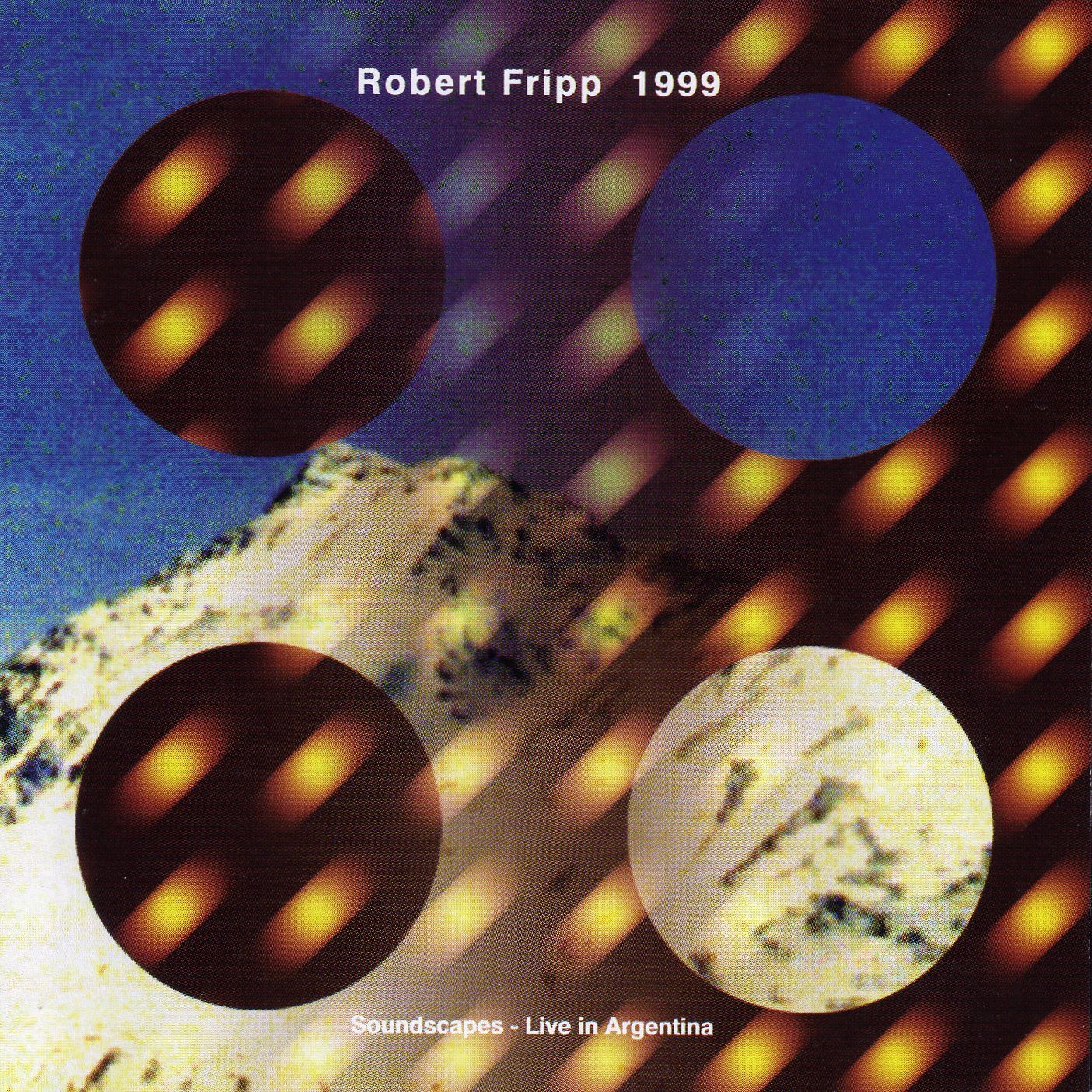
Robert Fripp - 1994 "1999" Soundscapes-Live In Argentina

The five selections that make up Robert Fripp's 1999 album were selected from 12 different live, improvised performances recorded in Buenos Aires, Argentina in 1994. And although some King Crimson fans will be confused by Fripp's musical departure, he's said that his soundscape material is his most immediate and personal work, since the improvised performances can change from night to night, depending on the circumstances. Also, it is pretty fascinating just how many different tones, colors, and textures Fripp creates with just a guitar, guitar synthesizer, and effects pedals (it sounds almost like a full electronic orchestra at times). Fripp also chose not to edit or cut any of the songs on 1999 (except for one), so the songs sound exactly the way they did when Fripp first improvised them in front of an Argentinean audience back in '94. If you want to check out Fripp's Frippertronics technique, which he talks about often in interviews (Fripp describes the technique as being based on "delay, repetition, and hazard"), 1999 is an adequate introduction.

"1999" is, if I'm not mistaken, the first album by Robert Fripp featuring solely his soundscapes performances (differentiated from Frippertronics as being a wholly digital experience whereas Frippertronics relied on tape loops). Essentially, it is Fripp, his guitar, a series of effects and looping equipment. It is not music that is for everyone-- for those familiar with Fripp's guitar work with King Crimson, this is not the sort of jaw dropping stuff he played with that band, instead it is similar to his work with Brian Eno-- in fact ambient music. In addition, it is wholly improvised, so all structure, implied or not, is spontanteous. And without such things as concrete melody, this music can often be extremely difficult to deal with.

Having stated that, "1999"-- five unedited live recordings from 1994 is a decent example of the form (though not the best-- I've reserve that for "A Blessing of Tears"). The music moves between dark and haunting ("1999"), horrific ("2000"), achingly beautiful ("2001"), meandering (the appropriately titled and fortunately only edited track on the record, "Interlude"), and gentle ("2002"). Remarkably, the only track I really dislike is the "Interlude", which comes closest to sounding like a guitar, the rest has an orchestral feel to it, the pure amount of noise generated at a minimum is pretty impressive.

If you're new to soundscapes, start with the easier to find "A Blessing of Tears", but if you're familiar with this work, track this one down, it is an interesting and rewarding release.

Robert Fripp's "1999" CD from 1994 was released during a time when the legendary guitarist was making a major comeback. King Crimson had returned after a decade-long absence and Fripp re-emerged with his first solo performances in almost as long. 1994 also marked the birth of Fripp's 'soundscaping' technique which was and still is an extension of his 'Frippertronic' experiments of the 1970's and '80's.

Instead of using two tape machines as had been the norm with 'Frippertronics', Soundscapes utilized digital technology and guitar-synthesizers to create and loop the endless mass of sound created by Fripp from his guitar. The idea was not a new one but the sound definitely was.

Unlike the later Soundscape albums which consist mostly of layered calm atmospheric sounds, "1999" mostly consists of giant crescendo-like pieces that begin from pure silence and slowly develop into harsh and sometimes abrasive frightening walls of sound. The opening two pieces (1999 and 2000) follow this manner and are quite unsettling and chilling. "2001" is a more calmer piece but still has the same principle as the first two tracks. "Interlude" is an edited piece from a longer performance and is quite experimental with its sounds which ping-pong between the speakers. Finally, to close the album, "2002" points the direction in which Fripp would eventually take his Soundscapes as it consists of beautiful ambient layered sounds.

"1999" has become somewhat difficult to find in recent years but if your a fan of King Crimson, Robert Fripp and Soundscapes, this CD is definitely a must. This was the beginning of a new Fripp trademark which continues to this day and displays him at his most experimental and most unpredictable. Recommended!!!

Track Listing:

1. 1999 Pt. 1 (16:08)
2. 2000 (16:02)
3. 2001 (12:52)
4. Interlude (3:59)
5. 2002 (8:29)

Total Time: 57:30

Personnel:

- Robert Fripp / guitar

Wednesday, August 8, 2018

King Crimson - 1981 [1989] "Discipline"

Discipline is the eighth studio album by English progressive rock band King Crimson, released on 22 September 1981 by E.G. Records in the United Kingdom and by Warner Bros. Records in the United States. This album was King Crimson's first album following a seven-year hiatus. Only founder Robert Fripp and later addition Bill Bruford remained from previous incarnations. The rest of the band was Adrian Belew (guitar, lead vocals) and Tony Levin (bass guitar, Chapman Stick, backing vocals). The album resulted in a more updated 1980s new wave-oriented sound.

After seven years away from the public King Crimson returned in 1981 with a brand-new incarnation. Joining Robert Fripp and Bill Bruford are ex-Zappa/Bowie guitarist, Adrian Belew and ace session and Peter Gabriel bassist, Tony Levin. Incorporating sounds reminiscent of the resonant chimes of ancient gamelan music and the sleek, clear lines of modern minimalism,this Anglo-American combination forged a startlingly different musical vocabulary. Frame By Frame, Thela Hun Ginjeet and the album’s title track in particular, showcase Belew and Fripp’s dovetailing guitar parts and Levin and Bruford’s cyclical grooves, forming a mesmeric sound unlike anything heard before on any previous King Crimson albums. The shimmering, hypnotic textures of The Sheltering Sky and savagely raucous Indiscipline provide aleatoric counterweights to the album’s tightly-controlled complexity.

Discipline reached number 41 in the UK Albums Chart and received mixed to positive reviews. John Piccarella's review in Rolling Stone praised the talent and artistry of the four musicians of King Crimson, particularly Belew and Fripp's "visionary approach to guitar playing", but criticized the "arty content" of the album itself, concluding "Here's hoping that, unlike every other King Crimson lineup, this band of virtuosos stays together long enough to transform all of their experiments into innovations." Robert Christgau described the album as "not bad--the Heads meet the League of Gentlemen.

When King Crimson leader Robert Fripp decided to assemble a new version of the band in the early '80s, prog rock fans rejoiced, and most new wave fans frowned. But after hearing this new unit's first release, 1981's Discipline, all the elements that made other arty new wave rockers (i.e., Talking Heads, Pere Ubu, the Police, etc.) successful were evident. Combining the futuristic guitar of Adrian Belew with the textured guitar of Fripp doesn't sound like it would work on paper, but the pairing of these two originals worked out magically. Rounding out the quartet was bass wizard Tony Levin and ex-Yes drummer Bill Bruford. Belew's vocals fit the music perfectly, sounding like David Byrne at his most paranoid at times (the funk track "Thela Hun Ginjeet"). Some other highlights include Tony Levin's "stick" (a strange bass-like instrument)-driven opener "Elephant Talk," the atmospheric "The Sheltering Sky," and the heavy rocker "Indiscipline." Many Crimson fans consider this album one of their best, right up there with In the Court of the Crimson King. It's easy to understand why after you hear the inspired performances by this hungry new version of the band.

"Matte Kudasai" (Japanese: 待って下さい) literally means "please wait". The original release of Discipline featured only one version of "Matte Kudasai", with a guitar part by Robert Fripp that was removed from the track on a subsequent release of the album. The latest versions of the album to be released contains both versions of the song – track 3, "Matte Kudasai", without Robert Fripp's original guitar part; and track 8, "Matte Kudasai (alternative version)", with the guitar part included.

The lyrics of "Indiscipline" were based on a letter written to Adrian Belew by his then-wife Margaret, concerning a sculpture that she had made.

"Thela Hun Ginjeet" is an anagram of "heat in the jungle". When it was first performed live, some of its lyrics were improvised around an illicit recording made by Robert Fripp of his neighbours having a vicious argument when he was living in New York; this recording is featured on the track "NY3" on Fripp's solo album Exposure.[citation needed] While the track was being recorded for the Discipline album, Adrian Belew, walking around Notting Hill Gate in London with a tape recorder looking for inspiration, was harassed first by a gang and then by the police. On returning to the studio, he gave a distraught account to his bandmates of what had just happened to him. This account was recorded by Fripp, without Belew's knowledge, as well and is featured on the Discipline version of the track (as well as almost all live versions), in place of those earlier lyrics that were based on Fripp's New York recording.

"The Sheltering Sky" is named after and partially inspired by the 1949 novel of the same name by Paul Bowles. Bowles is often associated with the Beat generation, which would be an inspiration for King Crimson's subsequent studio album Beat.

Later versions of Discipline featured this design by Steve Ball.
Live versions of "Elephant Talk", "Indiscipline", and "Thela Hun Ginjeet" included partial vocal improvisation during spoken-word parts. One such example can be found in the 13 August 1982 performance, which, as of 12 August 2014, was still available for download in both MP3 and FLAC formats from DGM.

The back cover features the statement, "Discipline is never an end in itself, only a means to an end". King Crimson purchased the rights to use a variation on a copyrighted Celtic knot design by George Bain on the LP cover. In later releases, it was replaced by a knotwork designed by Steve Ball on commission from Robert Fripp. Ball's design is also used as the logo of Discipline Global Mobile, the music label founded by Fripp, which has become the label for King Crimson, Fripp, and associated artists.

Track listing:

1. Elephant Talk 4:42
2. Frame By Frame 5:08
3. Matte Kudasai 3:45
4. Indiscipline 4:31
5. Thela Hun Ginjeet 6:25
6. The Sheltering Sky 8:22
7. Discipline 5:02

Personnel:

Adrian Belew – electric guitar, lead vocals (1-5)
Robert Fripp – electric guitar, devices (Frippertronics)
Tony Levin – Chapman Stick (1-2, 4, 6-7), backing vocals (2, 5), bass (3, 5)
Bill Bruford – drums (1-5, 7), slit drum (6-7)

Monday, July 4, 2016

King Crimson - 1992 "The Great Deceiver" (Live 1973-1974) [4 CD Box]

The Great Deceiver is a live 4CD box set by the band King Crimson, released on Virgin Records in 1992. In 2007, it was reissued as two volumes of 2 CDs each. The track listing on the volume 1 CD 1 lists 11 tracks, incorrectly listing The Talking Drum and the abbreviated "Larks' Tongues in Aspic, Part Two" from the Pittsburgh show from CD 1 of the volume 2 set.
The box set features live recordings of the band from 1973 and 1974. All recordings feature the lineup of Robert Fripp, John Wetton, David Cross and Bill Bruford. Jamie Muir, who left the band in early 1973, is not featured on the set. The band's 1974 concert from Providence, Rhode Island is presented in its entirety on CDs One and Two; this was the second-to-last live concert ever performed by this incarnation of King Crimson.
King Crimson's "Walk On" music in 1973-74 was an excerpt of "The Heavenly Music Corporation," from the album (No Pussyfooting) by Robert Fripp and Brian Eno. These "walk-ons" are reproduced here, and indexed as separate tracks.
Three recordings from this box set were previously available on other King Crimson albums, albeit in slightly altered forms. An abbreviated version of "We'll Let You Know" appears on the Starless and Bible Black album, released in 1974. Similarly, an abbreviated version of "Providence" was included on the Red album, also released in 1974. The live performance of "21st Century Schizoid Man" on CD Two was issued in 1975 as part of the album USA, featuring overdubbed violin from Eddie Jobson.
Many of the recordings on this album are band improvisations. "The Law of Maximum Distress" appears in two sections, as the tape ran out in the middle of the song. Much of the missing material seems to be used on "The Mincer" from Starless and Bible Black. As Robert Fripp notes in the CD jacket, "Most live recording follows the policy of two machines in use simultaneously to meet an eventuality such as this. We learn."
The liner notes to The Great Deceiver run to 68 pages. These notes feature comments from Fripp, Wetton and Cross, annotated excerpts from Fripp's 1974 diary, reviews of the previous King Crimson box set, Frame by Frame: The Essential King Crimson (1991), and a complete listing of all concerts performed by the band in 1973 and 1974.
The track "Exiles" is credited to Fripp/Wetton/Palmer-James on this box set. The correct credit, as listed on Larks' Tongues in Aspic and confirmed by BMI's records, is Cross/Fripp/Palmer-James. Despite having no legal co-writing credit for the song, John Wetton has indicated in interviews that he wrote the bridge for "Exiles.

In King Crimson's extensive catalog of archival recordings and box sets, The Great Deceiver (Live 1973-1974) is the undisputed winner, the item truly worth acquiring. The four-CD set Frame by Frame, released 18 months earlier, was light on material previously unavailable and included a few edits and overdubs on classic King Crimson tracks that shocked the fans. Epitaph, another four-CD collection culled from the group's first live shows in 1969, boasted understandably flawed sound and more repetitive content. But The Great Deceiver has it all. Over four discs, the set chronicles the on-stage activity between October 1973 and June 1974 of the most powerful King Crimson lineup. Robert Fripp, John Wetton, David Cross, and Bill Bruford were mostly performing material from their previous two LPs (Larks Tongues in Aspic and Starless and Bible Black). Yes, the track list remains pretty much the same from one show to another, but the group approaches each night from a different angle, changing the arrangements on the fly to suit the prevailing mood -- check out the chameleon-esque "Easy Money," presented in four guises, for tangible proof. Most importantly, the group performed unpredictable improvisations that embodied the struggle between order and chaos that Fripp thrived to express in penned songs like "Starless" and "Fracture." The live tapes have been beautifully mastered so that the music hits hard without losing the subtle nuances of Cross' violin. At the time of its release, The Great Deceiver filled a gap in the group's discography (the live album USA had not been officially reissued yet), but even after tons of additional concerts from that period were released by Fripp's label, Discipline, this box set still stands as the definitive argument to consecrate the 1973-1974 Crimson as its most exciting incarnation.

The Great Deceiver (Live 1973-1974). A four-CD box set that brings together excerpts and complete shows from six dates beginning in October, 1973 and ending in June, 1974, it demonstrates just how much of an improvising band this incarnation of King Crimson was—perhaps the greatest improvising line-up in the group's long career.

The version of King Crimson that released Larks' Tongues In Aspic (DGM, 1973) was by far the heaviest and most guitar-centric version of Crimson to date. The previous band, featuring recently-deceased bassist/singer Boz Burrell, reedman/mellotronist Mel Collins and drummer Ian Wallace, had fallen apart on tour, with everyone except Fripp hell-bent on moving towards a more rock and blues-centric approach. Fripp's new version of Crimson would bring together a group of players from diverse backgrounds, but who demonstrated almost instantaneous chemistry.

Drummer Bill Bruford had departed from progressive rockers Yes as the group edged towards superstardom on the heels of Close To The Edge (Atlantic, 1972). While it seemed a curious choice at the time, anyone familiar with Bruford's subsequent career knows that in many ways he's a perpetual student, making the majority of his career choices based on art rather than commerce. Bassist/vocalist John Wetton was a member of Family, a curious but distinctive group that never achieved the success it deserved. Violinist David Cross was the new name, but lent the group a new texture and classicism combined with an edgy approach to soloing. Those familiar with the free improv community would have found the inclusion of percussionist Jamie Muir—who left shortly after recording Larks' Tongues In Aspic—an odd choice. But, interestingly enough, Muir would prove to be the most extroverted showman the group ever had; leaping around the stage with chains, dressed in an animal skin and spewing fake blood.

While even the earliest Crimson from 1969 would include improvisations that went well-beyond mere extended soloing, the 1973-1974 edition of the group would allow composed tunes to break down into lengthy free pieces that might magically find their way into the next structured song. Or, perhaps, not. While a four-CD set of material culled from performances of songs from only three studio albums is bound to have some repetition, does anyone really need to hear four versions of "Easy Money"?

The answer is an unequivocal yes. Even twenty-four hours represent a significant difference in how this group approached form-based material. The June 29, 1974 version of "Easy Money" breaks down from its aggressive edge into a softer solo section that, unlike the studio version, never returns to a final verse. Instead, it gradually evolves into a vamp that pairs warm chordal work from Fripp and a mellotron flute solo from Cross. The following night—Crimson's second-to-last show of its final tour before Fripp would dissolve the band (something nobody was aware of that point)—manages to find its way back to the final verse, but not before some frenzied high-octane soloing from Fripp threatens to completely unhinge the proceedings. The group was clearly in high spirits, and Fripp— considered by most at the time to be a serious, reserved type—manages to break Wetton up during the first verse by responding to the bassist's vocal line with one of the most extreme note bends in guitar history.

Even two versions of "Fracture"—Fripp's most convoluted composition to date and still a challenge for aspiring guitarists—end up being different enough to justify inclusion. Despite the detailed structure of the song, the shades of color added by everyone- -and the open-ended section that immediately precedes the propulsive final third—illustrates just how open-minded this group was, even with the most regimented material. The equally constructed but initially balladic "Starless" is given the same treatment, also on two versions. Fripp's introductory "one note" solo gives way to two very different approaches once the dynamics and energy pick up—including a sadly under-mixed electric piano solo from Cross on the June 30th show.

Bruford's decision to leave Yes couldn't have come at a more opportune time. The opportunity to work with Muir, if even only for a few months, opened up his mind to possibilities felt in his work to this day. While he had a ways to go in terms of loosening up as he has in recent years, the chance to play in a group that, unlike his old cohorts in Yes, didn't believe in faithful reproduction of the studio recordings night after night, gave him an opportunity to evolve rapidly. He also began playing a host of tuned and untuned percussion, and worked hand-in-glove with Wetton to create some of the most thunderous grooves ever heard.

The improvs that regularly found their way into 1973-1974 Crimson sets sometimes emerged from songs, sometimes evolved into them, or sometimes stood alone. And while many began abstractly but ultimately found their way to powerfully funky grooves courtesy of Bruford and Wetton, there were exceptions. "Improv-Daniel Dust" begins as a delicate guitar/violin duet that ebbs and flows, only to find its way into "The Night Watch." "Improv-Wilton Carpet" proves this Crimson could be be adept at more abstract free play, patterns emerging only to disappear again as Wetton develops a repeated riff over Bruford's military-style drumming. That seamlessly segues into "The Talking Drum," a pattern-based vehicle for soloing that almost inevitably led to the metal-edged "Lark's Tongues In Aspic, Part Two," albeit in this instance an abbreviated version.

In many ways The Great Deceiver is this quartet's finest work, saying everything it had to say. Red (DGM, 1974), would find Crimson pared down to a trio, with the fired Cross appearing on only a couple of tracks, and the return of other guests including original Crimson co-founder Ian McDonald on saxophone. As a studio release it's a high point of Crimson's 37-year on-again/off-again career and signals, with the title track, "Fallen Angel" and "One More Red Nightmare," a shift that might have been worth exploring further had Fripp not become so disillusioned with touring and the harsh economic realities of the music industry in general.

Subsequent Crimsons would include some improvisation in performance, but never again to the same degree as the 1973-1974 line-up. And while future members Tony Levin, Adrian Belew, Trey Gunn and drummer Pat Mastelotto would be on more equal technical footings with Fripp and Bruford (who would return to Crimson for the early-1980s version and the mid-1990s double trio), none of the later incarnations could match this Crimson for its energy, unfettered sense of exploration and ability to just let things happen in a completely unconsidered way. Characteristics that made 1973-1974 Crimson the band that, if only remembered for a handful of enduring compositions, is fondly looked at as, perhaps, the most viscerally exciting version of this longstanding and continually reinvented group.

Track listing:

Disc 1: Things Are Not as They Seem...

    Recorded at the Palace Theatre, Providence, Rhode Island, United States, 30 June 1974.

01  "Walk On ... No Pussyfooting" (Robert Fripp, Brian Eno) – 0:52
02  "Larks' Tongues in Aspic, Part Two" (Fripp) – 6:12
03  "Lament" (Fripp, John Wetton, Richard Palmer-James) – 4:04
04  "Exiles" (David Cross, Fripp, Palmer-James) – 7:00
05  "Improv - A Voyage to the Centre of the Cosmos" (Cross, Fripp, Wetton, Bill Bruford) – 14:41
06  "Easy Money" (Fripp, Wetton, Palmer-James) – 7:14
07  "Providence" (Cross, Fripp, Wetton, Bruford) – 9:47
08  "Fracture" (Fripp) – 10:47
09  "Starless" (Cross, Fripp, Wetton, Bruford, Palmer-James) – 11:56

Disc 2: Sleight of Hand (or Now You Don't See It Again) and...

    Tracks 1-2 recorded at the Palace Theatre, Providence, Rhode Island, United States, 30 June 1974.
    Tracks 3-11 recorded at the Glasgow Apollo, Glasgow, Scotland, UK, 23 October 1973.
    Tracks 12-13 recorded at Pennsylvania State University, State College, Pennsylvania, United States, 29 June 1974.

(Note: Only the first half of "The Night Watch" is taken from the Glasgow performance; the second half was taken from the Zurich show featured on CD Four. The liner notes indicate that there were technical problems with both recordings, and that the splice was done "to honour the spirit and sense of Glasgow's performance".)

 01  "21st Century Schizoid Man" (Fripp, Ian McDonald, Greg Lake, Michael Giles, Peter Sinfield) – 7:32
 02  "Walk off from Providence ... No Pussyfooting" (Fripp, Eno) – 1:15
 03  "Sharks' Lungs in Lemsip" (Cross, Fripp, Wetton, Bruford) – 2:30
 04  "Larks' Tongues in Aspic, Part One" (Cross, Fripp, Wetton, Bruford, Jamie Muir) – 7:25
 05  "Book of Saturday" (Fripp, Wetton, Palmer-James) – 2:49
 06  "Easy Money" (Fripp, Wetton, Palmer-James) – 6:43
 07  "We'll Let You Know" (Cross, Fripp, Wetton, Bruford) – 4:54
 08  "The Night Watch" (Fripp, Wetton, Palmer-James) – 4:54
 09  "Improv - Tight Scrummy" (Cross, Fripp, Wetton, Bruford) – 8:27
 10  "Peace - A Theme" (Fripp) – 1:01
 11  "Cat Food" (Fripp, Sinfield, McDonald) – 4:14
 12  "Easy Money..." (Fripp, Wetton, Palmer-James) – 2:19
 13  "...It is for You, but Not for Us" (Cross, Fripp, Wetton, Bruford) – 7:25

Disc 3: ...Acts of Deception (the Magic Circus, or Weasels Stole Our Fruit)

    Tracks 1-11 recorded at the Stanley Warner Theatre, Pittsburgh, Pennsylvania United States, 29 April 1974.
    Tracks 12-13 recorded at Pennsylvania State University, State College, Pennsylvania, United States, 29 June 1974.

  01  "Walk On ... No Pussyfooting" (Fripp, Eno) – 1:15
  02  "The Great Deceiver" (Fripp, Wetton, Palmer-James) – 3:32
  03  "Improv - Bartley Butsfordd" (Cross, Fripp, Wetton, Bruford) – 3:13
  04  "Exiles" (Cross, Fripp, Palmer-James) – 6:23
  05  "Improv - Daniel Dust" (Cross, Fripp, Wetton, Bruford) – 4:40
  06  "The Night Watch" (Fripp, Wetton, Palmer-James) – 4:18
  07  "Doctor Diamond" (Cross, Wetton, Fripp, Bruford, Palmer-James) – 4:52
  08  "Starless" (Cross, Fripp, Wetton, Bruford Palmer-James) – 11:36
  09  "Improv - Wilton Carpet" (Cross, Fripp, Wetton, Bruford) – 5:52
  10  "The Talking Drum" (Cross, Fripp, Wetton, Bruford, Muir) – 5:29
  11  "Larks' Tongues in Aspic, Part Two" (abbreviated) (Fripp) – 2:22
  12  "Applause and announcement" – 2:19
  13  "Improv - Is There Life Out There?" (Cross, Fripp, Wetton, Bruford) – 11:50

Disc 4: ...But Neither Are They Otherwise

    Tracks 1-4 recorded at Massey Hall, Toronto, Canada, 24 June 1974.
    Tracks 5-12 recorded at the Volkshaus, Zürich, Switzerland, 15 November 1973.

  01  "Improv - The Golden Walnut" (Cross, Fripp, Wetton, Bruford) – 11:14
  02  "The Night Watch" (Fripp, Wetton, Palmer-James) – 4:22
  03  "Fracture" (Fripp) – 10:48
  04  "Improv - Clueless and Slightly Slack" (Cross, Fripp, Wetton, Bruford) – 8:36
  05  "Walk On ... No Pussyfooting" (Fripp, Eno) – 1:00
  06  "Improv - Some Pussyfooting" (Cross, Fripp, Wetton, Bruford) – 2:23
  07  "Larks' Tongues in Aspic, Part One" (Cross, Fripp, Wetton, Bruford, Muir) – 7:41
  08  "Improv - The Law of Maximum Distress, Part One" (Bruford, Cross, Fripp, Wetton) – 6:31
  09  "Improv - The Law of Maximum Distress, Part Two" (Bruford, Cross, Fripp, Wetton) – 2:17
  10  "Easy Money" (Fripp, Wetton, Palmer-James) – 6:57
  11  "Improv - Some More Pussyfooting" (Cross, Fripp, Wetton, Bruford) – 5:50
  12  "The Talking Drum" (Cross, Fripp, Wetton, Bruford, Muir) – 6:05

Personnel:

    Robert Fripp - guitar, mellotron, electric piano
    John Wetton - bass guitar, vocals
    David Cross - violin, mellotron, electric piano
    Bill Bruford - drums, percussion

Sunday, February 10, 2019

Robert Fripp, Jeffrey Fayman - 2000 "Temple In The Clouds"

From 2000: A stunning album of looped Frippertronics and electronics, in the vein of the classic Fripp & Eno No Pussyfooting collaboration.

Recorded live from a past life. Awash in the hypnotic looping structures of Robert Fripp’s guitar soundscapes, Jeffrey Fayman adds an opulent cinematic brilliance to the proceedings, creating an intense and dramatic vision of a future rich in the heritage of Fripp’s past.

A Temple In The Clouds is a unique collaboration between one of rock’s most important and influential guitarists and a contemporary cinematic composer. Fripp’s contribution of two hours worth of treated guitar work (his trademark “Frippertronics”) formed the basis for Fayman’s layering of interwoven electronic soundscapes. Focusing on the subtleties and slight shifts in overtones and harmonics, Fayman & Fripp have created a dynamic musical kaleidoscope, ever changing and intrinsically radiant in each sonic fractal.

AmbientVisions: "A Temple in the Clouds is a spiritual and euphoric soundscape by Jeffrey Fayman and Robert Fripp(!). A glorious album of Frippertronics and contemplative sound sculptures. The sheer spirituality of their experiences shines in this ethereal ambience and insightful minimalism. The joy and beauty of the soul is touched. Piercing rays of bright and unfettered emotion overshadow the dark undertones. This disc is a spiritual journey."

Robert Fripp is like a box of chocolates. One minute he's the evil scientist pumping out some of the most intense and disturbing metal ever recorded with the boys in King Crimson, and the next minute he's a new age disciple using his guitar to create incredibly soothing and "healing" textures. A Temple in the Clouds - a collaboration with keyboardist Jeffrey Fayman - would fall in the latter camp as it is a collection of Fripp's patented "Soundscapes" mixed in with Fayman's keyboards stylings and some ambient outdoor sounds. If the goal of the music (actually, calling it music is a stretch - "ambient backgrounds" would be more appropriate) is to put the listener in almost a meditative trance-like state, A Temple in the Clouds succeeds on every level. After listening to this CD multiple times, I literally felt as if every muscle in my body had called out sick and gone to Tahiti.

According to the liner notes, in 1992 Fripp and Fayman took a pilgrimage to the Greek temple of Anapraxis (along with three tons of recording equipment) with the idea of hopefully capturing some of the mystique of ancient Greece on tape. The sounds captured there - along with some samples from Fripp's Let the Power Fall, - comprise the four tracks on A Temple in the Clouds. Musically speaking, the tracks are mostly exercises in patience and subtlety - the slow chord changes take you from Point A to Point B without really allowing you to remember how you got there. Fripp's guitar acts as the foundation for the CD, while Fayman colors in the spaces with sweeping synthesizers that lend an almost ominous tone to the tracks. The prime example of this eeriness is the 30-minute title track - by the time I was 10 minutes into the track I was definitely completely relaxed, but there was also a residual feeling of something not quite being right.

So if your interest lies in Fripp's guitar chops and "traditional" song structure, you won't be happy here. But, if you're looking for ambient sounds that patch directly into the very essence of what you are, then look no further than A Temple in the Clouds. I guarantee that no matter how stressed and anxious you may feel from the mundane day-to-day existence on planet Earth, spending an hour Fripp and Fayman will put your mind and body at ease - and in these hectic and fast-paced times an experience like A Temple in the Clouds is priceless.

https://jazz-rock-fusion-guitar.blogspot.com/search?q=Robert+Fripp

Tracks Listing:

1. The Pillars Of Hercules (15:23)
2. The Sky Below (4:32)
3. A Temple In The Clouds (30:59)
4. The Stars Below (3:30)

Total Time 50:28

Personnel:

- Robert Fripp / soundscapes
AND
- Jeffrey Fayman / tranceportation


Note: The actual instrumentation could not be fully confirmed at this moment

Robert Fripp - 1995 "A Blessing of Tears" - Soundscapes Vol. 2 - Live

When Robert Fripp's mother passed away in 1993, he chose the new age sounds of his soundscape series to serve as a tribute to her. The liner notes in the CD booklet contain a beautifully written eulogy (by Fripp himself) about the interesting life of his mother Edie. Fripp does an excellent job of conveying his grief in the eight selections that comprise A Blessing of Tears, while his sorrow is evident in some of the tracks' titles ("The Cathedral of Tears," "A Blessing of Tears," etc.). All of the tracks were recorded live during a week-long U.S. West Coast tour, and it differs from the preceding Soundscapes release, Radiophonics, because its sole purpose is obviously not to test his audience's "listening capabilities." Fripp has once again successfully put his most personal and heartfelt feelings into his music, the proof being heard throughout the beautiful A Blessing of Tears: 1995 Soundscapes, Vol. 2.

Robert Fripp's "A Blessing of Tears" consists of improvised live performances from Fripp's solo soundscapes tour in the beginning of 1995. Soundscapes is a form of digital guitar looping based on Frippertronics-- tape-based guitar looping that Brian Eno concocted. Fripp performs this in many contexts, in the case of this album, as a solo performer. The music on this album is entirely improvised, with only Fripp's guitar and processing in place. The result does not sound like a solo guitar record, but closer to electronic orchestral ambient music. It is fragile and often of stunning beauty, in particular on this album-- "A Blessing of Tears" is a reflection on the death of Fripp's mother, whose eulogy (by the guitarist) is included in the liner notes.

From the opening track ("The Cathedral of Tears"), the mood is set. The piece is achingly beautiful, suggestive of loss, prodding but in a gentle way, and overall mournful. This theme and feel is developed over the next two pieces ("First Light", whose loops hint at Fripp's solo line in 2003's "The Power To Believe II" and the album's standout track, "Midnight Blue", a piece of such a delicate nature it demands its listener to stop and listen) before sort of resetting on "Reflection I", whose gentle themes provide an openness not found on the previous tracks. Again,there seems to be a trilogy of pieces on this one, as "Second Light" and "A Blessing of Tears" build on this mood and establishment. The couplet at the end of the album, "Returning I" and "Returning II", is actually the same track, only the tape is played in reverse on one of them. It is interesting to contrast the two, as they are evocative in different manners.

This is certainly the best of the 1995 soundscapes series and likely the best of Fripp's ambient catalog. If you are a fan of ambient music, or of Robert Fripp, this is essential, if you are curious, this is where to start. Highly recommended.

The "Soundscapes" are more technologically sophisticated frippertronics and while the concept itself is not original, the effectiveness of tools is nonexistent without a good ear for sound. With _A Blessing of Tears_, Fripp has crafted an album of such beauty that you will wonder how it can even be real! All the pieces are taken from improvised, live solo performances. It is hard to describe what it sounds like, it is sort of like a rapturous form of guitar soloing... Fripp pensively constructs various levels of looped guitar synths through digital electronics (as opposed to the old frippertronics use of analog tapes), bearing no resemblance to usual guitar music, just a constantly shifting, alien voices that make your billions of individual cells quiver with ineffable emotions.

It is not like ambient new-age music for SISSIES that goes over you like moving water -- this gives most benefit to the active listener, rather than some passive-aggressive dingus trying to chill out. The way Fripp makes the different voices sort of "speak" to each other is very beautiful, and more engaging, like the solos from Crimson's "Walking on Air" but more complex. There is an emphasis on lots of minor and augmented harmonies, or harmony is strangely suspended altogether.

It is not like an ambient, textural wall of sound, it is about dialogue between different voices, a ravishing polyphony in the language of angels. There is no real structure so one is just lucky that this music was recorded and one can listen. That is part of why this music is a peaceful, mystical experience. _A Blessing of Tears_ is a meditation on sadness, dedicated as it is to the memory of Fripp's mother, but I find this album does not make me feel sad. As with the world, we see suffering and evil and we are distressed by how the world is apparently such a malevolent place. But past this veil of sadness, is a sense of reconciliation and recognition that all the instruments in the symphony of the Absolute meld into a perfectly coherent, beautiful whole. We think of pain and death, but we must also think of beauty, friendship, peace and love.

This is an excellent album!

https://jazz-rock-fusion-guitar.blogspot.com/search?q=Robert+Fripp

Track listing:

1 The Cathedral Of Tears 6:30
2 First Light 7:59
3 Midnight Blue 6:06
4 Reflection I 6:06
5 Second Light 7:25
6 A Blessing Of Tears 8:37
7 Returning I 4:00
8 Returning II 5:12

Personnel:

Guitar, Producer – Robert Fripp

Saturday, September 1, 2018

King Crimson - 1999 "The ProjeKcts" [4 CD Box]

The ProjeKcts is a 1999 box set of four live albums recorded between 1997 and 1999 by four side projects of the band King Crimson, known as ProjeKcts. From 1997 to 1999, King Crimson "fraKctalised" (forked) into four successive side projects, dubbed ProjeKct One, Two, Three and Four. The box set consists of a live album from each of them.

The ProjeKcts are a succession of spin-off projects associated with the band King Crimson.

The ProjeKcts were most active from 1997 to 1999, but have performed intermittently since. These earlier ProjeKcts, up to ProjeKct Six in 2006, were devoted to instrumental and heavily improvised music. All of them included King Crimson guitarist Robert Fripp, who described their purpose as being "research and development" for King Crimson. Two later spin-off projects were of a different nature, but both involving former King Crimson members.

The ProjeKcts were/are devised as 'research units' to find possible futures for the fuller Crimson line-up. This box comprises the four live discs and kicks off with Jazz Café (KC have an amazing ability to play the most unlikely places). Head banging improv of the first track (all of which have numerate titles eg. 4 i ii) sees Fripp in inspired frenzy mode. The fifth though recalls a tranquility similar to the better tuneful soundscapes and the First Day period with David Sylvian. ProjeKct 2's mania has Adrian Belew trying out drums whilst Fripp and Gunn handle fretwork. The final here is a warts and all account of the battle between band and photographer (Fripp hates being photographed on stage - unless invited). Band wins thus making a 3-4 minute piece eleven! West Coast is also invigorating; if you liked Fripp and Mastelotto's Sabre Dance from DGM's overview Sometimes God Hides, chances are you'll love this as it expands upon the zonked out dance and trippy Frippy grooves and scapes respectively. Aided by Gunn and Tony Levin, this is almost the line-up that now makes up the actual KC.

At the Albert Hall in 1995, prog-rock perennials King Crimson radiated a kind of smug ignorance, a confidence in the indisputable relevance of their new material that might have crumbled had they a keener ear on the experimental sounds of the underground. But Dorset guitar guru Robert Fripp smelt the rot and addressed the problem. Crimson fragmented into smaller, more manageable R&D units known as "projekcts", touring small clubs incognito, and improvising their way towards the next level.

The hefty Projekcts 4-CD box set has been edited down from hundreds of hours of tapes to showcase the best of Crimson's four current subdivisions. Projekct One is pretty much what you'd expect, Fripp and Trey Gunn's guitars carving corrosive noise or icy ambience around bassist Tony Levin and drummer Bill Bruford, while Projekct Two sees Fripp and Gunn struggling to forge something solid around Adrian Belew's rather flimsy drums.

But on the third and fourth CDs two different fractals succeed in creating something shocking, revolutionary and utterly contemporary. Pat Mastelotto triggers rhythm samples and drum programmes of such power and velocity that Fripp, Gunn and Levin have to raise their game, tossing echoes of the finest moments of their back catalogue into a harsh dystopian soundscape. This earth-shattering music sounds like it should have emerged from beneath the hoods of young, shaven-headed techno types, rather than from the gnarly fingers of men entering their fifties. Against the odds, Fripp has re-invented his band once more, in a way that shames all other 1970s survivors. Posters for the current Yes reunion tour, for example, boast the desperate headline No Boundaries. What can the poor fools possibly mean? King Crimson, on the other hand, would be worthy of the hyperbole.

This is almost too massive to review. When an established band breaks new ground and produces a work of such experimental energy, of sheer genius, it is difficult to describe the importance that such a work can provide to its fans and the public. I can conceive of the effort it cost these musicians, and the abilities which enabled them to give substance to a creation of the Mind. Yet the interpretation of all this can only be admired by us as a creation of inspired muses. This isn't for everyone, but I recommend "The ProjeKcts" for would-be musicians and lovers of music.

FraKctalisation (1997–1999)

ProjeKct One (1997)
(Robert Fripp - Guitar, Trey Gunn - Warr Guitar, Tony Levin - Bass, Bill Bruford - Drums)

ProjeKct One began as a suggestion by Bruford to Robert Fripp that they do some improvisational shows together. Fripp suggested adding Gunn, while Bruford suggested adding Tony Levin — four of the six members of King Crimson were now involved.

Fripp then developed the idea of "fraKctals": multiple different subsets of the band working separately as a way of developing new material for King Crimson, the band having been at something of a compositional impasse.

ProjeKct One performed four consecutive shows at the Jazz Cafe from 1 through 4 December 1997. All four concerts have been made available for download through DGMLive.

Track listing:

Disc 1: (1997 concerts) ProjeKct One - Live At The Jazz Café

1. "4 i 1" 6:11
2. "4 ii 1" 3:29
3. "1 ii 2" 4:27
4. "4 ii 4" 7:58
5. "2 ii 3" 4:27
6. "3 i 2" 8:14
7. "3 ii 2" 6:32
8. "2 ii 4" 4:27
9. "4 i 3" 4:32

Total length: 50:17

Personnel:

- Robert Fripp / guitar
- Bill Bruford / drums, percussion
- Trey Gunn / touch guitar
- Tony Levin / basses, Stick, synth


ProjeKct Two (1997–1998)
(Fripp, Gunn, Adrian Belew - V-Drums)

While ProjeKct One was the first of the sub-groups planned, ProjeKct Two actually convened and recorded first. It featured Fripp, Gunn and Adrian Belew on drums rather than guitar (his usual instrument with King Crimson). This configuration was unplanned, but when the group gathered at Belew's home studio to record, he had recently taken possession of the V-drums and Fripp was keen to experiment with their use. The group enjoyed the results enough that it was decided to keep this configuration for the whole course of the project.

They released the studio album Space Groove in 1998. Additionally, they performed thirty-five concerts between February and July 1998. As of 2 May 2011, twenty-six of these shows have been made available for download through DGMLive.

Track listing:

Disc 2: (1998 concerts) ProjeKct Two - Live Groove

01. "Sus-tayn-Z" 8:05
02. "Heavy ConstruKction" 5:11
03. "The Deception Of The Thrush" 7:33
04. "X-chayn-jiZ" 6:01
05. "Light ConstruKction" 5:17
06. "Vector Shift to Planet Detroit" 3:41
07. "Contrary ConstruKction" 4:55
08. "Live Groove" 10:50
09. "Vector Shift to Planet Belewbeloid" 1:24
10. "21st Century Schizoid Man" 11:52

Total length: 1:04:49

Personnel:

- Robert Fripp / guitar
- Adrian Belew / V-drums
- Trey Gunn / touch guitar, talker


ProjeKct Three (1999, 2003)
(Fripp, Gunn, Pat Mastelotto - drums).

ProjeKct Three (P3) performed five shows from 21 March through 25 March 1999 in Texas. In May 2014 all five shows were made available for download from DGMLive.

On 3 March 2003, P3 performed instead of King Crimson at the Birchmere in the Washington, DC, area, as Adrian Belew was taken ill that night. Following their impromptu performance, the three band members interacted with the audience in the form of a question and answer session. This is the only other full concert appearance of P3 other than the tour of Texas in March 1999. The performance is available on CD (ProjeKct Three – Live in Alexandria, VA, 2003 ), however, the Q&A session on the CD is incomplete. The complete Q&A is available separately as a download at the DGMLive web site.

Track listing:

Disc 3: (1999 concerts) ProjeKct Three - Masque

01. "Masque 1" 5:40
02. "Masque 2" 3:13
03. "Masque 3" 6:17
04. "Masque 4" 3:10
05. "Masque 5" 3:19
06. "Masque 6" 0:45
07. "Masque 7" 3:21
08. "Masque 8" 4:26
09. "Masque 9" 2:40
10. "Masque 10" 6:11
11. "Masque 11" 6:24
12. "Masque 12" 3:51
13. "Masque 13" 5:08

Total length: 54:25

Personnel:

- Robert Fripp / guitar
- Trey Gunn / touch guitar, talker
- Pat Mastelotto / electronic traps and buttons


ProjeKct Four (1998)
(Fripp, Gunn, Levin, Mastelotto)

ProjeKct Four performed a seven-show tour of the United States from 23 October – 2 November 1998. These shows consisted of improvised material, as well as expanded upon material developed by earlier ProjeKcts.

All seven of these shows have been made available for download through DGMLive

Track listing:

Disc 4: (1998 concerts) ProjeKct Four - West Coast Live

01. "Ghost (Part 1)" 9:14
02. "Ghost (Part 1)" 4:07
03. "Ghost (Part 1)" 5:55
04. "Ghost (Part 1)" 5:06
05. "Deception of the Thrush" 7:12
06. "Hindu Fizz" 4:46
07. "ProjeKction" 5:29
08. "Ghost (Part 2)" 1:39
09. "Ghost (Part 2)" 2:43
10. "Ghost (Part 2)" 3:53
11. "Ghost (Part 2)" 1:48
12. "Ghost (Part 2)" 4:57

Total length: 56:49

Personnel:

- Robert Fripp / guitar
- Trey Gunn / touch guitar, talker
- Tony Levin / basses, Stick
- Pat Mastelotto / electronic traps and buttons

Saturday, January 7, 2017

Robert Fripp & Brian Eno - 1975 [1989] "Evening Star"

Evening Star is an ambient album by British musicians Robert Fripp and Brian Eno. It was recorded from 1974 to 1975 and released in December 1975.

This album's recording and the preceding seven show European tour by the duo marked Fripp's first output after disbanding King Crimson and his last before temporarily retiring from music (at the time thought to be permanently) to study at the International Academy for Continuous Education in Sherborne House. Wiki.

Robert Fripp's second team up with Brian Eno was a less harsh, more varied affair, closer to Eno's then-developing idea of ambient music than what had come before in (No Pussyfooting). The method used, once again, was the endless decaying tape loop system of Frippertronics but refined with pieces such as "Wind on Water" fading up into an already complex bed of layered synths and treated guitar over which Fripp plays long, languid solos. "Evening Star" is meditative and calm with gentle scales rocking to and fro while Fripp solos on top. "Wind on Wind" is Eno solo, an excerpt from the soon to be released Discreet Music album. The nearly 30-minute ending piece, "An Index of Metals," keeps Evening Star from being a purely background listen as the loops this time contain a series of guitar distortions layered to the nth degree, Frippertronics as pure dissonance. As a culmination of Fripp and Eno's experiments, Evening Star shows how far they could go.  All Music.

his is a very difficult cd to find at present, and i was fortunate enough to get it for a reasonable price. I started looking for it after i found out that the beautiful song i'd been listening to on a friend's unlabeled mixed cd was the title track to Evening Star. The opening track (Wind on Water) is a very strangely crafted piece of music. It almost never establishes a "tonic" or resolving note, yet the whole thing sounds like home. The guitar work in it hardly sounds like a guitar, and is mixed very well with the synth in the back. the piece sounds like you're watching something naturally epic happening, like cells going through mitosis.

The title track, which is still my favorite, is probably the most visionary and picture-painting track on the cd. i don't like the word soundscape because it's so cliche and abused. robert fripp really shines on this piece, and makes his guitar expressive of things that most guitar players find great difficulty in bringing to life. the beautiful thing about this song, and really the whole album, is how *subtle* it all is. it never hits you in the face like a rock song, no matter how loud you turn it up. the whole thing plays through like a soundtrack to something wonderful happening under a microscope, or through a telescope. either way, it's very cosmic.

the only thing i'd criticize is the last track, "An Index of Metals." if you're familiar with King Crimson (Fripp's band), you'll know what i mean by this. like a handful of Crimson pieces, it takes a while to get started, with what seems like several minutes of near-silence at the beginning, and then pretty much sits back and enjoys a half hour of disturbing noise and dark ambience. it's a contrast, as the rest of the album is very light and relaxing. It's reminiscent of Crimson's "The Mincer," or "Starless and Bible Black" on the Starless and Bible Black album, so if you can dig it, then it's pretty intense.

Overall, i'd highly recommend the album, and hopefully they'll re-release it soon so everyone can listen to it without paying 40 dollars for the cd. If you're looking for truely "ambient" music (meaning not pumped up dance beats with spacey music in the back, but really atmospheric stuff), then you'll probably be more than satisfied with it. on the other hand, it might not be fully appreciated by someone who expects something much more defined and typical of a newer generation, like house music or techno-ambient stuff like Orbital. By Alex H. Miller

I've always been an agnostic when it comes to remastered versions of classic albums. However, this brilliant album was remastered by Robert Fripp himself, along with Simon Heyworth. As a result, the integrity of the music is maintained while the quality of the recording stands head and shoulders above the remastering attempts of others.

"Wind on Water," which originally sounded more or less like solid chords, is revealed as an intricate network of looped sounds. "Evensong" likewise is exposed as having much greater depth than I ever suspected. As for "Evening Star," a piece of music so beautiful it seems as though it simply dropped out of heaven, it's even richer.

However, it is "An Index of Metals" that stands as a testament to the skill of Fripp and Heyworth. I've listened to this piece hundreds of times, and it never sounded like this. The depth, the clarity, and the dynamics that are present in this remastering are unparalleled in any remastered CD I've ever heard. By The Glass Guitar.

As the name implies, Fripp & Eno is a musical pairing of two highly prolific and influential musicians. Brian Eno has worked with and influenced countless musicians with his innovative production work and solo albums that pushed the boundaries of ambient/experimental music. On the other hand, Robert Fripp is best known as the guitarist of the legendary progressive rock band King Crimson. Together they released two ambient albums in the 1970s, entitled ‘(No Pussyfooting)’ and ‘Evening Star’.

‘Evening Star’ is the album that opened my eyes to the potential beauty and purpose of ambient. The album is filled with bubbling electronics and beautifully sparse guitar melodies that intertwine with one another to make some of the most gorgeous, but subtle music I’ve ever heard. The title track, which is my personal favorite, begins with a guitar loop panned to one side with accompanying electronic keys panned to the other. As the the piece progresses, soaring waves of sound are added into the mix, resulting in an almost overwhelming sense of exquisiteness. The last half of the album is dedicated to a 28 minute sound experiment entitled “An Index Of Metals”. Layers upon layers of guitar and effects are piled upon one another, as the droning sounds slowly enter different stages of distortion. Despite its length, this track is an ultimately rewarding experience and laid the groundwork for many artists in the field of sound experimentation.

‘Evening Star’ should be one of the stepping stones for anyone who is interested in ambient music. The arrangements on the first half of the album are accessible enough for anyone with a love of music to enjoy. The carefully placed layers of sound reveal new details with every listen, which always makes for a rewarding experience. Check out this album for its innovation and pairing of two musical geniuses at the height of their game. by Kyle

Track listing

All tracks written by Brian Eno and Robert Fripp, except "Wind on Wind" by Eno.

1.  "Wind on Water" – 5:30
2.  "Evening Star" – 7:48
3.  "Evensong" – 2:53
4.  "Wind on Wind" – 2:56
5.  "An Index of Metals" – 28:36

Personnel:

Robert Fripp – guitar
Brian Eno – tape loops, synthesizer, piano


Thursday, April 14, 2016

Robert Fripp & Brian Eno - 1994 "The Essential Fripp & Eno"

This compilation of the recorded collaborations between guitarist Robert Fripp and producer/conceptualist/musician Brian Eno is taken from two album-length recordings made for the Island subsidiary Antilles in 1974 and 1975, No Pussyfooting and Evening Star, with an unreleased 1979 session added on. "The Heavenly Music Corporation" and "Swastika Girls," totaling 39 minutes, make up the whole of No Pussyfooting. Both of these pieces are slowly evolving reel-to-reel tape experiences that are hypnotic and remain revelatory decades later. "Wind on Water" and "Evening Star" account for half of the latter album's first side; they are easily the two most beautiful and "melodic" cuts issued by the pair. The remaining 22 minutes are the previously unissued, four-part "Healthy Colours." These cuts are radically different from their predecessors -- they're more rhythmic, employing digital drum loops, a plethora of dynamic samples, and a wider array of sound effects and treatments. They also point at future projects: Eno's collaboration with David Byrne on My Life in the Bush of Ghosts, and King Crimson's reunion album, Discipline, thereby making them compelling listens, while the earlier material is still essential listening decades after its initial release.

"The first two tracks of this release are the complete "No Pussyfooting", which I have reviewed in its section for this web page. The following two tracks are taken from "Evening Star"; the final four tracks--Healthy Colours 1-4--are available only with this release. So put simply, this CD replaces "No Pussyfooting", but the rest of "Evening Star" is, I believe, still quite essential.

"All of that out of the way, I would refer the reader to my review of "No Pussyfooting" and add my comments on "Healthy Colours": This suite of tracks is certainly worth owning, but don't expect to find classic Fripp-Eno. The tracks are far more similar to the Eno-Byrne release, "My Life With Ghosts." An electronic rhythm sequence is played (very obviously by Eno) and over that we hear broadcasts from American talk-radio programs and the occassionally quirky guitar line from Mr. Fripp. All of this is, to my ears, more interesting than a description can possibly convey. Overall, if not classic Eno-Fripp, these tracks make for a nice addition to recorded careers of these two fine artists." 

This compilation includes ALL of the milestone (both tracks complete/unedited from the) 1973 No Pussyfooting album, the seminal ambient/non-ambient recording with guitar and loops, as well as 2 cuts from the 2nd album Evening Star. YOU REALLY SHOULD OWN BOTH OF THESE ALBUMS COMPLETE, ABSOLUTELY - SO GET EVENING STAR AS A SEPARATE RELEASE WELL!
But MOST IMPORTANT of all ON THIS DISC, there is the previously unreleased 20 minutes of workup material for the never finished 3rd (circa 1978) Fripp & Eno album. "Healthy Colors I", "...II", "...III", and "...IV" are actually a precursor to the direction of material (avant funk grooves with found vocals), project that finally ended up as Brian Eno/David Byrne's My Life In The Bush Of Ghosts. The work with Fripp was abandoned, and the direction that Eno wanted to work in found was continued with Byrne, with whom he was a closer collaborator during that period.
An absolutely hilarious radio talk show host is superimposed over this terrain, which is complete with Fripp doing elephant roars on his guitar much before he worked with Belew! In an '80s audience Q&A, Fripp even answered a "when's the 3rd album [of Fripp & Eno] gonna come out?" question with "It's out already - My Life in The Bush Of Ghosts!" (which is why he has an arrangement credit on it, for the one cut that mutated out of Healthy Colours)
Essentially a 5 minute experiment, with each subsequent 5 minute segment [parts II, III, and IV) being subsequent passes with more and more layers added on top.
UNFORTUNATELY, the booklet that comes with this DOESN"T have any explanatory information, and thus the average owner of this item thinks it's some schlock that Virgin tossed together in the 90s, a late entrant in the trend started more than a decade previously by the milestone Bush Of Ghosts recording. NO! THIS is the work THAT caused that project to come into existence! [and BTW, I had a tape of this in '79 from friends in EG Management, as did others close to Eno]
And, of course, it is of a completely different direction - and listening 'head' - than the first two albums, so it is understandable that is a jarring upset when the other material that preceeds it has blsiised you out..

The musical experiments of King Crimson guitarist/founder Robert Fripp and electronic music pioneer/former Roxy Music member Brian Eno were definitely groundbreaking when they were released in the early to mid '70s. The pair released two albums, 1973's "No Pussyfooting" and 1975's "Evening Star", which paved the way for ambient and so-called 'new age' music.
With the 1994 compilation "The Essential Fripp and Eno", we are offered an excellent sampling of the noise that these two musicians made so long ago. The compilation includes the "No Pussyfooting" album in its entirety plus two tracks from "Evening Star" and the previously unreleased "Healthy Colours Parts 1-4" which was recorded in 1978.
"No Pussyfooting's" "The Heavenly Music Corporation" and "Swastika Girls" consist mostly of Robert Fripp performing fluid sustained guitar lines which are manipulated by Brian Eno using tape machines and a primitive synthesizer. It's beautiful and frantic at the same time.
"Wind on Water" and the title track from "Evening Star" have a more quieter surreal mood to them. "Evening Star" in particular has beautiful melodic parts with simplistic piano and guitar lines.
The unreleased "Healthy Colours" suite is quite different from the previous music made by the duo. Each of the four sections consist of repeated rhythm guitar patterns, a bouncy elementary synthesizer line and various tapeloops of speech all set to a primitive drum machine. This music is quite minimalistic and dry-sounding.
All together, "The Essential Fripp and Eno" covers the basics of what Robert Fripp and Brian Eno did as a musical force. Since they only released two albums together, I personally think that releasing this as a 2-disc set with "Healthy Colours" tacked onto the end would have been a better idea (The lenghty "Index of Metals" from "Evening Star" is an essential piece in my opinion). However, I have no complaints with the way this compilation is put together. The sound quality is stellar on this CD and so is the music. Here's hoping that Robert and Brian will reunite for something new real soon.

 Tracks Listing

1. The Heavenly Music Corporation (20:59)
2. Swastika Girls (18:38)
3. Wind on Water (5:29)
4. Evening Star (7:48)
5. Healthy Colours I (5:36)
6. Healthy Colours II (5:39)
7. Healthy Colours III (5:35)
8. Healthy Colours IV (5:35)

Total Time: 75:19

Line-up / Musicians

- Robert Fripp / guitar
- Brian Eno / electronics