Showing posts sorted by date for query John Scofield. Sort by relevance Show all posts

Thursday, May 4, 2023

Trio Beyond - 2006 "Saudades"


Saudades is the name of the debut double-disc album released by Trio Beyond in 2006 on ECM records. Saudades is a Portuguese word meaning sadness or longing for times past, or in a musical context, blues.

The AllMusic review by Thom Jurek awarded the album 4½ stars, stating, "Jack DeJohnette initiated a project to pay tribute to the late Tony Williams' Lifetime... The results on this double-disc album, Saudades, are explosive, dynamic, and utterly compelling... This is one of the finer moments in recent ECM history, and a fitting tribute to Williams and his contribution to a music that sharply divided "purists' (who still are a pain in the ass in trying to preserve jazz as a museum piece), and those more progressive thinking fans who were -- and are still -- looking for a music that could breathe, engage the culture, and continue to grow". A JazzTimes reviewer selected it in 2012 as one of DeJohnette's key albums, and wrote that it "might be his most incendiary showcase of sheer drumming prowess".

Looking back has become almost de rigeur lately, and with that the risk of putting legacy groups on a pedestal—being fervently imitative, rather than taking the music to new places. Saudades pays tribute to the late drummer Tony Williams' groundbreaking fusion group Lifetime, and Trio Beyond clearly has the right idea. The spirit and energy which defined Lifetime's brief existence is in full force on this live double-disc set, but Trio Beyond's ability to apply a modernistic bent to Lifetime's raw power makes Saudades more than just a heartfelt tribute. It's one of the best releases of 2006.

Drummer Jack DeJohnette, guitarist John Scofield and keyboardist Larry Goldings ensure that Williams' revolutionary work is given a facelift that's reverent but speaks with its own voice. Culling material from Lifetime's Emergency! (Polydor, 1969) and Turn It Over (Polydor, 1970), and dipping into the repertoire of Lifetime organist Larry Young and iconic bandleader Miles Davis—who first brought Williams to prominence—Trio Beyond's purview is broader than Lifetime's ever was.

DeJohnette and Williams were contemporaries, so there's no denying that cross-pollination occurred. Williams swung hard, and here DeJohnette is as raucous as he's ever sounded, approaching John Coltrane's "Big Nick with a muscularity rarely heard from him these days. Always a malleable player, DeJohnette keeps the time profoundly elusive yet undeniably clear on the ballad "I Fall in Love Too Easily.

A decade his junior, Scofield couldn't help but be influenced by Lifetime guitarist John McLaughlin's seemingly unschooled but, in reality, highly studied approach to aggressive jazz guitar. Scofield has rarely played with this level of energy and angularity, especially when the trio's take on McLaughlin's knotty "Spectrum breaks down mid-stream. With his own harmonic approach, Scofield applies a host of electronic processing to take his instrument to places McLaughlin simply couldn't have visited.

At 38, Larry Goldings is the same age as Young was when he died tragically in 1978. Young's more abstract modality figures more in Goldings' approach than the soul jazz of Jimmy Smith or Jack McDuff.

Reaching Lifetime's sonic levels on "Emergency and "Spectrum, Trio Beyond also shines in its reinvention of material Williams played during his tenure with Miles. "Seven Steps to Heaven opens with a powerful vamp that sets up the familiar theme, played with unexpectedly staggered time and an energy that leads into Scofield's hard-hitting solo, supported by an unrepentant DeJohnette and Goldings' in-the-stratosphere accompaniment.

While Trio Beyond demonstrates more finesse than Lifetime, it would be a mistake to consider this a more conventional group. There's nothing polite about it, and Saudades demonstrates that when you bring together three players with a common goal, the resultant chemistry can make for music that's both visceral and cerebral. With a European tour this year and dates lining up for 2007, it looks like Trio Beyond will be around for awhile—which is good news for those who want to hear three players at the absolute top of their game.

Track listing:

Disc One:

    "If" (Joe Henderson) - 10:07
    "As One" (Larry Goldings) - 4:36
    "Allah Be Praised" (Larry Young) - 0:43
    "Saudades" (Jack DeJohnette, John Scofield, Larry Goldings) - 10:46
    "Pee Wee" (Tony Williams) - 12:13
    "Spectrum" (John McLaughlin) - 16:11

Disc Two:

    "Seven Steps To Heaven" (Miles Davis, Victor Feldman) - 12:54
    "I Fall in Love Too Easily" (Jule Styne, Sammy Cahn) - 10:13
    "Love In Blues" (DeJohnette, Goldings, Scofield) - 4:45
    "Big Nick" (John Coltrane) - 17:08
    "Emergency" (Williams) - 11:19

Personnel:

Jack DeJohnette: drums;
John Scofield: guitars;
Larry Goldings: Hammond organ, electric piano, sampler.

Tuesday, April 25, 2023

John Scofield - 1977 [1987] "Live"


John Scofield Live is a live album by jazz guitarist John Scofield, featuring pianist Richie Beirach, bassist George Mraz and drummer Joe LaBarbera. It was recorded on November 4th, 1977 in Munchen, Germany.

This set features some high-quality post-bop guitar playing by the immediately distinctive John Scofield. The four lengthy selections -- three originals and an over 15-minute rendition of "Softly as in a Morning Sunrise" -- find Scofield, pianist Richie Beirach, bassist George Mraz and drummer Joe LaBarbera really stretching out. The music holds one's interest throughout and shows how mature a player the guitarist was even during his early pre-Miles Davis period.

Mid-price reissue of 1977 live album by guitar great John Scofield, alongside pianist Richie Beirach, bassist George Mraz and drummer Joe LaBarbera.

"Spirited soloing and studio savvy stand as trademarks of 28-year-old John Scofield, a jazz guitarist who in a few short years already has garnered an impressive catalogue of gigs and LPs with top jazzers like Billy Cobham, George Duke, the late Charlie Mingus, Gerry Mulligan, Chet Baker, and a host of others.

John Scofield Live, which captures him in a modern jazz setting with pianist Richie Beirach, bassist George Mraz, and drummer Joe LaBarbera.

Single lines possessing a horn-like fluidity and sweetness abound, while his chord voicings articulate a natural, unstilted approach to the electric guitar.

So whether he's soaring on flights of improvisational fantasy, or getting down to some smoking bebop, John Scofield has come of age in the world of electric jazz."

Track listing:

All tracks are written by John Scofield except where noted.

1.    "V."         10:33
2.    "Gray and Visceral"         14:54
3.    "Leaving"    Scofield, Richie Beirach    14:35
4.    "Air Pakistan"         9:41
5.    "Jeannie"         8:22
6.    "Softly, as in a Morning Sunrise"    Oscar Hammerstein II, Sigmund Romberg    15:11

Personnel:

    John Scofield – electric guitar
    Richie Beirach – piano
    George Mraz – double bass
    Joe LaBarbera – drums

Sunday, January 29, 2023

Marc Johnson - 1986 [2008] "Bass Desires"


“Samurai Hee-Haw,” the opening track of Marc Johnson’s Bass Desires, is one of the most memorable cuts in the ECM catalogue and a signature one for this transient project. Yet beyond its leader’s deeply rooted bass and Peter Erskine’s key-to-lock drumming, the pairing of Bill Frisell and John Scofield is what truly sets this firecracker a-sparkle. Their combined forces are enough to make one dizzy, and more than once they slip past our expectations by the skin of their teeth. Perhaps nothing could bear the weight of this resounding call to electric arms more confidently than a movement lifted from John Coltrane’s A Love Supreme. Hence “Resolution,” a groovy flower in which Erskine proves his own mettle with a tripped out solo against the metal string game being woven before him. The band turns the tables once more with the keening “Black Is The Color Of My True Love’s Hair.” This Appalachian folk song of Scottish origin finds not new but old life in the stretch of sonic hallway down which it is led. Lest we fall too deeply into elegy, the title track counters with rip-roaring fun. Erskine and Johnson lay down plenty of traction to spare as the two pickers fry the ether with their song. Elmer Bernstein’s “A Wishing Doll” sports a dancing synth guitar that can’t help but put one in mind of Pat Metheny. Flip a switch, though, and suddenly we’re riding Johnson’s “Mojo Highway,” of which the reggae-ish beat and lumpy bass complement smoldering mood swings from guitars.

The pairing of electric guitarists Bill Frisell and John Scofield had to be one of the most auspicious since John McLaughlin and Carlos Santana. Acoustic bassist Marc Johnson's stroke of genius in bringing the two together on Bass Desires resulted in a sound that demonstrated both compatibility between the guitarists and the distinctiveness of the two when heard in combination. Add drummer Peter Erskine and you had a bona fide supergroup, albeit in retrospect a short-lived one, before Frisell and Scofield would establish their own substantial careers as leaders. The guitarists revealed symmetry, spaciousness, and a soaring stance, buoyed by the simplicity of their rhythm mates. This is immediately achieved on the introductory track, "Samurai Hee-Haw," as hummable, head-swimming, and memorable a melody as there ever has been, and a definite signature sound. A perfect country & eastern fusion, the guitarists lope along on wafting white clouds of resonant twang, singing to themselves while also playing stinging notes, supported by the insistent two-note funk of Johnson and the rolling thunder of Erskine. The title track is a one-note ostinato from the bassist with a popping, driven drum rhythm and the guitars more unified in their lines, but broadening their individualistic voices. The light reggae funk of "Mojo Highway" sounds more conversational and jam-like, while "Thanks Again" is a relaxed, unforced waltz, again eschewing Asian-Missouri folkloric alchemy fired by Frisell's wah-wah and Scofield's stairstep strums. Ethereal and effusive sky church inflections lead to loose associations, especially from Frisell's moon-walking guitar synthesizer on "A Wishing Doll." There are three covers: a take on Elmer Bernstein's "A Wishing Doll;" "Resolution," the second movement from John Coltrane's A Love Supreme suite, with a more spiky bass and spacy lead melody played only once; and the standard "Black Is the Color of My True Love's Hair," floating and eerie, held together by silk and lace threads. One of two Bass Desires albums, this debut has stood the test of time -- it is priceless, timeless, and still far from being dated.

This is a must for any ECM lover’s collection and ranks among the best of the Touchstones series. Like the title of Scofield’s “Thanks Again” that ends it, it holds up as a sprawling love letter to those on either end of the musical stick.

Track listing:

Samurai Hee-Haw    7:43
Resolution    10:28
Black Is The Color Of My True Love's Hair    7:07
Bass Desires    6:08
A Wishing Doll    6:13
Mojo Highway    8:42
Thanks Again    7:15

Personnel:

Marc Johnson - Bass
John Scofield - Guitar
Bill Frisell - Guitar, Guitar Synthesizer
Peter Erskine - Drums

Friday, December 9, 2022

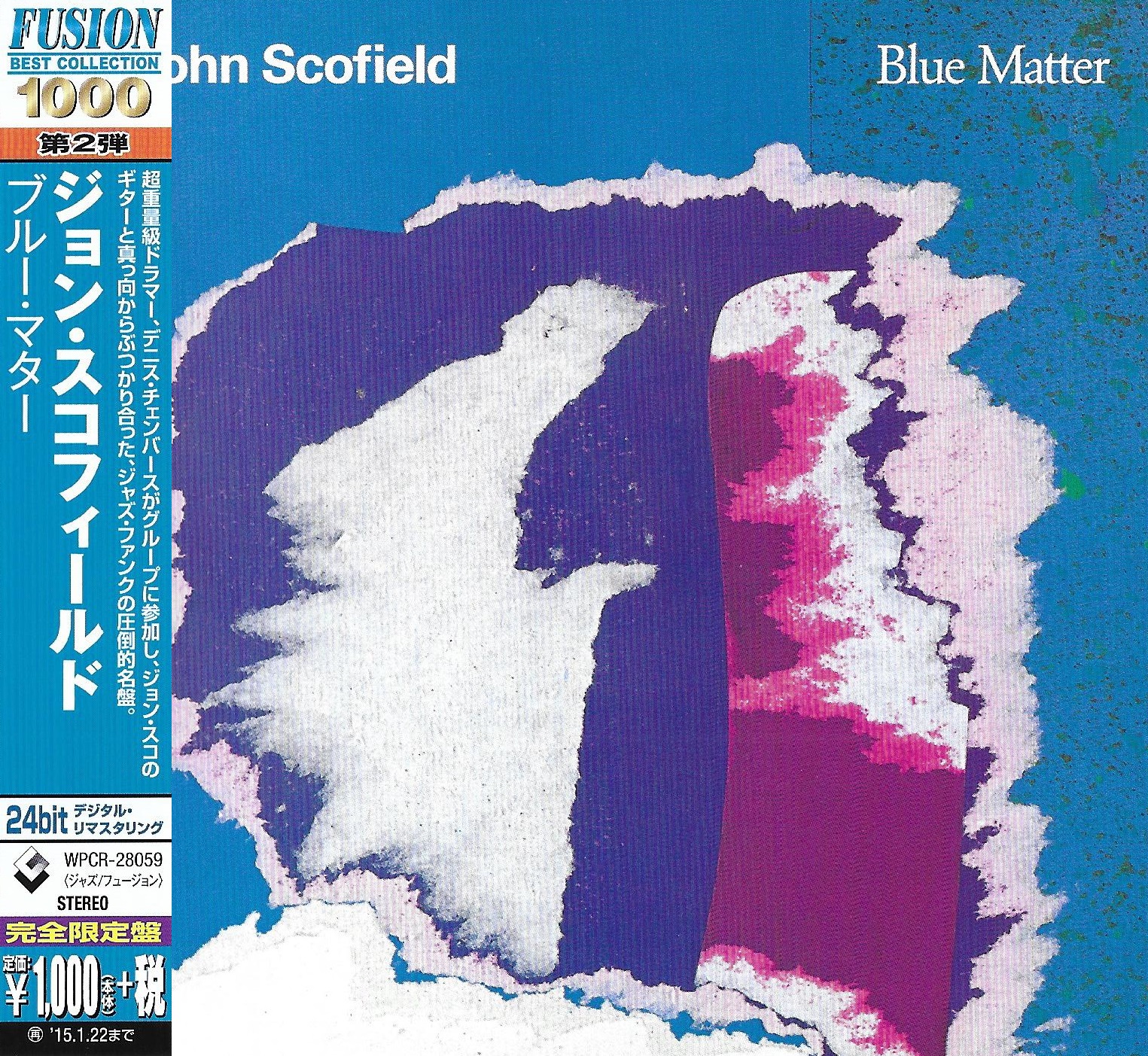
John Scofield - 1987 [2014] "Blue Matter"


Blue Matter is a studio album by jazz guitarist John Scofield that was released in 1986. It is the first of three recordings featuring Gary Grainger on bass guitar and Dennis Chambers on drums. The keyboards are played by Mitchel Forman with Don Alias providing percussion. Hiram Bullock is featured as second guitarist on three tracks.

One of the top jazz guitarists from the mid-1980s on, John Scofield has always had a very recognizable sound and the ability to combine together R&B/funk with advanced jazz. He is the lead voice throughout most of this release, performing eight of his originals with a group also including keyboardist Mitchel Forman, electric bassist Gary Grainger, drummer Dennis Chambers, percussionist Don Alias and (on three of the numbers) Hiram Bullock on rhythm guitar. Although not for jazz purists, who should get his slightly later Blue Note releases instead, this set should interest guitar freaks.

This 1986 session is one of Scofield's watershed dates. It was the first to feature the rhythm duo of bassist Gary Grainger and drummer Dennis Chambers (ex-Parliament/Funkadelic) that powered Scofield's successful live shows of the late '80s. Old friends Mitchel Forman (keyboards) and Don Alias (percussion) are also present, plus Hiram Bullock adding rhythm guitar on three tracks.

The presence of Hiram Bullock’s rhythm guitar on three tracks gives a good indication of Scofield’s approach on this album – it’s R’n’B/funk-based jazz/rock, with great grooves, neat chord changes and no gratuitious displays of instrumental technique for technique’s sake – though Scofield and Chambers were of course quite capable of some serious chops, evident on the killin’ ‘Trim’.

The dynamic title track is clearly influenced by Miles/Marcus Miller’s ‘Tutu’ with its half-time groove, walking synth bass and enigmatic chords, but Chambers’ brilliant contribution (closely monitored by the excellent Gary Grainger on bass) transforms it into something totally new.

In the first minute of the tune, he achieves a novel ‘bouncing ball’ snare drum effect and then unleashes some of the most kick-ass kick-drum playing in music history.

Chambers had already turned some heads playing with George Clinton, but, even if he had never picked up the sticks again after 1987, ‘Blue Matter’ would probably have put him right up in the drum pantheon.

‘Heaven Hill’ – named for Sco’s favourite brand of bourbon – a slow blues with surprising chord changes and tasty gospel-tinged piano playing by Mitch Forman, influenced a whole host of ‘fusion’ guitarist/composers such as Robben Ford, Scott Henderson and Frank Gambale (compare it to Henderson’s ‘Slidin’ Into Charlisa’).

‘Now She’s Blonde’, ‘Time Marches On’, ‘The Nag’ and ‘So You Say’ manage to be both funky and catchy while retaining enough harmonic interest and ‘dirt’ to go way beyond the smooth jazz tag.

The Blue Matter band got quite a live following around this time, with good reason. They were somewhat of an antidote to the Chick Corea Elektric Bands and Al Di Meolas of this world, as musically jaw-dropping as those artists were/are. Scofield himself acknowledged as much during an interview with Howard Mandel in 1988

Track listing:

All tracks written by John Scofield

    "Blue Matter" – 5:47
    "Trim" – 7:33
    "Heaven Hill" – 4:28
    "So You Say" – 4:34
    "Now She's Blonde" – 5:32
    "Make Me" – 2:53
    "The Nag" – 4:18
    "Time Marches On" – 7:32

Personnel:

    John Scofield – electric guitar
    Mitchel Forman – keyboards
    Hiram Bullock – electric guitar on "Blue Matter", "Now She's Blonde", and "Make Me"
    Gary Grainger – bass guitar
    Dennis Chambers – drums
    Don Alias – percussion

Wednesday, June 2, 2021

McCoy Tyner - 2008 "Guitars"


Guitars is an album by McCoy Tyner released on his McCoy Tyner Music (a subsidiary of Half Note Records) label in 2008. It was recorded in September 2006 and features performances by Tyner, Ron Carter and Jack DeJohnette with guitarists Marc Ribot, John Scofield, Béla Fleck, Derek Trucks, and Bill Frisell. The album also contains a DVD featuring video footage of the studio sessions.

This is McCoy Tyner's second release on his own label, and it is odd, to say the least. Around the fixed trio of the pianist, Ron Carter on drums and Jack DeJohnette on drums, one of today's leading guitarists is added to form a quartet : first Marc Ribot, then John Scofield, Belà Fleck, Steve Trucks and ending with Bill Frisell. All six guitarists are of course stylistically totally different, although they kind of accomodate McCoy here. The end result is at best entertaining, fun to hear, with great musicians showing some of their skills. But it's not great music, just good. The playing is good, the music a little boring. And at times it's even a little pathetic, like when Belà Fleck plays "My Favorite Things" on his banjo. It is all a little bit sad : it lacks musical vision and creativity, and I hate to say this about a musician for whom I've always had the greatest esteem. Yet if you like to hear jazz guitar in its many variations, you might like this, although it adds nothing to these musicians' already vast list of albums. Well, maybe. It's the first time I hear Ribot play in such a conventional jazzy fashion (on "500 Miles").

Ah, but McCoy had one more twist for this one-of-a-kind record: he let the guitarists themselves decide which two or three songs they wanted to play with Tyner’s trio. Tyner was clearly interested in getting his guest six string slingers firmly invested in his project.

These guitarists were also given a lot of lead parts, often being the ones who state the main melody instead of Tyner. So much so, that sometimes Tyner is virtually a sideman on his own record. However, few can play that supporting role as well he does, and his presence is always felt. Perhaps not so coincidentally, Tyner shows a somewhat lighter touch on the piano than what he’s normally known for.

As to each of the collaborations, they’ve all worked out reasonably well, but some better than others. John Scofield previously duet-ed with Tyner on a couple of tracks for Tyner’s otherwise solo piano record Things Ain’t What They Used To Be from 1989.

Scofield chose two classic compositions from Tyner’s sixties period. “Mr. P.C.” is one that is tied to Tyner via his stint with ‘Trane. Scofield does yeoman’s work, even if he sounds a little stiff at first, then loosens up nicely after a while. His other selection is a Tyner standard, “Blues On The Corner,” a great tune, but a it’s pretty pedestrian rendering.

Bela Fleck’s contributions stand out from the others, as expected, simply because he’s playing an instrument foreign to a jazz trio. However, Fleck chose some tunes that provided a good setting for both himself and the pianist. The first two are Fleck’s own compositions “Trade Winds” and “Amberjack,” and the Broadway song made famous by Coltrane, “My Favorite Things.” Both Tyner and Fleck play surprisingly well together, but Dejohnette’s outstanding kit work on the latter two that also got my attention. for his part, Fleck seems much at ease with Tyner and the two blended together their playing effectively.

The Allman Brothers’ Derek Trucks came to the session with Tyner’s “Slapback Blues,” which is a logical choice since Trucks comes to jazz via the blues and Tyner’s own conception of jazz is blues-based. Trucks is clearly in his element and shines on his solo turn. “Greensleeves” is performed in much the same way that “My Favorite Things” is, and Tyner puts in a particularly crisp solo.

Like Bela Fleck, Bill Frisell also came to the proceedings with a couple of his own tunes in hand: The mystical, rhythm-less “Boubacar” and “Baba Drame,” which with it’s extended world music groove evokes Tyner’s excellent early seventies Milestone work. But for the third piece, Frisell, like Scofield, digs up a superb selection from Tyner’s 1967 Blue Noter The Real McCoy, “Contemplation.” And once again, it’s solid but not exceptional. Frisell’s playing is subdued throughout, preferring to play a texturist role than a true lead part.

Bela Fleck notwithstanding, the most successful pairing overall was one I would have least expected: that experimental, John Zorn/Tom Waits kind of guy Marc Ribot. Ribot is more than those things, naturally, but while he suppressed his rough edges for this meeting, he was nonetheless the most creative and nonconformal of the lot.

The traditional piece “500 Miles” is made new again with Ribot’s arrangement, which isn’t too much unlike the way Coltrane might have handled it when Tyner was in his band. Subtly but effectively using pedal effects, Ribot’s guitar is both stinging and soulful. “Passion Dance” is worth listening to just to hear Ribot’s fuzz guitar pair up with Tyner’s forceful left hand. The guitarist’s rock solo sounds a bit out of place, but the backing trio is so muscular, they don’t get overwhelmed like most other acoustic backing units would.

Track listing

All compositions by McCoy Tyner except were indicated

    "Improvisation 2" (Marc Ribot, Tyner) – 1:34
    "Passion Dance" – 6:10
    "500 Miles" (Traditional) – 6:22
    "Mr. P.C." (John Coltrane) – 6:21
    "Blues on the Corner" – 6:07
    "Improvisation 1" (Ribot, Tyner) – 3:46
    "Trade Winds" (Bela Fleck) – 6:35
    "Amberjack" (Fleck) – 4:36
    "My Favorite Things" (Oscar Hammerstein II, Richard Rodgers) – 7:01
    "Slapback Blues" – 3:46
    "Greensleeves" (Traditional) – 6:15
    "Contemplation" – 7:55
    "Boubacar" (Bill Frisell) – 2:18
    "Baba Drame" (Boubacar Traoré) – 5:21

Personnel

    McCoy Tyner – piano
    Bill Frisell – guitar (tracks 12, 13 & 14)
    Marc Ribot – guitar (tracks 1, 2, 3 & 6)
    John Scofield – guitar (tracks 4 & 5)
    Derek Trucks – guitar (tracks 10 & 11)
    Béla Fleck – banjo (tracks 7, 8 & 9)
    Ron Carter – double bass
    Jack DeJohnette – drums

Thursday, June 27, 2019

John Abercrombie and John Scofield - 1984 [1996] Solar ''the bebop album''

Solar is a studio album by jazz guitarists John Abercrombie and John Scofield. It was initially released in 1984 by Palo Alto Records and reissued in 2001 by West Wind.

Guitarists John Abercrombie and John Scofield join forces for these early-'80s sessions, mostly duets while occasionally adding bassist George Mraz and drummer Peter Donald. They delve into the jazz canon with an intricate duet of "Solar," a driving, Latin-fused take of "Four on Six" (in which Abercrombie overdubs an electric mandolin), and a dreamy duo interpretation of "If You Could See Me Now." The sole standard, "I Should Care," fares just as well in their hands, which settles into a relaxed exchange between the two players as if they are playing for themselves alone. Scofield's "Small Wonder" is scored for the quartet, a bristling post-bop vehicle with a feature for Mraz as well. Abercrombie's introspective "Sing Song" best contrasts the styles of the two leaders, with the composer a bit more melodic and Scofield with a more brittle attack. This is an enjoyable CD that has stood the test of time very well.

I'm a huge Abercrombie fan and this album is one of my favorites. Scofield and Abercrombie dig down deep into some jazzy blues lines that make these two guitar players undeniably some of the most creative to ever play the guitar. Abercrombie is magical as always and Scofield is young, bold, and worthy to share the light with this jazz god. I feel like Abercrombie is passing the torch on to another generation. The album [Timeless] materialized the jazz-rock-fusion era by crossing boundaries and steering music into new directions (an unbeatable accomplishment.) This has been handed off to Scofield who has ever since been attempting to move jazz onto a new canvas.

Abercrombie was second only to McLaughlin among the guitarists of this epoch, to my taste; Scofield was not far behind. Both men had it over the great J Mac in that they played better with others. And this is a great interaction, not "two stars that can't play together", to quote Jelly Roll Morton. Figments of Pat Metheny are floating around here, and the harmonies are the harmonies we remember from Jarrett, ECM and the other masters of this period. I won't deny that there's a certain power of nostalgia at work here, but it's like a wine that never ages into superannuation.

A beautiful as the record was (original date was 1984, so I'm not sure whether it was issued on vinyl or CD - I have a cassette), it might have been stronger if all tracks had been dual electric, with no bass + drums. No criticism of those supporting musicians; just that my memory is a of a downright magical guitar duo.

This duo works as well together as Herb Ellis & Joe Pass, with the same amount of skill and taste. Definitely great listening at home, relaxing after a long day at work. The mood is subdued yet warm and enveloping. This makes me wish that they had worked together for more than just this one disc.

https://jazz-rock-fusion-guitar.blogspot.com/search?q=john+abercrombie

https://jazz-rock-fusion-guitar.blogspot.com/search?q=john+scofield

Track listing:

1.    "Solar"    Miles Davis    4:10
2.    "Even Steven"    Abercrombie    6:51
3.    "Four on Six"    Wes Montgomery    6:25
4.    "Sing Song"    Abercrombie    6:22
5.    "Small Wonder"    John Scofield    6:21
6.    "I Should Care"    Sammy Cahn, Axel Stordahl, Paul Weston    6:39
7.    "If You Could See Me Now"    Tadd Dameron, Carl Sigman    6:02
Total length:    42:35

Personnel:

    John Abercrombie – guitar, electric mandolin, co-producer
    John Scofield – guitar, co-producer
    George Mraz – bass
    Peter Donald – drums

Monday, April 29, 2019

John Scofield - 1994 "Hand Jive"

Guitarist John Scofield and tenor saxophonist Eddie Harris make a very complementary team on this upbeat set of funky jazz, for both have immediately identifiable sounds and adventurous spirits. Along with a fine rhythm section that includes Larry Goldings on piano and organ, Scofield and Harris interact joyfully on ten of the guitarist's originals.

This 1994 recording is one of John Scofield's best, with a band that adds the soul-jazz veteran Eddie Harris to a group of the guitarist's regular associates, Larry Goldings on keyboards, Dennis Irwin on bass, Bill Stewart on drums, and Don Alias on percussion. Perhaps it's the mix of the familiar rhythm section with the novelty of playing with Harris, a player with a similar penchant for inside funk, outside approaches, and altered sounds, but Scofield is unusually animated. He digs into the rhythmic grooves and develops extended ideas throughout, most notably on "I'll Take Les" and "Do Like Eddie," tributes to the onetime partnership of Harris and pianist McCann. Goldings is outstanding on piano as well as organ, and everyone involved contributes to making this a high point in contemporary soul jazz.

Absolutely my favorite Scofield album, and one of my favorite groovin' jazz albums of all time. I come back to this one often, and not only because it has one of my favorite drummers (Bill Stewart) and a high school friend of mine (Larry Goldings) playing on it. This is top-notch playing, Scofield at his best (imho), fantastic session guys, and while it keeps some of the Scofield "angularity," it's a lot more fluid and groove-oriented than some of his offerings. Most of this one feels as if it comes more from the gut than the head, and that's a good thing.

Having just seen Scofield with Mike Stern and the Hollowbody Band (also featuring Bill Stewart), I have a renewed appreciation for this gem - they closed the show with Do Like Eddie, my favorite track from the disc. You will have that head melody in your head for days, I all but guarantee!

Very funky recording, a soul-jazz throwback to the music of saxophonist Eddie Harris -- who as a guest star on the CD makes the connection even more obvious. The organ/guitar grooves are terrific!

Not just for jazz fans, I've had friends who don't like jazz say they like this CD. Even more accessible is the CD Scofield a la Go Go with Medeski Martin & Wood. This CD is funkier, that one more poppy.

Track listing:

All compositions written by John Scofield.

1. I'll Take Les (6:58)
2. Dark Blue (7:37)
3. Do Like Eddie (8:06)
4. She's So Lucky (5:50)
5. Checkered Past (5:28)
6. 77th Floor (4:45)
7. Golden Daze (7:33)
8. Don't Shoot The Messenger (6:10)
9. Whip The Mule (5:37)
10. Out Of The City (5:18)

Total time 63:22

Personnel:

    John Scofield - guitar
    Eddie Harris - tenor saxophone
    Larry Goldings - piano, organ
    Dennis Irwin - bass
    Bill Stewart - drums
    Don Alias - percussion

Friday, February 22, 2019

Mike Stern - 1999 "Play"

Play is an album by Mike Stern, released in 1999 through Atlantic Records. The album reached a peak position of number twenty-one on Billboard's Top Jazz Albums chart.

Mike Stern is a preeminent guitarist for two key reasons: One, he can play all styles very well and with equal command; and two, he plays very well with all other players. He always shows great respect for those with whom he is playing and gives them each the time and space to develop their musical ideas. Stern displays these two qualities in abundance on Play. Several notable guests join Stern and his core band for this release. Guitarists John Scofield and Bill Frisell and drummer Dennis Chambers each team with Stern on several tracks.

If you enjoy straight-ahead jazz, listen to Stern and Scofield on the title track, or mix in Bob Malach's tenor sax on "Outta Town." If you like your guitar music slightly more spacious and lyrical, try Stern and Frisell on the hypnotic "Blue Tone" or the pensive "All Heart." Finally, if you want to turn up the heat and move into some rock/funk-influenced fusion, then check out the groovy "Tipatina's," the bold rocker "Link," or the intensely funky "Big Kids." It is no surprise, based on his other work, that Chambers, in particular, gives the band a kick in the musical pants inspiring bassist Lincoln Goines to enjoy the ride. Play is an outstanding guitar album from the highly accomplished and incredibly versatile Mike Stern. It is highly recommended.

If Mike Stern were a guitarist coming out of the 1960s, he'd be a hero today. Sure, there's always John McLaughlin. But not many other guitarists then - or now - could play rock guitar with the high degree of intimacy and the non-assaulting technical prowess that Mike Stern has always possessed.

Plus, if there was any kind of justice in jazz, Miles Davis's Star People (1983) would be regarded as one the great records of the Eighties it has always surely been. There, Mike Stern in commanding communiqué with John Scofield, laid the law for what jazz-rock had hoped and ceased long before to achieve. It's just that jazz listeners had stopped caring.

Which brings us effectively to Play, Mike Stern's ninth Atlantic disc over the last baker's dozen years. The question is - be honest — how many of us knew of or heard the preceding eight?

Well, the big news is that Play isn't really newsworthy. It's Stern doing his own thing - a catchy rock take on post-bop jazz — with a first-rate cast of musicians. Again. The guest seats, filled this time by guitarist Bill Frisell and John Scofied (but unfortunately not together), are all people will hear about. However, Stern displays a continuing ability here to hone his melodic craft and perfect his catchy compositional skill. That's what'll Play on after all the hype is gone.

All ten selections are Stern's own, while Scofield guests on three pieces and Frisell sits in on four. Like Scofield did for Medeski, Martin & Wood on last year's A Go Go, Stern here concocts melodies suggested by the much more distinct styles carved by his fellow plecterists.

Scofield goes to Scofieldland for the funky "Play" and catchy "Small World." But Stern breaks the mold a bit for the swingy bop romp, "Outta Town," which lets the reuniting guitarists show their chops a bit and shows how Stern's harshness has mellowed through the years without any loss of bite.

Frisell's tracks took Stern's group to Friztown (Seattle) for the disc's most interesting numbers. Of course, there's the Frisell country-folk-jazz-Americana of "Blue Tone" and "All Heart." But Stern also challenges Frisell to the electro-avant-bop duel of "Frizz" and the surprisingly funky "Big Kids" (which postulates the intriguing concept of a Frisell funk album).

The remaining three tracks - "Tipitina's," "Link" and "Goin' Under" - offer the more familiar Stern groove with his working band featuring keyboardist Jim Beard, the Breckeresque Bob Malach on tenor, bassist Lincoln Goines and (former Scofield) drummer Dennis Chambers.

Since neither Scofield nor Frisell set off any major fireworks, Play ultimately becomes a showcase for its star, Mike Stern. The composer and guitarist is totally in his element here. And if high-ticket guests like Scofield and Frisell bring him the attention he's long been due, then Play is Stern's own hero's welcome.

Mike Stern is doing things with jazz, he always gets hammered by the critics, for his rock edge, but this album along with the last, between the lines, break down musical barriers in a music (jazz) that should incourage new voices, but of course dosen't, and has become mundane,since the passing of Miles, Stern keeps the torch burning!and by the way mike doen't loose the rock edge ! its a uniquie voice in a day when everyone is encouraged to sound the same.

Track listing:

01 Play 7:15
02 Small World 5:23
03 Outta Town 6:09
04 Blue Tone 6:43
05 Tipatina's 6:35
06 All Heart 6:22
07 Frizz 5:41
08 Link 6:50
09 Goin' Under 4:10
10 Big Kids 7:29

Personnel:

Mike Stern – guitar (all tracks)
John Scofield – guitar (tracks 1, 2 & 3)
Bill Frisell – guitar (tracks 4, 6, 7 & 10)
Ben Perowsky – drums (tracks 1, 2, 3, 4, 6, 7 & 10)
Dennis Chambers – drums (tracks 5, 8 & 9)
Lincoln Goines – bass (all tracks)
Bob Malach – tenor saxophone (tracks 3, 5, 6, 8 & 9)
Jim Beard – keyboards (tracks 1, 2, 3, 5, 6, 8 & 9)

Wednesday, February 6, 2019

Gary Burton & Friends - 1992 "Six Pack"

Gary Burton's peculiar connection and affinity for great guitarists is a proven historical fact, as he has been responsible for bringing such fantastic musicians to the world stage as Larry Coryell and Pat Metheny. On Six Pack, he joins with six different six-stringers for some decidedly varied modern jazz. Kurt Rosenwinkel makes like Metheny on the first track, the up-tempo Mitch Forman composition "Anthem." Any predictability to the song disappears in the presence of the rhythm section of Jack DeJohnette, Steve Swallow, and Mulgrew Miller. One doesn't generally think of the vibes as a blues instrument, and to be fair, it's really not, but Burton gives it the old college try on the title track, where his vibes intersect surprisingly well with Bob Berg's tenor sax and B.B. King's guitar. There is absolutely nothing weighty about this song at all, but it is fun and swinging nevertheless (who says jazz has to be serious all the time?). John Scofield also shows up on the track, and his distinctive tone and phrasing work perfectly in this setting. Other selections include such notables as Jim Hall, Ralph Towner, and Kevin Eubanks, and all of their contributions are solid in their own way. One sometimes wishes that this record was a little less GRP, with Larry Goldings' keyboards and Berg's sax being the most frequent offenders, but there are plenty of hot moments on Six Pack that make this record worth searching out, especially for fans of jazz guitar. Where else will listeners find all of these great players on a single record?

Gary Burton also has brought along a lot of kids. His leadership at Berklee`s School of Music makes it natural for him to help younger musicians find an audience. The musical results have been passable, but not as nice as the work he does on this new disc with a group of stars as distinctive as guitarists Kevin Eubanks, Jim Hall, John Scofield, Ralph Towner and B.B. King. Paul Shaffer and Mulgrew Miller join in on piano and keyboards. The mood changes with the sideman, but all of them are interesting.

Track Listing:

  01. Anthem
  02. Six Pack
  03. Summertime
  04. Jack's Theme
  05. Lost Numbers
  06. Double Guatemala
  07. Asphodel
  08. Redial
  09. Invitation
  10. My Funny Valentine
  11. Something Special
  12. Guitarre Picante

Personnel:

Gary Burton - Vibes
John Scofield, B.B. King, Jim Hall, Kevin Eubanks, Ralph Towner, Kurt Rosenwinkel - Guitar
Jack DeJohnette - Drums
Larry Goldings - Keyboards
Mulgrew Miller - Piano
Steve Swallow, Will Lee - Bass
Bob Berg - Saxophone
Paul Shaffer - Piano, Organ

Saturday, December 29, 2018

John Scofield - 1984 [2014] "Electric Outlet"

Guitarist John Scofield combines with Pete Levin on synthesizer to make this 1984 session both very electric and eclectic. With David Sanborn on alto, Ray Anderson on trombone, and Steve Jordan on drums adding acoustic voices to the mix, the results are as thought-provoking as Scofield's titles. The rock, funk, jazz, and techno elements proliferate and combine, putting populist and outside approaches in a new perspective. There are even touches of Ennio Morricone's film music in the wide-open spaces of "Best Western." While much fusion is about the easy mismatching of elements, Scofield manages to turn his different sources into distinctive and original music.

Guitarist John Scofield's music of the '80s (mostly recorded for Gramavision) blended together funk with post-bop improvising. Although not as timeless as much of his work of the '90s, there are always moments of interest on his many recordings. For Electric Outlet, Scofield performs eight originals (the best-known is "Pick Hits") with a notable quintet and also including altoist David Sanborn, trombonist Ray Anderson, Pete Levin on synthesizer and drummer Steve Jordan; there is no bassist, although the leader often plays basslines. Intriguing music.

John Scofield was an early favotite of mine from before he played with Miles. I picked up Shinola when it came out (looking for Steve Swallow stuff, actually). I really loved that. When he started playing with Miles, I was fortunate enough to see him a coulpe of times, and then later in solo form at a nice club. After that period, I have found his stuff 'hit or miss' ... but I was blown away by UberJam. However, Electric Outlet remains right at the top of my list of favorite Scofield work. It really lays out his style and preferences. Worth picking up!

This is a great Scofield disc. I like John's recent funk outings, but this disc from further back in his career really outlines his jazz playing in a more fusion-like setting.

Track listing:

All tracks by John Scofield

1. Just My Luck (5:21)
2. Big Break (5:15)
3. Best Western (5:41)
4. Pick Hits (6:03)
5. Filibuster (5:51)
6. Thanks Again (4:50)
7. King For A Day (2:28)
8. Phone Home (5:12)

Personnel:

John Scofield - electric guitar, bass
Peter Levin - synthesizers
David Sanborn - saxophone
Ray Anderson - trombone
Steve Jordan - drums

Thursday, November 29, 2018

Various Artists - 2000 "Celebrating the Music of Weather Report"

Telarc and producer Jason Miles brought in a boat-load of contemporary jazz heavyweights to celebrate the 30th anniversary of Weather Report's formation with this recording, and quite a celebration it is. Miles and his all-star cast have managed to remain true to the original music, while updating and opening up the arrangements. Tenor saxman extraordinaire Michael Brecker smokes up "Elegant People," while alto superstar David Sanborn teams up with the final Weather Report rhythm section of Victor Bailey and Omar Hakim to take a scrumptious, synth-soaked stroll through "Cannonball." Lesser known saxophonist Aaron Heick comports himself well as he fills Shorter's shoes on "Mysterious Traveller," and Spyro Gyra's Jay Beckentein turns in a lovely soprano sax lead over Joe Sample's distinctive piano on the ballad "Harlequin." "The Man in the Green Shirt" journeys to the islands courtesy of steel pan man Andy Narell. Randy Brecker's trumpet gives a new dimension to "Palladium," while Marcus Miller and John Scofield take a loping, funky trip through "Cucumber Slumber." In fact, the only complaint about this recording is that the modern synthesizers, employed a little heavy-handedly at times by Miles, have a much cheesier sound than did Joe Zawinul's bank of organic keyboards and early synths in the band's heyday. Nonetheless, this celebration offers a bevy of delights to remind old-time Weather Report fans of the band's greatness; it may even help introduce a new generation of listeners to this superb music, hopefully enticing them to check out the originals.

With a rich subject to mine and a distinctive, creative vision, the compilation Celebrating the Music of Weather Report (Telarc CD-83473; 58:30) stands a cut above the glut of all-star tribute albums currently on the market. The common thread uniting a football team-sized cast is keyboard phenom Jason Miles, who through unique arrangements of carefully chosen pieces traces the band’s evolution and highlights its influence without wandering into cliche territory. Where “Birdland” is given a whammy-bowed, rock guitar read by Chuck Loeb, with Take 6 building rich rhythms via voice, “Cannonball” finds David Sanborn belting the alto sax melody over Miles’ lovely keyboard tones and fusion-styled breaks. “Badia” boasts exotic percussion backbeat, tribal vocals and prickly mid-eastern tones, while “Harlequin” makes an unexpectedly lush, darkly romantic statement with saxophonist Jay Beckenstein at the helm. Most startling and revealing are “Mysterious Traveler,” with Miles setting a haunted, cornered keyboard tone for Aaron Heick to set aflame with multiple squealing saxes, and “Palladium,” which starts with a music-box keyboard feel before opening into a fusion storm, with Omar Hakim’s spitfire drums and Randy Brecker’s singing, sharp trumpet line.

With a huge assembly of star performers like Marcus Miller, Dennis Chambers, Jay Beckenstein etc.,the performances are top-notch, but the overall production borders on "smooth", although some of Weather Reports' catalog is quiet catchy in a "pop" kind of way and therefore lends itself to a slightly more "poppy and smooth" version of fusion jazz.

The sonics are as usual for Telarc, fantastic, and the music is perfectly suited for 5.1, and the mix does not
disappoint, with tasteful use of the surrounds for synths, percussion and "atmosphere", but the main performance is up-front.

Track Listing:

01. Birdland
02. Elegant People
03. Badia
04. Young And Fine
05. Cannonball
06. Pursuit Of The Woman With The Feathered Hat
07. Mysterious Traveller
08. Harlequin
09. Man In The Green Shirt
10. Palladium
11. Cucumber Slumber

Personnel:

- John Scofield, Chuck Loeb, Dean Brown / guitar
- Randy Brecker / trumpet
- Michael Brecker / Tenor saxophone
- David Sanborn / Alto saxophone
- Joe Sample / piano
- Victor Bailey, Mike Pope, John Patitucci, Will Lee, Marcus Miller / bass
- Dennis Chambers, Vinnie Colaiuta, Steve Gadd, Omar Hakim / drums
- Aaron Heick / Soprano & Tenor saxophones
- Jay Beckenstein / Soprano saxophone
- Jason Miles / keyboards, programming, background vocals
- Tom Schuman / synthesizer
- Andy Narell / pans
- Mark Quinones, Cyro Baptista / percussion
- Mary Fahl, Porter Carroll, Take 6 / background vocals

Monday, November 26, 2018

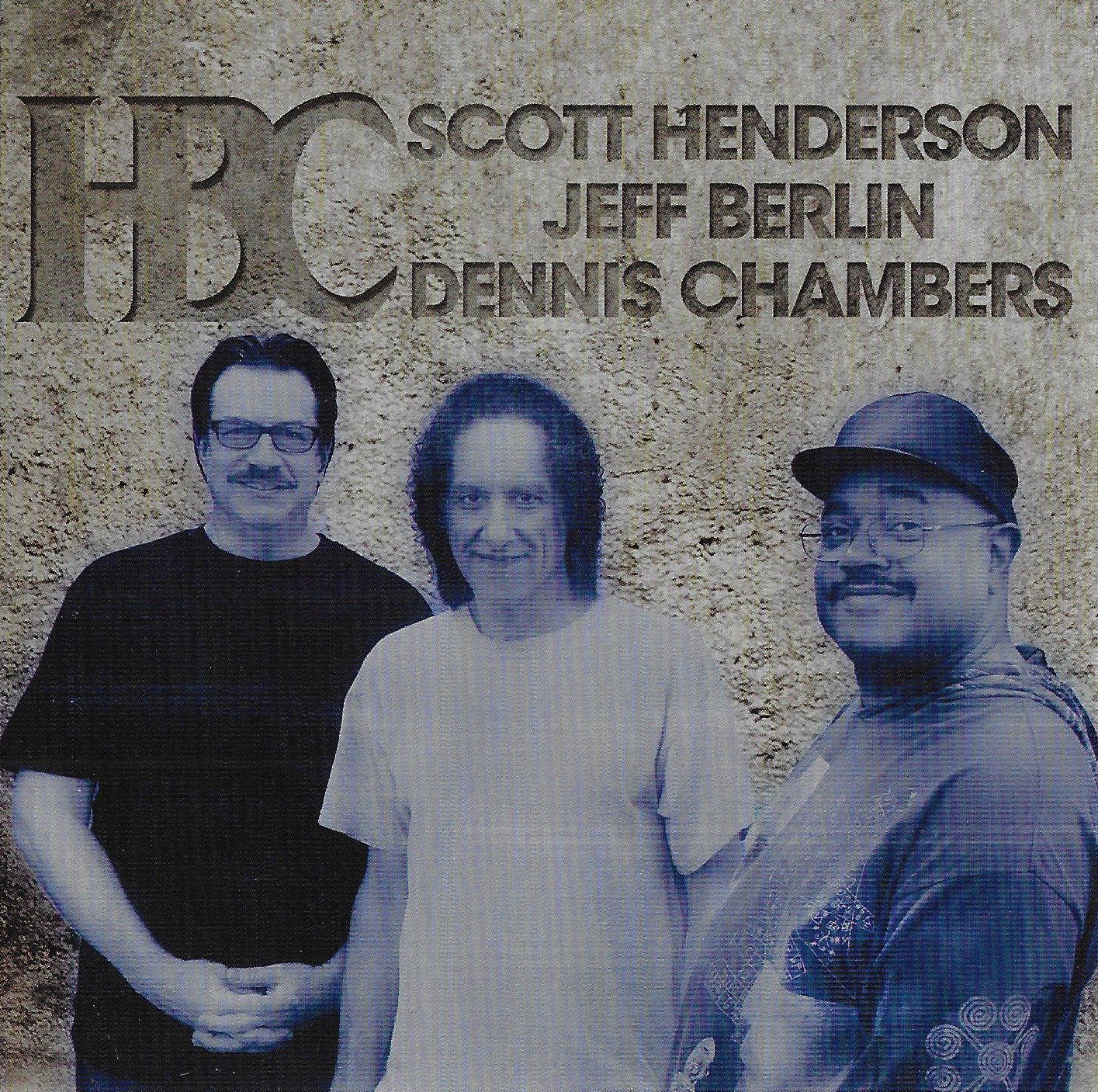
Scott Henderson, Jeff Berlin, Dennis Chambers - 2012 "HBC"

Not simply a super-group, but more like a jazz-fusion superpower as this formidable trio melds classic fusion works amid a few originals on its debut release, although the artists have crossed paths over the years. Bios and resumes would transcend the limitations of a review or analysis. So, it's the in-your-face attitude, creative impetus, and the respective musicians' gargantuan chops that account for a passionate exposition.

Guitarist Scott Henderson's enviable technique as a monumental blues-rock soloist shines on his "Wayward Son of Devil Boy," inflicting pain on his axe via some serious shedding and molding a blues-with-a-vengeance stance with blazing fills, detuned extended notes and wailing choruses. But the preponderance of the album offers an abundance of cunning insights and spins on pieces such as drummer Billy Cobham's jazz-fusion anthem "Stratus." Then again it would be a sacrilege to ignore this trend-setting classic. Here, all-universe session drummer Dennis Chambers slams the backbeat into overdrive in concert with bass great Jeff Berlin's sinuous fretless bass lines. Owing to the original recording, Henderson abides by late guitarist Tommy Bolin's tension and release buildup, and then goes off the radar with stratospheric licks, leading to the heavy metal-like finale.

Henderson morphs polytonal chord voicings to execute a translation of pianist Herbie Hancock's funkified "Actual Proof," where Berlin unleashes a mindboggling solo, awash with twirling notes and breakneck linear runs. Henderson injects some spacey electronic treatments and spatial attributes into saxophonist Wayne Shorter's title track from Weather Report's Mysterious Traveler (Columbia, 1974), raising the bar with edgy and distorted crunch chords while reshaping and reconfiguring the primary theme, tinted with a rather ominous rite of passage.

HBC also integrates a pure jazz element into Shorter's "Sightseeing," offset by the artists' expressive solo spots and streaming background effects, all the while prepping for the kill towards the coda as Berlin thumps and plucks his bass strings into submission. Sure, he's all over the place, but lessons learned will dictate that he makes every note count, marked by his lyrical thematic statements and a technique to die for.

Other than the instrumentalists' technical mastery, these works' construction lend to a refreshing glimpse of the proverbial roads previously traveled. From a holistic perspective of the jazz-fusion genre, it doesn't get a whole lot better.

As power trios go, it doesn’t get much more powerful than guitarist Scott Henderson, bassist Jeff Berlin and drummer Dennis Chambers. Like an update of the McLaughlin/Pastorius/Williams “Trio of Doom,” HBC succeeds by putting musicality above its overwhelming technical skills-only far better than that hit-and-miss collective did.

On HBC, this trio opts for mostly modern standards by the fusion era’s elite composers. Berlin’s serpentine bassline and Henderson’s keyboard mimicry highlight Herbie Hancock’s opening “Actual Proof.” Wayne Shorter gets his due as well: Henderson’s spacey intro and Chambers’ combustible drumming highlight “Mysterious Traveler,” and the guitarist’s underrated straightahead jazz chops shine through on “Footprints” and “Sightseeing.” Another Weather Report composition-the funky, stop-and-start “D Flat Waltz” by Henderson’s onetime employer Joe Zawinul-proves the 12-minute highlight among this honorary sequence.

Other highlights: Chambers blends funk and fury on Billy Cobham’s closing “Stratus,” a homecoming of sorts for Henderson, who wowed club crowds with it in his native Florida during the ’70s. And Berlin’s solo reading of his “Threedom” provides the disc’s best original moments.

HBC is the new fusion supergroup comprised of three virtuoso musicians: Scott Henderson Jeff Berlin and Dennis Chambers who join together to create one of the most phenomenal trios in the history of jazz fusion. Rather than jumping into the studio as virtual strangers and winging it like some superstar alliances HBC hit the road first and refined a repertoire of classic fusion covers in front of thousands of hungry fusion fans. After assembling an impressive collection of road-tested masterpieces, the group, composed of all leaders, decided that it was finally time to combine their talents to make this musical statement.

Henderson is one of the most well-known contemporary guitarists in the jazz fusion genre and he has mesmerized guitar fans around the globe with his masterful phrases and unique style. Guitar fans have enjoyed hearing Scott work with Jean-luc Ponty, Chick Corea, Joe Zawinul, and power fusion trio "Henderson, Smith, and Wooten" with Steve Smith and Victor Wooten. In addition Scott has churned out an incredible body of work stemming from his other career as founding member of Tribal Tech and also a solo artist, both of which he has toured extensively to support.

Bassist Jeff Berlin is a celebrated solo artist with numerous fusion recordings under his name and affiliations with artists such as Al Di Meola, Bill Bruford, Allan Holdsworth, John McLaughlin, and Billy Cobham. Berlin is widely regarded as one of the greatest bassists in the world and is equally adept at playing hard-core no holds-barred jazz-fusion and straight ahead traditional jazz. As a bassist Berlin's tone phrasing, and keen sense of melody are a winning combination that has helped him reach the top of magazine reader's polls for years.

A formidable, ferocious, and ultra-funky presence behind the kit in such celebrated ensembles as Parlament-Funkadelic, Steely Dan, Santana, and The Brecker Brothers as well as incendiary fusion outfits led by guitarist John Scofield, Steve Kahn, Mike Stern, and John McLaughlin, Dennis Chambers is a miracle in modern music. A remarkably versatile drummer who has shown limitless ability to swing on a small kit in traditional jazz settings or flaunt his stylistic chops in fusion supersessions, Dennis Chambers is one of the most recorded drummers in the world of jazz fusion.

Track listing:

01. Actual Proof
02. Mysterious Traveller
03. Footprints
05. D Flat Waltz
06. The Orphan
07. Sightseeing
08. Wayward Son Of Devil Boy
09. Threedom
10. Stratus

Personnel:

Scott Henderson: guitar;
Jeff Berlin: bass;
Dennis Chambers: drums.

Sunday, September 23, 2018

Shane Theriot - 2003 "The Grease Factor"

The Grease Factor is the second studio album by guitarist Shane Theriot. It was released in 2003.

A heavy hitting dose of modern rock/jazz compositions mixed with equal doses of New Orleans funk. One of Shane’s more “guitar intensive” records that is a favorite among musicians and groove-lovers alike. Featuring some of the funkiest musicians on the planet- including Victor Wooten, Russell Batiste (The Funky Meters), Jeff Sipe (Apt Q-258), Johnny Vidacovich, Jeff Coffin (Bela Fleck), Kirk Joseph (Dirty Dozen), Johnny Neel (Gov’t Mule) and others…

Here we have the second solo album from New Orleans native Shane Theriot pronounced "Terry O" for those of you who don't know. This album is a collection of eleven original compositions written by guitarist Theriot. If I had to label the music on "Grease Factor" I'd call it funk/rock fusion with strong connections to the second line New Orleans street beat grooves of his native city "The Big Easy".

Shane employés some high profile musicians on this collection of funky ditties, 6 string monster Adam Nitti shows how well he can lay back & groove with the drummer on one of my personal favorite tunes track 6 "Mr Longhair" a medium tempo funk workout that features a hip multi layered harmonized guitar melody set against some burbling greasy B3 organ played by Johnny Neel.

Track 4 "Shrimp Boots" brings the New Orleans vibe with founding member of The Dirty Dozen Brass Band Tuba & Sousaphone master Kirk Joseph laying down the bass & boy does he lay it down! Shane employes several masters of New Orleans style funk drumming such as Russell Batiste, David Northup, Jeff Sipe, Doug Belote. "Shrimp Boots" features the legendary John Vidacovich of the band "Astral Project" covers the beat as well as a short but sweet drum solo.

Track 7 "The Apartment" features living bass god Victor Wooten playing fretless 5 string. The best way for me to describe this tune would be mellow intensity if that makes any sense because the groove is a driving fusion groove with Shane dialing in a more processed wet tone sort of like a cross between Pat Metheny's tone with his Metheny Group & Steve Morse with his Dixie Dreggs. Wooten lays down melodic fretless grooves that support the song they don't dominate it, I think it's nice to hear Wooten on fretless rather than his usual four string fretted bass. Shane takes a ripping solo over Wooten's delft accompaniment.

Track 10 "Zydefaux" is pure Zydeco with accordion & the type of driving up tempo groove that makes Zydeco music so much fun to dance too.

Well there you have it, I hope you've found my review informative & I highly recommend this or Theriot's other two albums "Hywy 90" & "Dirty Power". In my opinion this music is just all around awesome! If you appreciate top self musicianship especially in the guitar department & funky bass & drums with that Big Easy grease factor than pick this up now!

The obvious points of reference when discussing Shane Theriot are Brian Stoltz and June Yamagishi. Like Stoltz and Yamagishi, Theriot is a hot shot New Orleans funk guitarist who plays with various bands associated with people named Neville. While Stoltz and Yamagishi worship at the alter of Hendrix, though, Theriot seems to have more of a thing for John Scofield, and his music has more of a jazz-rock fusion influence. Occasionally, it even sounds almost metal, like the work Shawn Lane did with bass phenom Jonas Hellborg. However, also like Lane and Hellborg, Theriot never loses sight of the fusion-funk groove, so he never goes into full metal mode. If find this album a bit more satisfying than Highway 90, mostly because there are a few moments on Highway 90 where Theriot's fusion gets a bit too smooth for my taste, but The Grease Factor is, well, a bit greasier. That suits me just fine.

Track listing:

Little Hat (4:50)
Swish (5:12)
Zodiac (4:08)
Shrimp Boots (3:40)
Dublin (5:43)
Mr. Longhair (5:57)
The Apartment (5:45)
Slow (5:42)
Woody (5:17)
Zydefaux (3:52)
Dear Ellen (1:15)

Personnel:

Shane Theriot - composer, producer, electric/acoustic guitars, programming
Johnny Vidacovich - drums
Russell Batiste - drums
Victor Wooten - bass
Adam Nitti- bass
Doug Belote- drums
David Northrup- drums
Johnny Neel - Hammond B-3, keys
Kiyoshi Tamai - voice
Steve Conn - accordion

Thursday, June 14, 2018

Billy Cobham - 2001 "Rudiments" - The Billy Cobham Anthology

"Rudiments" connotes that this is essential for drummers-and the 24 tracks of straight-ahead, funked-up and rock-infused jazz make it a real treat for the rest of us, too! The tracks are from eight 1973-78 Atlantic LPs and the supporting players include Jan Hammer, John Scofield, Randy and Michael Brecker and more; includes Stratus; Spanish Moss; Flash Flood; Moon Germs; 29; Shabazz , and more. Nearly two and a half hours of awe-inspiring performances!

If ever anybody deserved a two-disc anthology of his offerings as a solo artist it's fusion drummer Billy Cobham. After making his stellar debut with John McLaughlin's Mahavishnu Orchestra, Cobham made eight records for Atlantic from 1973-1978. To varying degrees, these recordings were true statements on the state of jazz-rock fusion. Many blame Cobham for being a member of the technical-expertise-is-everything school, and to a degree it may be true. But the tracks collected here by Barry Benson and Nick Sahakian provide evidence of something else entirely: that along with technical expertise in spades, Cobham had soul, groove, and a handle on how powerful rock & roll could contribute to jazz improvisation if harnessed in the right way. And every single track on these two discs does exactly that and more. For starters there's the majority of Cobham's classic debut, Spectrum, that featured contributions from guitarists Tommy Bolin (speaking of rock & roll), John Scofield (as he has never been heard since), and John Tropea as well as Jan Hammer from the Mahavishnu band. Spectrum's two finest tracks, "Quadrant 4" and "Stratus," are screaming jazz-rock with just the right hints of funk and groove that would become the hallmarks of Cobham's records after that. Also on "Stratus" it's interesting to note that Cobham and Frank Zappa were going for the same keyboard sounds simultaneously, and not just sonics, but phrasing. The sounds were perhaps derived from the two using the same session players including George Duke, the Brecker Brothers, and Alfonso Johnson among others. All of disc one is pure gold; there's not a weak second on it. And for that matter, disc two is solid as well; it's just that by the time these sets were recorded, Cobham's musical focus had shifted from jazz-rock to jazz-funk. The same tom-tom rolls are there, the constant rim shifts, and shaking, thunderous bass drum blasts and pops. Because of the exhilaration on disc one what comes across clearer on the second set is just how intricate and compelling Cobham is as a composer. These are scripted roles, with plenty of room for improvisation in the middle and often at the beginning and end; they are wonders of musical sophistication and raw gritty funky soul. In addition to almost three hours of crushingly innovative music, the liner notes are chock full of an extensive bio, critical, and session notes, a few outtakes and unreleased cuts and a cool clear plastic slipcase. This set is a document from a classic time in the evolution of both rock and jazz, and should be regarded as an essential purchase by fans not only of Cobham's but Bolin's, Scofield's, Miles Davis' electric era, the Breckers', and of course Mahavishnu's. Zappa fans from the era would also appreciate much of the material here.

Cobham was one of the building blocks of jazz-rock fusion. By the time he started his recording career in 1976, he had been part of three of the most important bands of the '70s, Miles Davis's groups, Dreams, and the Mahavishnu Orchestra. A favorite of guitar players and fans because of the way he drives the string players, his debut album, Spectrum, is pure jazz-rock (featuring the late rock guitarist, Tommy Bolin, from the James Gang and Deep Purple). Bolin's tracks are at the beginning of this 24-track, two-CD retrospective and a very young John Scofield, is featured on guitar at the end of the CD. Back in the days before he joined Miles Davis, Scofield was part of Cobham's band that he co-led with George Duke, and of course, that band's funk classic, "Do What You Wanna" is included. In between those bookends are stunning examples of what it means to be a powerful drummer and to drive a band. There are liberal samplings of Cobham's solos, as well as tracks with his group that featured his partners from Dreams, the Brecker Brothers. Fusion lovers can't go wrong here, while smooth-jazz folks could gain a better appreciation of the roots of that genre.

The Good Book of fusion drumming, culled from a half-dozen years in the life of Billy Cobham. After serving in drum corps, the High School of Music and Arts, and the Army band, as well as gigging and recording with Kenny Burrell, George Benson and Junior Mance, Panamanian native Cobham was finally recommended by Jack DeJohnette to Miles Davis in 1969. Things took off like a bullet from there, and soon enough Cobham was firmly established as the Hot New Thing in jazz-rock drumming. He was also noted as a talented composer at the time.
Rudiments picks up following his tenures with Miles, Dreams and Mahavishnu Orchestra. Cobham debuted on Atlantic in 1973 with Spectrum and a band that included Mahavishnu keyboardist Jan Hammer, session bassist Lee Sklar, and young guitar wizard Tommy Bolin (who replaced Joe Walsh in the James Gang and Ritchie Blackmore in Deep Purple). The first five tracks on Disc 1 are drawn from those sessions, and they illustrate just what all the fuss over Cobham was about. His use of dual or triple bass drums presaged Alex Van Halen by years; in fact, Cobham is an acknowledged influence on most 70s and 80s hard-rock drummers. The hell-on-wheels “Quadrant 4” sets the pace for much of this anthology. Bolin is more honestly blues-oriented than John McLaughlin was, and this track sets the blues caravan rolling downhill without brakes. The long, tense synth and drums intro of “Stratus” collapses into a soulful, Zappa-ish guitar theme. The next three tunes are of similar temperament.

The remaining seven tracks of Disc 1 feature larger ensembles that include the Brecker Brothers and guitarist John Abercrombie. Randy and Mike Brecker poured more fuel on the Cobham fire, abetted by trombonist Glenn Ferris and keyboardists Milcho Leviev and George Duke alternately. “Spanish Moss” and “Flash Flood” are two sections of a tone poem powered by Latin percussion and urgent electric piano. The “Solarization” suite, “Lunarputians”, “Moon Germs” and “Solar Eclipse” (note Cobham’s preoccupation with things cosmic and atmospheric) continue the grand evolution of his pumped-up soul-funk-rock-jazz hybrid. The last track is perhaps the most dated of the bunch, rather like a Rocky soundtrack edit.

Disc 2 continues the odyssey with similar personnel and vibe. “Shabazz”, inspired not by Malcolm X but a chain of bakeries, begins with another thunderous drum solo and ends up in the same kind of groove as much of the prior disc. Things took a heavier turn with A Funky Thide of Sings, his crossover hit of ’75 that ushered in John Scofield. The Breckers’ “Some Skunk Funk” upped the ante of power fusion with its outstanding horn arrangement. “A Funky Thide...” has its roots in martial music as much as the funk. The following year, the horns were gone and Cobham was back to a quartet format. Scofield, bassist Doug Rauch and keyboardist George Duke (under the pseudonym “Dawilli Gonga”) recorded Life & Times, from which tracks 6-8 are drawn. As hot as the horn section was, the personnel reduction brings welcome breathing room for everyone to stretch out. Organist Allan Zavod makes an evocative guest spot on the title track, and Scofield’s own personality begins to emerge more fully.

Next are three tracks by the Cobham/Duke Band, including Scofield again and bassist Alphonso Johnson. Duke’s personal aesthetic, filtered through his experience with Zappa, dominates these tracks but Cobham is not to be denied, particularly his double-bass adventure on “Juicy”. The final track, “Arroyo”, marked the end of Cobham’s Atlantic contract in 1978. It’s back to the quartet again, with John Williams in place of Doug Rauch, and the melancholy vibe of the track indicates the closing of doors and moving on.

http://jazz-rock-fusion-guitar.blogspot.com/search?q=Billy+Cobham

Tracks Listing:

Disc 1:
01. Quadrant 4 (4:32)
02. Stratus (9:52)
03. Anxiety/Taurian Matador (4:49)
04. Snoopy's Search/Red Baron (7:44)
05. All 4 One [Outtake]* (4:16)
06. The Pleasant Pheasant (5:23)
07. Spanish Moss (4:10)
08. Flash Flood (5:12)
09. Solarization: (11:11)
  a) Solarization
  b) Second Phase
  c) Crescent Sun
  d) Voyage
  e) Solarization Recapitulation
10. Lunarputians (2:33)
11. Moon Germs (4:57)
12. Total Eclipse (5:58)

Total Time 1:10:30 (70.5 mins)

Disc 2:
01. Shabazz (13:49)
02. Some Skunk Funk (5:11)
03. A Funky Thide Of Sings (3:41)
04. Panhandler (4:07)
05. Neu Rock N' Roll [Outtake]* (6:28)
06. Life & Times (7:01)
07. 29 (2:35)
08. Earthlings (5:07)
09. Hip Pockets - The Billy Cobham/George Duke Band (7:10)
10. Juicy - The Billy Cobham/George Duke Band (6:53)
11. Do What Cha Wanna - The Billy Cobham/George Duke Band (5:00)
12. Arroyo (4:13)

Total Time 1:11:11 (71 mins)

*Indicates previously unreleased tracks

Personnel:

- Billy Cobham / percussion
- Jan Hammer / keyboards (Disc 1 Tracks 1-5)
- Tommy Bolin / guitar (Disc 1 Tracks 1-5)
- Lee Sklar / bass (Disc 1 Tracks 1-5)
- George Duke / keyboards (Disc 1 Tracks 6-8, Disc 2 Tracks 9-11)
- John Abercrombie / guitar (Disc 1 Tracks 6-12)
- John Williams / bass (Disc 1 Tracks 6-8, Disc 2 Track 12)
- Lee Pastora / latin percussion (Disc 1 Tracks 6-8)
- Milcho Leviev / keyboards (Disc 1 Tracks 9-12 & Disc 2 Tracks 1-5)
- Alex Blake / bass (Disc 1 Tracks 9-12, Disc 2 Tracks 1-5)
- Randy Brecker / trumpet (Disc 1 Tracks 6-12, Disc 2 Tracks 1-5)
- Garnett Brown / trombone (Disc 1 Tracks 6-8)
- Michael Brecker / woodwinds & saxes (Disc 1 Tracks 6-12, Disc 2 Tracks 1-5)
- Glenn Ferris / trombones (Disc 1 Tracks 9-12, Disc 2 Tracks 1-5)
- John Scofield / guitar (Disc 2 Tracks 2-12)
- Dawilli Gonga / keyboards (Disc 2 Tracks 6-8 & 12)
- Alfonso Johnson / bass (Disc 2 Tracks 9-11)

...and countless additional musicians (who contributed to a lesser degree and are unfortunately too many to list)

Tuesday, June 12, 2018

John Scofield - 1988 [2014] "Loud Jazz"

The title, a phrase coined by Scofield's daughter, is the guitarist's typically witty take on the distinctive approach he had achieved with the quartet that included Robert Aries on keyboards, bassist Gary Grainger and drummer Dennis Chambers. To add to the fun, former boss George Duke was called in to take keyboard solos on six tracks. This album is most indicative of what Scofield achieved during his Gramavision years.

There are "loud" moments on this studio set, but the title cut's name is more a humorous attempt to describe the John Scofield Quartet's music than an accurate depiction of their style. The leader/guitarist, who sounds typically distinctive, welcomes guest keyboardist George Duke to five of his nine originals. Scofield's regular group of the era consisted of keyboardist Robert Aries, electric bassist Gary Grainger and drummer Dennis Chambers and they are also joined here by percussionist Don Alias. The music (which includes such numbers as "Tell You What," "Dirty Rice," "Wabash" and "Spy Vs. Spy") has few memorable melodies but plenty of dynamic playing by Scofield, who at this point was growing as a major stylist from album to album. A strong effort.

If I ever needed a title to categorize John Scofield releases from his Grammavision days, I couldn't find one more apt than Loud Jazz (Grammavision, 1988) This was the last of Sco's hot, electric funk fusion releases. He's still groovin' and in the pocket today, but not the electric, loud, in-your-face stuff evident on this album. Although I'm a fan of all of these early releases, and even some from the mid 70's, this is probably my favorite Scofield release. The reason is simple. All of the standard "Sco" stuff is there, but these tracks are more lyrical. The melodies and rhythms are less pushed. The album, overall, feels relaxed and hip.

And the classic gang is all there too. Gary Grainger is spry and funky on bass with Dennis Chambers doing what he does best with a powerful and punchy kick drum. They're joined by keyboardist Robert Aries and Don Alias on percussion, with George Duke taking the keyboard solos.

I can't think of a bad track on this album. Not even one that I get bored with. This is quintessential Sco-funk from the opener "Tell You What" to the title track. Like most Scofield albums, I find myself thinking "these guys had a lot of fun playing these tunes." There's energy, wit, humor-all the elements. I especially found the change of pace, almost melancholy ballad, "True Love" endearing. Even though there's room to take this and rip it like the other tracks despite the depressed tempo, Sco maintains the vibe, keeps it pretty, and does a wonderful job.

http://jazz-rock-fusion-guitar.blogspot.com/search?q=John+Scofield

Tracks Listing:

01. Tell You What (3:46)
02. Dance Me Home (5:55)
03. Signature Of Venus (4:42)
04. Dirty Rice (6:34)
05. Did It (5:38)
06. Wabash (4:33)
07. Loud Jazz (6:06)
08. Otay (6:14)
09. True Love (3:54)
10. Igetthepicture (4:07)
11. Spy Vs.Spy (6:16)

Total time 57:45

Personnel:

- John Scofield / guitar
- Robert Aries / keyboards
- George Duke / keyboard solos (1,2,4,6-8)
- Gary Grainger / bass
- Dennis Chambers / drums
- Don Alias / percussion

Thursday, January 11, 2018

John Scofield - 1981 [2010] "Out Like A Light"

Out Like a Light is a live album by jazz guitarist John Scofield that was released in 1981. Out Like a Light is the sister album to Shinola as both recordings contain material from the Munich concerts of December 1981.

Fine trio date from '81, with guitarist John Scofield stretching out in multiple directions and showing his facility with the swing style, mainstream, and jazz-rock genres. Besides his fluid, inventive solos, Scofield works well with bassist Steve Swallow, who approaches his instrument like a second guitar, and drummer Adam Nussbaum.

OUT LIKE A LIGHT is the best illustration yet Scofield’s prismatic talent. His solo on ‘Holidays’ displays the colours of all his influences refracted into the natural and coherent single shaft of light that is Scofield’s distinctive sound.

This set, along with "Shinola" was recorded live in 1981 in Germany, at Club Vielharmonie. This music is taken from the second night of the group's stand, and is as wonderful as it's predecessor. In a trio setting Scofield's guitar is allowed to roam at will, without the inclusion of any keyboards. His band, Steve Swallow-electric bass, Adam Nussbaum-drums, are arguably the best rhythm section he ever played with. Swallow has played with many jazz greats, especially with vibist Gary Burton. Nussbaum, too, has played with many fine jazz artists, and together they lay down a sympathetic, almost intuitive foundation for Scofield. Both these sets were recorded just prior to Scofield joining Miles Davis' band in 1982.

The trio are just about evenly mixed on this recording, which gives listeners a good chance to hear three musicians at the top of their game. Four of the five tracks are by Scofield, with the fifth ("Melinda") by Allen Lerner. The music is energetic without sounding rushed, which sometimes happens in a live setting. Scofield has his guitar under restraint here, leaving space for Swallow to shine through with some wonderful bass playing, with Nussbaum filling in any holes with his light touch on the cymbals and snare drum. All the tracks are long, 7-8 minutes, with "Melinda" clocking in at a bit over 3 minutes. But the star is Scofield, who plays with intelligence and forethought-sometimes leaving spaces between the notes and other times filling up his solos with a flurry of notes.

This music ebbs and flows and is over before you know it. The trio is continually playing off one another as only musicians of this caliber can. This early look at Scofield is some of his finest playing-just his guitar and rhythm section, and is very satisfying. If you've been waiting (like I have) for this to hopefully be re-released, well, here it is. I only wish more from this trio would be made available-it's out there, along with more of his live quartet music (hear "Live")from roughly the same era. A fine studio set is "Rough House" for those unfamiliar with Scofield. Another good live set is "Live-En Route", from 2003, recorded at the Blue Note Club, with Bill Stewart on drums, and Scofield's old pal Steve Swallow on bass. But if you like jazz guitar trios in a live setting, this is something (along with "Shinola") that is well worth investigating.

I've listened to a lot of John Scofield records over the years; this is a favorite, as are Still Warm and Blue Matter. Holidays, the opening track on Out Like a Light, is a tour de force; it sounds extremely fresh and new. Scofield, Swallow, and Nussbaum play together with great sensitivity, playing at the edges of the jazz idiom to build tension and play some amazing solos. Since it's a live recording, one would expect some looseness in solo construction and some clams, but there are very few of either - just playing by three very talented musicians interacting with great musical empathy.

It bears repeated listening very well, and compares favorably to much more well-known albums, in my opinion. All three players bring a lot to the music....

This is one of Scofield's two or three best records, in some ways, still my favorite to this day (it was the second one that I heard, after "Still Warm). I truly believe that, though Sco has grown as a player over the years, he's never quite surpassed, on record, the tune "Holidays" from this album. Simply put, I've never heard anything quite like it in jazz, rock, fusion, or from the jam band scene (something about it's loping feel suggests some Grateful Dead material, though it's light years beyond them in every way). Also, Steve Swallow's bass solo on that tune is probably my favorite ever; it's incredibly beautiful, and operates like a mini composition within a composition.
Though the album never again achieves the same staggering level of achievement, that's really no insult to the other songs, which are all terrific. It simply means that "Holidays" is, for me, up there with things like Sonny Rollins' "St. Thomas," Coltrane's "A Love Supreme," or Sam Cooke's "A Change is Gonna Come" - a rare, perfect musical achievement that feels as though not a single detail could be any different, much less any better.

Cover picture from the original artwork. (I didn't like the new cover.) Alternate scans included.

Track listing:

1. "Holidays" (8:45)
2. "Last Week" (8:41)
3. "Miss Directions" (7:53)
4. "Out Like a Light" (7:01)
5. "Melinda" (3:18)

Personnel:

John Scofield – electric guitar
Steve Swallow – bass
Adam Nussbaum – drums

Friday, October 6, 2017

Larry Coryell - 2004 "Tricycles"

Jazz über-guitarist Larry Coryell has been hinting at a studio set like this for a long time now: a solid, top-to-bottom six-string jazz date with a crack rhythm section. Drummer Paul Wertico was on board for the dates that produced the Power Trio album, but the addition of bassist Mark Egan in the studio balances this equation perfectly. Interestingly, Wertico and Egan are both former sidemen from the Pat Metheny Group (albeit at different times). One thing both players have in common, and makes them so integral here, is their love of lyricism. Coryell, who has an astonishing variety of styles at his ready disposal, concentrates on it here in spades. Whether the tune is a smoking, bluesy swinger like the opener "Immer Geradeaus," the ultramodern "Good Citizen Swallow," that graces the edge of soft jazz-rock but never goes there, or the edgy arpeggiattic workout in "Spaces Revisited," the deeply haunting read of Monk's "Round Midnight," Coryell is virtually singing through his instrument. His focus on sonority and lush harmonic extrapolations is given weight by his rhythm section, who dance and weave around one another as a unit. The balance of Tricycles is its most startling aspect. These cats sound like they've been playing together for decades. Nuance, impression, and subtle suggestion are all incorporated in the mix for a wonderful melodic approach to modern creative jazz. The other Monk tune here, "Well You Needn't," is given an entirely new dimension by this approach because Coryell can concentrate on Monk's extrapolated harmonic ideas in his solo, yet roots the entire thing in a deft, gritty, bluesy frame. This is a straight-ahead date that is full of fresh ideas and compositions, as well exciting playing that points toward a new era for Coryell, and it numbers among his finest recordings.

Why guitarist Larry Coryell isn’t a bigger name is a mystery. Emerging in the ‘60s around the same time as John McLaughlin, Coryell’s forays into fusion actually predate McLaughlin’s, first fusing jazz with rock and country sensibilities in Gary Burton’s quartet, most notably on ‘67’s Duster and Lofty Fake Anagram. McLaughlin and Coryell even duked it out on Coryell’s Spaces , considered by many to be a classic fusion record. But Coryell’s career has strangely existed just below the radar, enough of a name to develop a rich body of recorded work, but never quite able to make the leap into broader exposure.
Maybe it’s because at the heart of things Coryell is really a jazzer. As eclectic as he can get, his roots are never far from the forefront. He has a clean but edgy approach that suits a broad range of styles, but harmonically and rhythmically it owes more to the tradition. And while he has straddled the fence on a variety of contexts over the years, there is no doubt on Tricycles , his latest release, where he’d fall if he lost his balance.

Accompanying Coryell are bassist Marc Egan and drummer Paul Wertico, both alumni, from different periods, of the Pat Metheny Group. Some artists are born to be leaders, others are best heard in support of others. While both Wertico and Egan have forged modestly successful careers as leaders, they are inconsistent at best—but in support of Coryell, who has a more focused conception, they clearly shine. Wertico demonstrates a sheer sense of power that he never had the chance to show with Metheny. His solo on “Spaces Revisited” gives Billy Cobham, who played on the original ’97 recording of the same name, a real run for his money. And Egan contributes some of his loosest playing in years, witness the group improvisation, “Three Way Split,” where he manages to emerge from a free-style intro into a fast swing with Wertico that gives Coryell all the room he needs.

In a programme that liberally mixes Monk standards with Coryell originals past and present, Coryell demonstrates a biting and compellingly distinctive style. On “Good Citizen Swallow,” originally from Burton’s Lofty Fake Anagram , he plays with a slight country flavour; on the blues-based “Immer Geredeaus” Coryell combines his roots in Wes Montgomery with a more angular approach. “Spaces Revisited” and “Dragon Gate” were originally recorded as quartet pieces, but both benefit from the more harmonic freedom of the trio setting. “Stable Fantasy,” another new composition, blurs the bar line, and features a lyrical melody from Egan.

Tricycles may not do anything to bring Coryell to the broader audience he deserves, but it should. With a personal style that is clearly as identifiable in its combination of energy and elegance, concept and commitment, as those of his more popular contemporaries, Coryell belongs in the spotlight that has eluded him for nearly forty years.

Anyone remember when Larry Coryell was one of the youngbloods of jazz guitar? Sheesh, I must be getting a bit “advanced” in age, eh? Through the years, there’s never been a doubt in my mind that Larry’s chops were as strong as anyone’s. There were times when I couldn’t follow, though, usually because the tunes weren’t that strong. Well, here the songs, the band, and Larry’s playing are as strong as can be.

There are six Coryell originals, and every one of them is interesting with fine changes and themes running through them. There are nice covers, too. Thelonius Monk’s “Well You Needn’t” has a great feel, with wonderful playing all the way around. The oddest piece, and the one that at first seems out of place, is the Lennon and McCartney chestnut, “She’s Leaving Home.” Larry’s acoustic work shines on the familiar melody, and the soloing is created from that melody. His electric playing is slightly chorused, not unlike some players who came up right after him, like Metheny and Scofield. The solos, though, are pure Coryell. Listen to him navigate the changes of “Immer Geradeaus,” where he solos around them wonderfully, and then lets loose with an impeccable chord solo.

And we should mention the band; on bass is Mark Egan and Paul Wertico mans the drums. The trio setting is perfect, whether it’s bop heaven like “Dragon Gate” or a beautiful, light, ballad like the title cut. The interplay between Egan and Coryell is real fun to listen to. They double each other on occasion, and all three lock in on pretty much every cut to create great music.

This is one of the best jazz guitar albums of the year so far. Great songs, great band, and great soloing.

Track listing:

1 Immer Geradeaus 6:38
2 Dragon Gate 8:31
3 Good Citizen Swallow 6:11
4 Tricycles 6:23
5 Stable Fantasy 4:31
6 Spaces Revisited 8:55
7 Round Midnight 8:38
8 Three Way Srlit 3:43
9 Well You Needn't 5:30
10 She's Leaving Home 3:02

Personnel:

Guitar – Larry Coryell
Bass – Mark Egan
Drums – Paul Wertico

Saturday, August 26, 2017

Various Artists - 1990 Guitar Player Presents - "Legends of Guitar" Jazz - Vol. 1

Great players on this one.

Good starting point for anyone interested in the history of Jazz and Jazz Fusion guitar.

Track listing:

01 Frankie Trumbauer & His Orchestra* - I'm Coming, Virginia 3:13
Guitar – Eddie Lang

02 The Kansas City Six* - Countless Blues 3:02
Guitar – Freddie Green*

03 Jack Teagarden & His Orchestra* - Pickin' For Patsy 2:45
Guitar – Allan Reuss

04 George Barnes Quartet - I'm Forever Blowing Bubbles 2:58
Guitar – George Barnes

05 Charlie Christian - Up On Teddy's Hill 6:10
Guitar – Charlie Christian

06 The Cats & The Fiddle* - Stomp Stomp (Fox Trot) 2:58
Guitar – Tiny Grimes

07 Charlie Parker All Stars* - Relaxin' At Camarillo 3:10
Guitar – Barney Kessel

08 Lennie Tristano & His Sextet* - Intuition 2:30
Guitar – Billy Bauer

09 Laurindo Almeida - Blue Balao 3:21
Guitar – Laurindo Almeida

10 Tal Farlow - Gibson Boy 2:46
Guitar – Barry Galbraith

11 Howard Roberts - Serenata Burlesca 3:10
Guitar – Howard Roberts

12 Wes*, Buddy* & Monk Montgomery - Montgomery Funk 4:19
Guitar – Wes Montgomery

13 Lenny Breau - Mercy, Mercy, Mercy 5:27
Guitar – Lenny Breau

14 Larry Coryell - Spaces (Infinite) 9:21
Guitar – John McLaughlin, Larry Coryell

15 John Scofield - Shinola 2:39
Guitar – John Scofield

16 Derek Bailey - Scaling 2:30
Guitar – Derek Bailey